

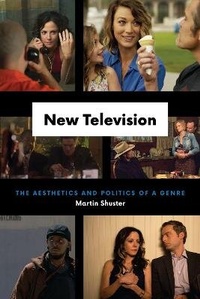
New Television
The Aesthetics and Politics of a Genre
Will be published approx. on 24. November 2017
Book
Hardback
272 pages
978-0-226-50381-3 (ISBN)
Description
Even though it's frequently asserted that we are living in a golden age of scripted television, television as a medium is still not taken seriously as an artistic art form, nor has the stigma of television as "chewing gum for the mind" really disappeared. Philosopher Martin Shuster argues that television is the modern art form, full of promise and urgency, and in New Television, he offers a strong philosophical justification for its importance. Through careful analysis of shows including The Wire, Justified, and Weeds, among others; and European and Anglophone philosophers, such as Stanley Cavell, Hannah Arendt, and Martin Heidegger; Shuster reveals how various contemporary television series engage deeply with aesthetic and philosophical issues in modernism and modernity. What unifies the aesthetic and philosophical ambitions of new television is a commitment to portraying and exploring the family as the last site of political possibility in a world otherwise bereft of any other sources of traditional authority; consequently, at the heart of new television are profound political stakes.
More details
Language
English
Place of publication
Chicago
United States
Publishing group
The University of Chicago Press
Target group
Professional and scholarly
Dimensions
Height: 23 mm
Width: 16 mm
Thickness: 2 mm
Weight
482 gr
ISBN-13
978-0-226-50381-3 (9780226503813)
Copyright in bibliographic data and cover images is held by Nielsen Book Services Limited or by the publishers or by their respective licensors: all rights reserved.
Schweitzer Classification
Other editions
Additional editions
E-Book
11/2017
1st Edition
University of Chicago Press
from
€40.49
Available for download
Person
Martin Shuster is assistant professor and chair of Judaic Studies in the Center for Geographies of Justice at Goucher College. In addition to many articles, he is the author of Autonomy after Auschwitz: Adorno, German Idealism, and Modernity, also published by the University of Chicago Press.