


The Synthetic University
How Higher Education Can Benefit from Shared Solutions and Save Itself
Will be published approx. on 24. February 2026
Book
Paperback/Softback
272 pages
978-0-691-25339-8 (ISBN)
Description
A bold, collaborative vision for combatting the ever-rising cost of college
US colleges and universities have long been the envy of the world. Institutional autonomy has fostered creativity among faculty, students, and staff. But this autonomy means that colleges tend to create their own solutions for every need. As a result, higher education suffers from costly redundancies that drive tuitions ever upward, putting higher education, essential to the fabric of the country, at risk. Instead of wishful thinking about collaboration or miraculous subsidies, The Synthetic University describes intermediary organizations that can provide innovative, cost-effective solutions.
Offering answers to challenges jointly faced by thousands of institutions, James Shulman lays out a compelling new vision of how to reduce spending while enabling schools to maintain their particular contributions. He explains why colleges are so resistant to change and presents illuminating case studies of mission-driven and market-supported entrepreneurial organizations-such as the student tracking infrastructure of the National Student Clearinghouse or the ambitious effort of classics professors to create a shared transinstitutional department. Mixing theory with lessons drawn from his own experience, he demonstrates how to finance and implement the organizations that can synthesize much-needed solutions.
A road map for sustained institutional change, The Synthetic University shows how to overcome colleges' do-it-yourself impulses, avoid the threat of disruption, and preserve the institutions that we need to conduct basic research, foster innovation, and prepare diverse students to lead meaningful and productive lives.
US colleges and universities have long been the envy of the world. Institutional autonomy has fostered creativity among faculty, students, and staff. But this autonomy means that colleges tend to create their own solutions for every need. As a result, higher education suffers from costly redundancies that drive tuitions ever upward, putting higher education, essential to the fabric of the country, at risk. Instead of wishful thinking about collaboration or miraculous subsidies, The Synthetic University describes intermediary organizations that can provide innovative, cost-effective solutions.
Offering answers to challenges jointly faced by thousands of institutions, James Shulman lays out a compelling new vision of how to reduce spending while enabling schools to maintain their particular contributions. He explains why colleges are so resistant to change and presents illuminating case studies of mission-driven and market-supported entrepreneurial organizations-such as the student tracking infrastructure of the National Student Clearinghouse or the ambitious effort of classics professors to create a shared transinstitutional department. Mixing theory with lessons drawn from his own experience, he demonstrates how to finance and implement the organizations that can synthesize much-needed solutions.
A road map for sustained institutional change, The Synthetic University shows how to overcome colleges' do-it-yourself impulses, avoid the threat of disruption, and preserve the institutions that we need to conduct basic research, foster innovation, and prepare diverse students to lead meaningful and productive lives.
Reviews / Votes
"A Forbes Best Higher Education Book" "Shulman offers excellent insights into why change is so difficult at universities and describes how they can succeed-or fail-at their work."---Michael Nietzel, Forbes "In [this] important forthcoming book, James Shulman of the American Council of Learned Societies and the mastermind behind ARTSTOR shows how cross-institutional collaboration and shared services can bend the cost curve, improve outcomes and make higher education more equitable."---Steven Mintz, Inside Higher Ed "Shulman's book is called The Synthetic University: 'synthetic' not meaning, of course, fake, but, rather, a place of synthesis. And it is these horizontal associations that bring faculty together from different universities that he points to as a prime example of synthesis that enriches all members of the academic ecosphere."---Nathan M. Greenfield, University World News "In a detailed, thoughtful and wide-ranging analysis, Shulman lays out the challenges to inter-institutional cooperation and suggests ways to overcome them."---Glenn C. Altschuler and David Wippmann, Inside Higher Ed "Shulman offers a host of fresh ideas, which, if implemented, could propel the higher education sector forward." * Choice * "The Synthetic University offers a compelling vision for the future of higher education. . . [and] provides a roadmap for addressing the rising costs and inefficiencies that have plagued the sector for years."---Joseph Miller, National Association of Student Financial Aid AdministrationsMore details
Language
English
Place of publication
New Jersey
United States
Target group
College/higher education
Professional and scholarly
Product notice
Paperback (trade)
Dimensions
Height: 234 mm
Width: 156 mm
Thickness: 15 mm
Weight
386 gr
ISBN-13
978-0-691-25339-8 (9780691253398)
Copyright in bibliographic data and cover images is held by Nielsen Book Services Limited or by the publishers or by their respective licensors: all rights reserved.
Schweitzer Classification
Other editions
Additional editions
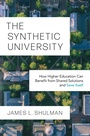
James L. Shulman
The Synthetic University
How Higher Education Can Benefit from Shared Solutions and Save Itself
E-Book
10/2023
1st Edition
Princeton University Press
€27.49
Available for download
Person
James L. Shulman is vice president and chief operating officer of the American Council of Learned Societies. He collaborated with William G. Bowen and Derek Bok on The Shape of the River: Long-Term Consequences of Considering Race in College and University Admissions and is the author (with William G. Bowen) of The Game of Life: College Sports and Educational Values (both Princeton).