

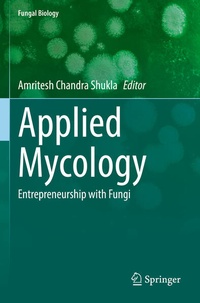
Applied Mycology
Entrepreneurship with Fungi
1st Edition
Published on 28. April 2023
Book
Paperback/Softback
XVIII, 447 pages
978-3-030-90651-1 (ISBN)
Description
Fungi are an important link in the food webs of all ecosystems. They have immense potential and comprise a myriad of useful bioactive compounds. Fungi feature in a wide range of diverse processes and applications in modern agriculture, the food science industry, and the pharmaceutical industry.
In the food and drink arena, the role of fungi is historically important in the form of mushrooms and in fermented foods as yeasts for baking and brewing. These roles are supplemented by the use of fungal food processing enzymes and additives, and more recently in the development of protein-based foodstuffs from fungi. Additionally, they are used in the formulation of biofertilizers and biopesticides used as biostimulants and bioprotectants of crops. The practical use of newer techniques such as genetic recombination and robotics have revolutionized the modem agricultural biotechnology industry, and have created an enormous range of possible further applications of fungal products.
Myco-materials created from mycelia (the root-like parts of fungi) are gaining attention as a sustainable alternative for a wide range of materials. They are being used as insulation, sustainable packaging, foam inserts, and even "eco-leather." In fact, mycelium bricks are pound-for-pound stronger than concrete. In addition, medicinal uses of fungal species have been historically recorded as important agents in the pharmaceutical sciences. The potential for myco-materials seems limitless.
The field of mycology and its application has become an increasingly important component in the education of industrial biotechnology. This book on applied mycology provides information helpful for developing entrepreneurial opportunities with fungi. This volume explains both the basic science and the applications of mycology and bio-resource technology with special emphasis on entrepreneurial applications. It offers a complete, one-stop resource for those interested in microbiology, food and agricultural science, medical mycology, and for those in industrial biotechnology.
In the food and drink arena, the role of fungi is historically important in the form of mushrooms and in fermented foods as yeasts for baking and brewing. These roles are supplemented by the use of fungal food processing enzymes and additives, and more recently in the development of protein-based foodstuffs from fungi. Additionally, they are used in the formulation of biofertilizers and biopesticides used as biostimulants and bioprotectants of crops. The practical use of newer techniques such as genetic recombination and robotics have revolutionized the modem agricultural biotechnology industry, and have created an enormous range of possible further applications of fungal products.
Myco-materials created from mycelia (the root-like parts of fungi) are gaining attention as a sustainable alternative for a wide range of materials. They are being used as insulation, sustainable packaging, foam inserts, and even "eco-leather." In fact, mycelium bricks are pound-for-pound stronger than concrete. In addition, medicinal uses of fungal species have been historically recorded as important agents in the pharmaceutical sciences. The potential for myco-materials seems limitless.
The field of mycology and its application has become an increasingly important component in the education of industrial biotechnology. This book on applied mycology provides information helpful for developing entrepreneurial opportunities with fungi. This volume explains both the basic science and the applications of mycology and bio-resource technology with special emphasis on entrepreneurial applications. It offers a complete, one-stop resource for those interested in microbiology, food and agricultural science, medical mycology, and for those in industrial biotechnology.
Reviews / Votes
"The volume comprises 20 chapters that touch on an impressive range of actual or potential applications . . Several chapters describe processes to be followed for exploitation, with often clear graphic representations of the steps. . the book provides many ideas that could be taken up in student projects or implemented on a local scale, and it will surely open the eyes of many to the wide range of applications involving fungi that both exist and await exploitation." (David L. Hawksworth, The Quarterly Review of Biology, Vol. 98 (4), December, 2023)More details
Product info
Paperback
Series
Edition
1st ed. 2022
Language
English
Place of publication
Cham
Switzerland
Publishing group
Springer International Publishing
Target group
Professional and scholarly
Illustrations
24
61 farbige Abbildungen, 20 farbige Tabellen, 24 s/w Abbildungen
XVIII, 447 p. 85 illus., 61 illus. in color.
Dimensions
Height: 235 mm
Width: 155 mm
Thickness: 26 mm
Weight
703 gr
ISBN-13
978-3-030-90651-1 (9783030906511)
DOI
10.1007/978-3-030-90649-8
Schweitzer Classification
Other editions
Additional editions
Book
04/2022
1st Edition
Springer
€267.49
Shipment within 7-9 days
Person
Amritesh Chandra SHUKLA is Professor of Botany at University of Lucknow, India. His research has mainly focused on exploration and conservation of fungal diversity and its bioprospection as well as unraveling the mechanism of action of potential antifungal plant products/ biomolecules as pharmaceuticals and herbal drugs. He has developed some commercial antifungal formulations and granted USA, UK, Japanese and Indian patents. He has credited eleven books, and published his research findings in various internationally reputed journals including seminars in cancer biology. For his scientific accomplishments, he received numerous awards and recognition, including the prestigious Fellow of the Linnean Society of London in the year 2021. He has also served the international scientific community well as Visiting Professor- University of Mauritius; and University of British Columbia, Vancouver, Canada. He has been in the expert panel of the Department of Botany and Microbiology, College of Science, King Saud University, Saudi Arabia; and in the Research Degrees and Scholarships Committee, Murdoch University, Perth, Australia.
Content
Preface
Chapter 1: Marine Microbial Enzymes and Their Applications Professor Se-Kwon KimKey laboratory of Molecular Enzymology and Enzyme Engineering of Ministry Education, Jilin University, Changchun, South Korea
Chapter 2: Mycoparasitism Professor Sergio Casas FloresCoordinador académico, División de Biología Molecular, Instituto Potosino de Investigación Científica y Tecnológica (IPICYT), Camino a la Presa San José No. 2055 Col. Lomas 4a. section, C. P. 78216 San Luis Potosí, SLP, Brazil
Chapter 3: Yeast in Entrepreneurship Professor S. Uribe-CarvajalDept. Molecular Genetics, Inst. de Fisiología Celular, UNAM, Mexico City, Mexico
Chapter 4: The Edible and Medicinal Fungi Professor Fang-Jie YaoEngineering Research Center of Chinese Ministry of Education for Edible and Medicinal Fungi, Jilin Agricultural University, Changchun, 130118, China
Chapter 5: Mushrooms in Enzyme Production Professor Renáta BánfiDepartment of Microbiology, Eötvös Loránd University, Pázmány Péter sétány 1/C, 1117 Budapest, Hungary
Chapter 6: Fungal Proteins with Biotechnology Potential Professor Renato ChávezDepartamento de Biología, Facultad de Química y Biología, Universidad de Santiago de Chile (USACH), Alameda 3363, Estación Central, 9170022, Santiago, Chile
Chapter 7: Microbased Biorefinery for Gold Nanoparticle Production Professor Rajini SinghAmity University of Microbial Biotechnology, Amity University Uttar Pradesh, Sector-125, Noida, U.P. India
Chapter 8: Mushrooms as Potential Sources of Entrepreneurships Professor T. N. LakhanpalDepartment of Bio- Science, Himachal Pradesh University, Summer Hill, Shimla-171 005, (HP), India
Chapter 9: Lignocellulosic Biomass and Conversion into Biofuels Professor Thaddeus EzejiBiotechnology and Fermentation Group, Department of Animal Sciences, The Ohio State University & OARDC 1680 Madison Avenue/Room 305 Gerlaugh Hall Wooster Ohio 44691 USA
Chapter 10: Trichoderma as Potential Biofungicidal and Plant Growth Promoter Professor HB SinghDepartment of Mycology and Plant Pathology, Institute of Agricultural Sciences, BHU, Varanasi-221005 (UP), India
Chapter 11: Myco-Metabolites and Their Applications Professor Amritesh Chandra ShuklaDepartment of Botany, University of Lucknow, Uttar Pradesh, India
Chapter 12: Natural Products of Endophytic Fungi and Their Applications Professor R. N. KharwarCentre of Advanced Study in Botany, Banaras Hindu University, Varanasi-221005 (UP), India
Chapter 13: Fungi as Sources of Biobased Fiber Materials Dr. Miia R. MäkeläDepartment of Food and Environmental Sciences, Division of Microbiology, Helsinki, Finland
Chapter 14: Fungal Consortium for Organic Municipal Solid Waste Composting Dr. Mukesh Kumar AwasthiAssociate Professor, College of Natural Resources and Environment, Northwest A&F University, Taicheng Road 3#, Yangling, Shaanxi 712100, China
Chapter 15: Fungal Applications in Biomass to Biorefineries Dr. Neelamegam AnnamalaiMicrobial Biotechnology and Bioenergy group, Department of Biology, College of Science, Sultan Qaboos University, PO Box 36, PC 123, Muscat, Sultanate of Oman
Chapter 16: Bioengineering Tools for the Production of Pharmaceuticals Dr. Surendra SarsaiyaAssociate Professor, Key Laboratory of Basic Pharmacology and Joint International Research Laboratory of Ethnomedicine of Ministry of Education, Zunyi Medical University, Zunyi, China
Chapter 17: Fungal Metabolites as Sources of Medicines and Dietary Supplements Dr. Maria Letizia GarganoDepartment of Agricultural and Environmental Science University of Bari, Italy
Chapter 18: Fungi as a Biocontrol Agent Dr. Ramesh SinghAssociate Professor, Department of Plant Pathology, Sardar Vallabhbhai Patel University of Agriculture & Technology, Meerut-250110, Uttar Pradesh, India
Chapter 19: Bio-Prospects of Fungal Endophytes Dr. Bhim Pratap SinghAssociate Professor, National Institute of Food Technology Entrepreneurship and Management (NIFTEM), Sonepat-131028, Haryana, India
Chapter 20: Value-Added Products of Mushrooms Dr. Rajesh Kumar PandeyAssistant Professor, Department of Botany, Bundelkhand University, Jhansi-284128 Uttar Pradesh, India
Index
Chapter 1: Marine Microbial Enzymes and Their Applications Professor Se-Kwon KimKey laboratory of Molecular Enzymology and Enzyme Engineering of Ministry Education, Jilin University, Changchun, South Korea
Chapter 2: Mycoparasitism Professor Sergio Casas FloresCoordinador académico, División de Biología Molecular, Instituto Potosino de Investigación Científica y Tecnológica (IPICYT), Camino a la Presa San José No. 2055 Col. Lomas 4a. section, C. P. 78216 San Luis Potosí, SLP, Brazil
Chapter 3: Yeast in Entrepreneurship Professor S. Uribe-CarvajalDept. Molecular Genetics, Inst. de Fisiología Celular, UNAM, Mexico City, Mexico
Chapter 4: The Edible and Medicinal Fungi Professor Fang-Jie YaoEngineering Research Center of Chinese Ministry of Education for Edible and Medicinal Fungi, Jilin Agricultural University, Changchun, 130118, China
Chapter 5: Mushrooms in Enzyme Production Professor Renáta BánfiDepartment of Microbiology, Eötvös Loránd University, Pázmány Péter sétány 1/C, 1117 Budapest, Hungary
Chapter 6: Fungal Proteins with Biotechnology Potential Professor Renato ChávezDepartamento de Biología, Facultad de Química y Biología, Universidad de Santiago de Chile (USACH), Alameda 3363, Estación Central, 9170022, Santiago, Chile
Chapter 7: Microbased Biorefinery for Gold Nanoparticle Production Professor Rajini SinghAmity University of Microbial Biotechnology, Amity University Uttar Pradesh, Sector-125, Noida, U.P. India
Chapter 8: Mushrooms as Potential Sources of Entrepreneurships Professor T. N. LakhanpalDepartment of Bio- Science, Himachal Pradesh University, Summer Hill, Shimla-171 005, (HP), India
Chapter 9: Lignocellulosic Biomass and Conversion into Biofuels Professor Thaddeus EzejiBiotechnology and Fermentation Group, Department of Animal Sciences, The Ohio State University & OARDC 1680 Madison Avenue/Room 305 Gerlaugh Hall Wooster Ohio 44691 USA
Chapter 10: Trichoderma as Potential Biofungicidal and Plant Growth Promoter Professor HB SinghDepartment of Mycology and Plant Pathology, Institute of Agricultural Sciences, BHU, Varanasi-221005 (UP), India
Chapter 11: Myco-Metabolites and Their Applications Professor Amritesh Chandra ShuklaDepartment of Botany, University of Lucknow, Uttar Pradesh, India
Chapter 12: Natural Products of Endophytic Fungi and Their Applications Professor R. N. KharwarCentre of Advanced Study in Botany, Banaras Hindu University, Varanasi-221005 (UP), India
Chapter 13: Fungi as Sources of Biobased Fiber Materials Dr. Miia R. MäkeläDepartment of Food and Environmental Sciences, Division of Microbiology, Helsinki, Finland
Chapter 14: Fungal Consortium for Organic Municipal Solid Waste Composting Dr. Mukesh Kumar AwasthiAssociate Professor, College of Natural Resources and Environment, Northwest A&F University, Taicheng Road 3#, Yangling, Shaanxi 712100, China
Chapter 15: Fungal Applications in Biomass to Biorefineries Dr. Neelamegam AnnamalaiMicrobial Biotechnology and Bioenergy group, Department of Biology, College of Science, Sultan Qaboos University, PO Box 36, PC 123, Muscat, Sultanate of Oman
Chapter 16: Bioengineering Tools for the Production of Pharmaceuticals Dr. Surendra SarsaiyaAssociate Professor, Key Laboratory of Basic Pharmacology and Joint International Research Laboratory of Ethnomedicine of Ministry of Education, Zunyi Medical University, Zunyi, China
Chapter 17: Fungal Metabolites as Sources of Medicines and Dietary Supplements Dr. Maria Letizia GarganoDepartment of Agricultural and Environmental Science University of Bari, Italy
Chapter 18: Fungi as a Biocontrol Agent Dr. Ramesh SinghAssociate Professor, Department of Plant Pathology, Sardar Vallabhbhai Patel University of Agriculture & Technology, Meerut-250110, Uttar Pradesh, India
Chapter 19: Bio-Prospects of Fungal Endophytes Dr. Bhim Pratap SinghAssociate Professor, National Institute of Food Technology Entrepreneurship and Management (NIFTEM), Sonepat-131028, Haryana, India
Chapter 20: Value-Added Products of Mushrooms Dr. Rajesh Kumar PandeyAssistant Professor, Department of Botany, Bundelkhand University, Jhansi-284128 Uttar Pradesh, India
Index