


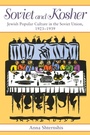
Soviet and Kosher
Jewish Popular Culture in the Soviet Union, 1923-1939
Published on 30. April 2006
Book
Hardback
248 pages
978-0-253-34726-8 (ISBN)
Description
Is Kosher pork an oxymoron? Anna Shternshis's fascinating study traces the creation of a Soviet Jewish identity that disassociated Jewishness from Judaism. The cultural transformation of Soviet Jews between 1917 and 1941 was one of the most ambitious experiments in social engineering of the past century. During this period, Russian Jews went from relative isolation to being highly integrated into the new Soviet culture and society, while retaining a strong ethnic and cultural identity. This identity took shape during the 1920s and 1930s, when the government attempted to create a new Jewish culture, "national in form" and "socialist in content." "Soviet and Kosher" is the first study of key Yiddish documents that brought these Soviet messages to Jews, notably the "Red Haggadah," a Soviet parody of the traditional Passover manual; songs about Lenin and Stalin; scripts from regional theatres; Socialist Realist fiction; and magazines for children and adults. More than 200 interviews conducted by the author in Russia, Germany, and the United States testify to the reception of these cultural products and provide a unique portrait of the cultural life of the average Soviet Jew.
More details
Language
English
Place of publication
Bloomington, IN
United States
Target group
Professional and scholarly
Illustrations
16
ISBN-13
978-0-253-34726-8 (9780253347268)
Copyright in bibliographic data is held by Nielsen Book Services Limited or its licensors: all rights reserved.
Schweitzer Classification
Other editions
New editions
Book
05/2006
Indiana University Press
€37.50
Shipment within 10-20 days
Content
Introduction: Sara F.'s Kosher Pork; 1. Anti-Religious Propaganda and the Transformation of Jewish Institutions and Traditions; 2. From Illiteracy to Worker Correspondents: Soviet Yiddish Amateur Writing; 3. Amateur Local Yiddish Theaters; 4. Soviet Yiddish Songs as a Mirror of Jewish Identity; 5. Soviet in Form, National in Content: Russian Jewish Popular Culture