

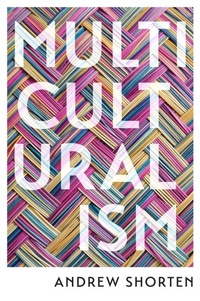
Multiculturalism
The Political Theory of Diversity Today
1st Edition
Published on 30. June 2022
Book
Paperback/Softback
210 pages
978-1-5095-5176-7 (ISBN)
Description
The idea that diverse cultural and ethnic groups should co-exist within a country and that assimilation should not be forced upon immigrant groups - "multiculturalism" - was orthodoxy 20 years ago. Today it's coming under pressure.
In this introduction to the political theory of multiculturalism, Andrew Shorten surveys the leading theories of multiculturalism, the critiques that have been levelled against the idea, and the debates surrounding cohesion, integration and diversity. He then goes on to demonstrate how multicultural political theory can be renewed, arguing that a single, monolithic vision of multiculturalism must be replaced by a multiculturalism made up of different strands, responding to distinctive but interrelated issues, and inspired by real-world policy debates about how political communities should respond to differences of religion, language and nationality. After tracing the influence of earlier multicultural ideas on these debates, Shorten reveals some new and surprising possibilities for mutual learning.
Containing an up-to-date overview of multicultural political theory and its various offshoots, this book is essential reading for students and scholars interested in the politics of cultural, religious, linguistic and national diversity.
In this introduction to the political theory of multiculturalism, Andrew Shorten surveys the leading theories of multiculturalism, the critiques that have been levelled against the idea, and the debates surrounding cohesion, integration and diversity. He then goes on to demonstrate how multicultural political theory can be renewed, arguing that a single, monolithic vision of multiculturalism must be replaced by a multiculturalism made up of different strands, responding to distinctive but interrelated issues, and inspired by real-world policy debates about how political communities should respond to differences of religion, language and nationality. After tracing the influence of earlier multicultural ideas on these debates, Shorten reveals some new and surprising possibilities for mutual learning.
Containing an up-to-date overview of multicultural political theory and its various offshoots, this book is essential reading for students and scholars interested in the politics of cultural, religious, linguistic and national diversity.
More details
Language
English
Place of publication
Oxford
United Kingdom
Target group
Professional and scholarly
Dimensions
Height: 228 mm
Width: 151 mm
Thickness: 15 mm
Weight
342 gr
ISBN-13
978-1-5095-5176-7 (9781509551767)
Copyright in bibliographic data and cover images is held by Nielsen Book Services Limited or by the publishers or by their respective licensors: all rights reserved.
Schweitzer Classification
Other editions
Additional editions
Book
06/2022
1st Edition
Polity Press
€65.00
Shipment within 15-20 days
E-Book
06/2022
1st Edition
Wiley
€18.99
Available for download
E-Book
06/2022
1st Edition
Wiley-Scrivener
€18.99
Available for download
Person
Andrew Shorten is Senior Lecturer in Political Theory at the University of Limerick.
Content
Acknowledgements
1. Introduction
2. Liberal Theories of Multiculturalism: Autonomy and Toleration
3. Beyond the Liberal Tradition: Recognition and Dialogue
4. Philosophical Criticisms of Multiculturalism
5. Diversity, Cohesion and Integration
6. Beliefs and Identities: Tolerating Religious Practices and Recognising Religious Differences
7. Ruling Ourselves: Self-Government Rights for National Minorities and Religious Associations
8. Speaking with Dignity: Linguistic Justice for National Minorities and Immigrants
9. Conclusion
Bibliography
1. Introduction
2. Liberal Theories of Multiculturalism: Autonomy and Toleration
3. Beyond the Liberal Tradition: Recognition and Dialogue
4. Philosophical Criticisms of Multiculturalism
5. Diversity, Cohesion and Integration
6. Beliefs and Identities: Tolerating Religious Practices and Recognising Religious Differences
7. Ruling Ourselves: Self-Government Rights for National Minorities and Religious Associations
8. Speaking with Dignity: Linguistic Justice for National Minorities and Immigrants
9. Conclusion
Bibliography