

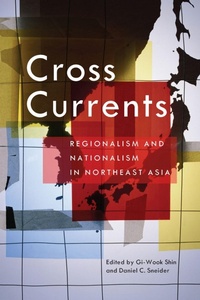
Cross Currents
Regionalism and Nationalism in Northeast Asia
Will be published approx. on 1. September 2007
Book
Paperback/Softback
304 pages
978-1-931368-10-0 (ISBN)
Description
Northeast Asia stands at a turning point in its history. The key economies of China, Japan, and South Korea are growing increasingly interdependent, and the movement toward regionalism is gaining momentum. Yet interdependency, often set in a global context, also spurs nationalism in all three countries, and beyond in East Asia. The essays in this volume assess current interactions - or cross currents - between national and regional forces in Northeast Asia, and suggest their future direction.
Cross Currents features provocative, plain-spoken contributions from a range of eminent international scholars and practitioners. They address key questions facing the region today: What competing visions of regional integration are being considered in Northeast Asia? Will they be realized? How do national pressures, especially the renewed China-Japan rivalry, stunt the movement toward regionalism? What role can Korea play to mitigate tensions between the two archrivals? How does the United States figure in Northeast Asian regionalism? Do America's Cold War alliances still have currency?
By addressing these questions from both Asian and U.S. perspectives, Cross Currents sheds new light on the interplay of national and regional forces in this strategic part of the world. Reformulating these interactions constructively is one of Northeast Asia's most pressing contemporary challenges.
Cross Currents features provocative, plain-spoken contributions from a range of eminent international scholars and practitioners. They address key questions facing the region today: What competing visions of regional integration are being considered in Northeast Asia? Will they be realized? How do national pressures, especially the renewed China-Japan rivalry, stunt the movement toward regionalism? What role can Korea play to mitigate tensions between the two archrivals? How does the United States figure in Northeast Asian regionalism? Do America's Cold War alliances still have currency?
By addressing these questions from both Asian and U.S. perspectives, Cross Currents sheds new light on the interplay of national and regional forces in this strategic part of the world. Reformulating these interactions constructively is one of Northeast Asia's most pressing contemporary challenges.
More details
Edition
New edition
Language
English
Place of publication
Stanford
United States
Target group
Professional and scholarly
Edition type
New edition
Product notice
Paperback (trade)
Dimensions
Height: 227 mm
Width: 155 mm
Thickness: 19 mm
Weight
490 gr
ISBN-13
978-1-931368-10-0 (9781931368100)
Copyright in bibliographic data and cover images is held by Nielsen Book Services Limited or by the publishers or by their respective licensors: all rights reserved.
Schweitzer Classification
Persons
Gi-Wook Shin is the director of Shorenstein APARC, the founding director of the Korean Studies Program, senior fellow at the Freeman Spogli Institute for International Studies, and associate professor of sociology, all at Stanford University, USA. Shin is also coeditor of the Journal of Korean Studies and the author/editor of many books and articles. Daniel C. Sneider is the associate director for research at Shorenstein APARC, USA. He was a 2005-06 Pantech Fellow at the Center, and is the former foreign affairs columnist of the San Jose Mercury News, USA. He has appeared as a foreign affairs commentator on the News Hour with Jim Lehrer and on National Public Radio.