

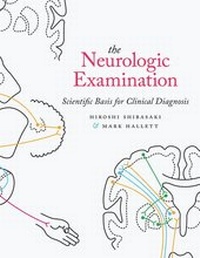
The Neurologic Examination
Scientific Basis for Clinical Diagnosis
Published on 14. July 2016
Book
Hardback
320 pages
978-0-19-024097-4 (ISBN)
Description
Whereas most books about neurologic examinations are disease and anatomy oriented, The Neurologic Examination: Scientific Basis for Clinical Diagnosis focuses on a pathophysiological approach to the nervous system. The authors emphasize that the scientific interpretation of symptoms obtained from carefully taking the patient's history and noting signs found during physical examination are essential in the diagnosis of neurologic diseases, even if laboratory testing,
such as electrophysiology and neuroimaging, are being more widely used. This book aims to provide a bridge from the basic sciences such as anatomy, physiology, pharmacology, and molecular biology to the neurologic symptoms. Neurologic examinations provide the foundation for the diagnosis, and only
after a thorough and expertly executed examination can one begin to incorporate laboratory testing and treatment.
The Neurologic Examination: Scientific Basis for Clinical Diagnosis, based on the widely successful Japanese book Diagnosis of Neurological Diseases (Igakushoin, Japan, second edition 2013) by Dr. Shibasaki, hopes to revitalize the use of neurologic examinations before jumping straight into laboratory testing. Doing so can help cut down on time, patient and physician anxiety, and unnecessary testing expenses. This book is a must-read for all practicing neurologists, residents, and medical
students.
Key Features Include
· The chapters are arranged in order of the actual steps in a neurologic examination;
· Highly illustrated with figures and tables indicative of the neurologic signs and symptoms that may appear during the given step; and
· 99 discussion boxes are inserted throughout to provide a more in-depth look at particular topics without interrupting the reading flow of the text.
such as electrophysiology and neuroimaging, are being more widely used. This book aims to provide a bridge from the basic sciences such as anatomy, physiology, pharmacology, and molecular biology to the neurologic symptoms. Neurologic examinations provide the foundation for the diagnosis, and only
after a thorough and expertly executed examination can one begin to incorporate laboratory testing and treatment.
The Neurologic Examination: Scientific Basis for Clinical Diagnosis, based on the widely successful Japanese book Diagnosis of Neurological Diseases (Igakushoin, Japan, second edition 2013) by Dr. Shibasaki, hopes to revitalize the use of neurologic examinations before jumping straight into laboratory testing. Doing so can help cut down on time, patient and physician anxiety, and unnecessary testing expenses. This book is a must-read for all practicing neurologists, residents, and medical
students.
Key Features Include
· The chapters are arranged in order of the actual steps in a neurologic examination;
· Highly illustrated with figures and tables indicative of the neurologic signs and symptoms that may appear during the given step; and
· 99 discussion boxes are inserted throughout to provide a more in-depth look at particular topics without interrupting the reading flow of the text.
Reviews / Votes
"This is an outstanding book on neurological examination with emphasis on its functional aspects. It is a must have book for neurology residents and neurophysiology fellows written by world-renowned authorities in clinical neurology and movement disorders. The book includes 150 figures and 99 boxes which illustrate topics of current interest in clinical neurology and should greatly facilitate learning the "art" of the neurological examination." --Hans Luders, MD, PhD Professor of Neurology, Case Medical Center, University Hospitals, Cleveland, Ohio"The distinguished senior neurologists, Hiroshi Shibasaki and Mark Hallett, have produced a tour de force of the neurological method. Progressing from the anatomic diagnosis to the etiological diagnosis and finally to the clinical diagnosis, this book re-articulates an age old and battle tested method of performing the art of clinical neurology. It is particularly refreshing to see that laboratory testing is relegated to its proper location; the end of the clinical method. Those who use this book will carry the evolutionary process forward to the next generation, properly armed with the wisdom of the classical neurological method." --Martin A. Samuels, MD, DSc(hon), FAAN, MACP, FRCP, FANA, Chair, Department of Neurology, Brigham and Women's Hospital, Miriam Sydney Joseph Professor of Neurology, Harvard Medical School, Boston, MAMore details
Other editions
Additional editions
Hiroshi MD Shibasaki | Mark Md Hallett
The Neurologic Examination
Scientific Basis for Clinical Diagnosis
E-Book
06/2016
1st Edition
OUP eBook
€129.99
Available for download
Persons
Dr. Hiroshi Shibasaki MD, PhD graduated from Kyushu University Graduate School of Medicine, Japan in 1969. He was a resident of Neurology at University of Minnesota Hospital, USA (1969-1971), a visiting scientist at Institute of Neurology, Queen Square, London, UK (1978-1979). Dr. Shibasaki became the Director of Human Brain Research Center (1990-2003) and Chairman of Neurology (1999-2003) at Kyoto University Graduate School of Medicine, Japan. He was also a Fogarty
Scholar at NINDS, NIH, USA (2003-2005) and the President of International Federation of Clinical Neurophysiology (2007-2010). He is currently an emeritus professor at Kyoto University Graduate School of Medicine.
Dr. Mark Hallett, MD attended Harvard Medical School (1969), did his residency in Neurology at the Massachusetts General Hospital (1972-1975), and a fellowship in motor control in London (1975-1976). He was at Harvard Medical School from 1976-1984, and since then he has been Chief, Human Motor Control Section, NINDS, NIH. He has been President of the Movement Disorder Society and is currently President of the International Federation of Clinical Neurophysiology.
Scholar at NINDS, NIH, USA (2003-2005) and the President of International Federation of Clinical Neurophysiology (2007-2010). He is currently an emeritus professor at Kyoto University Graduate School of Medicine.
Dr. Mark Hallett, MD attended Harvard Medical School (1969), did his residency in Neurology at the Massachusetts General Hospital (1972-1975), and a fellowship in motor control in London (1975-1976). He was at Harvard Medical School from 1976-1984, and since then he has been Chief, Human Motor Control Section, NINDS, NIH. He has been President of the Movement Disorder Society and is currently President of the International Federation of Clinical Neurophysiology.