

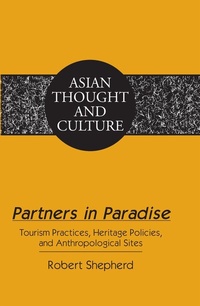
Partners in Paradise
Tourism Practices, Heritage Policies, and Anthropological Sites
Published on 31. October 2011
Book
Hardback
141 pages
978-1-4331-1609-4 (ISBN)
Description
How and why do some places in the world become symbols of illusive paradise, and what does this mean for their residents? Moving between anthropology, tourism, and the increasingly influential cultural heritage movement, Partners in Paradise examines the origins of a Euro-American fascination with places imagined to exist outside of Modernity. Focusing on the emergence of Tibet and Bali as, in turn, anthropological field sites, tourist destinations, and cultural heritage sites, it argues that the work of academic researchers, tourists, and cultural preservationists inform and constitute each other, in the process constructing particular places as «paradise». Unpacking this process is a necessary first step in understanding how Tibetans and Balinese negotiate their place in a modern world in which the meaning of «paradise» is contested. Drawing on anthropology, history, and tourist studies, Partners in Paradise offers a unique lens on the politics of development, modernization, and cultural preservation.
More details
Other editions
Additional editions
Robert J. Shepherd
Partners in Paradise
Tourism Practices, Heritage Policies, and Anthropological Sites
E-Book
12/2011
300th Edition
Peter Lang Verlag
€64.99
Available for download
Person
Robert Shepherd is Assistant Professor of Anthropology and International Affairs at The George Washington University in Washington, D.C., where he teaches courses on international development, human rights, and contemporary China. His research interests include the domestic tourism and heritage industries in China, transnational cultural flows, and contested forms of global theorizing, such as human rights and world heritage. He served as a Peace Corps volunteer in Nepal and as a United Nations volunteer in China and Indonesia.