

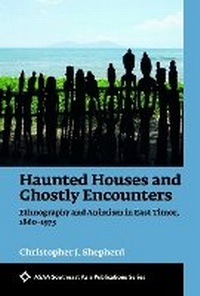
Haunted Houses and Ghostly Encounters
Ethnography and Animism in East Timor, 1860-1975
Published on 30. April 2019
Book
Paperback/Softback
352 pages
978-981-325-054-3 (ISBN)
Description
Haunted Houses and Ghostly Encounters presents a history of Western ethnography of animism in East Timor during the Portuguese period.
The book consists of ten chapters, each one a narrative of the work and experience of a particular ethnographer. Part One deals with colonial ethnography and Part Two with professional anthropology. Covering a selection of seminal 19th- and 20th-century ethnographies, the author explores the relationship between spiritual beliefs, colonial administration, ethnographic interests and fieldwork experience. It is argued that the presence of outsiders precipitated a new 'transformative animism' as colonial control over Portuguese Timor was consolidated. This came about because increasingly powerful outsiders posed threats and offered rewards to the Timorese just as the powerful ancestor spirits had long done; consequently, the Timorese ritualised their dealings with outsiders following their established model for appealing to spirits.
Bringing colonial and professional ethnography into the one frame of reference, it is shown that ethnographers of both types not only bore witness to these processes of transformative animism, they also exemplified them. The book presents an original synthesis of East Timor's history, culture and anthropology.
The book consists of ten chapters, each one a narrative of the work and experience of a particular ethnographer. Part One deals with colonial ethnography and Part Two with professional anthropology. Covering a selection of seminal 19th- and 20th-century ethnographies, the author explores the relationship between spiritual beliefs, colonial administration, ethnographic interests and fieldwork experience. It is argued that the presence of outsiders precipitated a new 'transformative animism' as colonial control over Portuguese Timor was consolidated. This came about because increasingly powerful outsiders posed threats and offered rewards to the Timorese just as the powerful ancestor spirits had long done; consequently, the Timorese ritualised their dealings with outsiders following their established model for appealing to spirits.
Bringing colonial and professional ethnography into the one frame of reference, it is shown that ethnographers of both types not only bore witness to these processes of transformative animism, they also exemplified them. The book presents an original synthesis of East Timor's history, culture and anthropology.
More details
Series
Language
English
Place of publication
Singapore
Singapore
Target group
Professional and scholarly
Dimensions
Height: 229 mm
Width: 152 mm
Weight
518 gr
ISBN-13
978-981-325-054-3 (9789813250543)
Copyright in bibliographic data and cover images is held by Nielsen Book Services Limited or by the publishers or by their respective licensors: all rights reserved.
Schweitzer Classification