

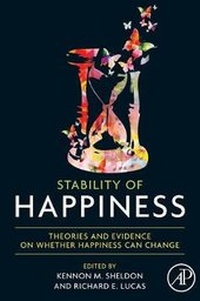
Stability of Happiness
Theories and Evidence on Whether Happiness Can Change
Published on 19. August 2016
Book
Paperback/Softback
334 pages
978-0-12-810249-7 (ISBN)
Description
The right to "pursue happiness" is one of the dominant themes of western culture, and understanding the causes of happiness is one of the primary goals of the positive psychology movement. However, before the causality question can even be considered, a more basic question must be addressed: CAN happiness change? Reasons for skepticism include the notion of a "genetic set point" for happiness, i.e. a stable personal baseline of happiness to which individuals will always return, no matter how much their lives change for the better; the life-span stability of happiness-related traits such as neuroticism and extraversion; and the powerful processes of hedonic adaptation, which erode the positive effects of any fortuitous life change. This book investigates prominent theories on happiness with the research evidence to discuss when and how happiness changes and for how long.
More details
Language
English
Place of publication
San Diego
United States
Publishing group
Elsevier Science Publishing Co Inc
Target group
Professional and scholarly
Researchers in social psychology, developmental psychology, or clinical psychology interested in the well being of people over time
Dimensions
Height: 229 mm
Width: 152 mm
Weight
540 gr
ISBN-13
978-0-12-810249-7 (9780128102497)
Copyright in bibliographic data and cover images is held by Nielsen Book Services Limited or by the publishers or by their respective licensors: all rights reserved.
Schweitzer Classification
Other editions
Additional editions
Kennon M. Sheldon | Richard E. Lucas
Stability of Happiness
Theories and Evidence on Whether Happiness Can Change
Book
07/2014
Academic Press
€68.09
Withdrawn from sale
Persons
Content
1. Is it Possible to Become a Permanently Happier Person?
Kennon M. Sheldon and Richard E. Lucas
2. Well-Being: Heritable and Changeable
Espen Roysamb, Ragnhild Bang Nes, and Joar Vitterso
3. Symptoms of Wellness: Happiness and Eudaimonia from a Self-Determination Perspective
Cody R. DeHaan and Richard M. Ryan
4. Is Lasting Change Possible? Lessons From the Hedonic Adaptation Prevention Model
Christina Armenta, Katherine Jacobs Bao, Sonja Lyubomirsky, and Kennon M. Sheldon
5. Can Happiness Change? Theories and Evidence
Robert A. Cummins
6. National Panel Studies Show Substantial Minorities Recording Long Term Change In Life Satisfaction: Implications for Set-Point Theory
Bruce Headey, Ruud Muffels, and Gert G. Wagner
7. Does Happiness Change? Evidence from Longitudinal Studies
Stevie C. Y. Yap, Ivana Anusic, and Richard E. Lucas
8. Increasing Happiness by Well-being Therapy
Chiara Ruini and Giovanni A. Fava
9. Long-Term Change of Happiness in Nations: Two Times More Rise Than Decline Since the 1970s
Ruut Veenhoven
10. Set Point Theory and Public Policy
Richard A. Easterlin and Malgorzata Switek
11. Economic Approaches to Understanding Change in Happiness
Nattavudh Powdthavee and Alois Stutzer
12. Personality Traits as Potential Moderators of Well-Being
Patrick L. Hill, Daniel K. Mroczek, and Robin K. Young
13. Statistical Models for Analyzing Stability and Change in Happiness
Michael Eid and Tanja Kutscher
14. Stable Happiness Dies in Middle-Age: A Guide to Future Research
Ed Diener
Kennon M. Sheldon and Richard E. Lucas
2. Well-Being: Heritable and Changeable
Espen Roysamb, Ragnhild Bang Nes, and Joar Vitterso
3. Symptoms of Wellness: Happiness and Eudaimonia from a Self-Determination Perspective
Cody R. DeHaan and Richard M. Ryan
4. Is Lasting Change Possible? Lessons From the Hedonic Adaptation Prevention Model
Christina Armenta, Katherine Jacobs Bao, Sonja Lyubomirsky, and Kennon M. Sheldon
5. Can Happiness Change? Theories and Evidence
Robert A. Cummins
6. National Panel Studies Show Substantial Minorities Recording Long Term Change In Life Satisfaction: Implications for Set-Point Theory
Bruce Headey, Ruud Muffels, and Gert G. Wagner
7. Does Happiness Change? Evidence from Longitudinal Studies
Stevie C. Y. Yap, Ivana Anusic, and Richard E. Lucas
8. Increasing Happiness by Well-being Therapy
Chiara Ruini and Giovanni A. Fava
9. Long-Term Change of Happiness in Nations: Two Times More Rise Than Decline Since the 1970s
Ruut Veenhoven
10. Set Point Theory and Public Policy
Richard A. Easterlin and Malgorzata Switek
11. Economic Approaches to Understanding Change in Happiness
Nattavudh Powdthavee and Alois Stutzer
12. Personality Traits as Potential Moderators of Well-Being
Patrick L. Hill, Daniel K. Mroczek, and Robin K. Young
13. Statistical Models for Analyzing Stability and Change in Happiness
Michael Eid and Tanja Kutscher
14. Stable Happiness Dies in Middle-Age: A Guide to Future Research
Ed Diener