

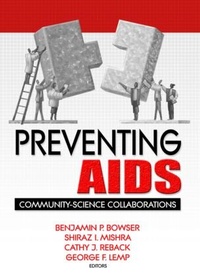
Preventing AIDS
Community-Science Collaborations
1st Edition
Published on 25. October 2004
Book
Paperback/Softback
250 pages
978-0-7890-1247-0 (ISBN)
Description
Learn how to create professional collaboration between HIV/AIDS researchers and community organizations for the benefit of all!
This book is designed to help frontline prevention organizations answer two questions that are of utmost importance. First, how effective are their services; and second, can their work be improved? The absence of rigorous evaluation is a barrier to stable funding for community organizations, and the strategies in Preventing AIDS: Community-Science Collaborations can help overcome that barrier. The book is a guide to successful cooperative efforts between researchers and community-based organizations. The information it presents will help community-based programs acquire detailed, timely information on program effectiveness and outcomes. It also provides researchers with methods for accessing hard-to-reach or hidden HIV high-risk groups. Handy tables and figures make important data easy to access and understand.
In Preventing AIDS: Community-Science Collaborations, you'll learn about the difficult but critically important collaboration between community organizations who do frontline prevention work and university scientists who evaluate the effectiveness of that work. The book describes the community-researcher equal partner collaboration (CREPC) model for community-based collaborative research. In addition, it examines six unique efforts to prevent the spread of AIDS among high-risk populations, such as prostitutes, injection drug users, impoverished pregnant women, migrant workers, transgendered persons, and prison inmates. The case studies in Preventing AIDS: Community-Science Collaborations describe the frustrations of outreach workers and counselors who suddenly must help design a survey they fear will be intrusive, and the parallel problems faced by scientists who are told that their traditional measures mean little to outreach workers.
Preventing AIDS: Community-Science Collaborations presents funders' perspectives on collaborative AIDS research and examines the collaborative and funding aspects of:
the CAL-PEP prevention programs for drug injectors and sex workers
efforts to promote HIV prevention for migrant farm workers and evaluate those efforts' effectiveness
the ongoing collaboration between The Center for AIDS Prevention Studies (University of California, San Francisco), Centerforce (a statewide nonprofit agency providing services and advocacy to prisoners and their families), and San Quentin State Prison
the effort of the Los Angeles County HIV Epidemiology Program and three community-based organizations, which collaborate to provide culturally appropriate outreach and HIV education/prevention services to transgendered individuals of various ethnic origins
San Francisco's PHREDA project and the way its creators collaborated to better understand and serve high-risk women
The U-Find-Out (UFO) Study, funded by the Universitywide AIDS Research Program of the State of California
This book is designed to help frontline prevention organizations answer two questions that are of utmost importance. First, how effective are their services; and second, can their work be improved? The absence of rigorous evaluation is a barrier to stable funding for community organizations, and the strategies in Preventing AIDS: Community-Science Collaborations can help overcome that barrier. The book is a guide to successful cooperative efforts between researchers and community-based organizations. The information it presents will help community-based programs acquire detailed, timely information on program effectiveness and outcomes. It also provides researchers with methods for accessing hard-to-reach or hidden HIV high-risk groups. Handy tables and figures make important data easy to access and understand.
In Preventing AIDS: Community-Science Collaborations, you'll learn about the difficult but critically important collaboration between community organizations who do frontline prevention work and university scientists who evaluate the effectiveness of that work. The book describes the community-researcher equal partner collaboration (CREPC) model for community-based collaborative research. In addition, it examines six unique efforts to prevent the spread of AIDS among high-risk populations, such as prostitutes, injection drug users, impoverished pregnant women, migrant workers, transgendered persons, and prison inmates. The case studies in Preventing AIDS: Community-Science Collaborations describe the frustrations of outreach workers and counselors who suddenly must help design a survey they fear will be intrusive, and the parallel problems faced by scientists who are told that their traditional measures mean little to outreach workers.
Preventing AIDS: Community-Science Collaborations presents funders' perspectives on collaborative AIDS research and examines the collaborative and funding aspects of:
the CAL-PEP prevention programs for drug injectors and sex workers
efforts to promote HIV prevention for migrant farm workers and evaluate those efforts' effectiveness
the ongoing collaboration between The Center for AIDS Prevention Studies (University of California, San Francisco), Centerforce (a statewide nonprofit agency providing services and advocacy to prisoners and their families), and San Quentin State Prison
the effort of the Los Angeles County HIV Epidemiology Program and three community-based organizations, which collaborate to provide culturally appropriate outreach and HIV education/prevention services to transgendered individuals of various ethnic origins
San Francisco's PHREDA project and the way its creators collaborated to better understand and serve high-risk women
The U-Find-Out (UFO) Study, funded by the Universitywide AIDS Research Program of the State of California
More details
Language
English
Place of publication
New York
United States
Publishing group
Taylor & Francis Inc
Target group
Professional and scholarly
College/higher education
Dimensions
Height: 216 mm
Width: 156 mm
Weight
460 gr
ISBN-13
978-0-7890-1247-0 (9780789012470)
Copyright in bibliographic data and cover images is held by Nielsen Book Services Limited or by the publishers or by their respective licensors: all rights reserved.
Schweitzer Classification
Other editions
Additional editions
E-Book
12/2012
1st Edition
Routledge
€45.99
Available for download
E-Book
12/2012
1st Edition
Routledge
€45.99
Available for download
Book
10/2004
1st Edition
Routledge
€178.56
Shipment within 10-20 days
Persons
R Dennis Shelby, Benjamin Bowser, Shiraz Mishra, Cathy Reback
Content
About the Editors
Contributors
Preface
Chapter 1. Introduction to Community-Science Collaboration: Equal Partners in Investigation (Benjamin P. Bowser and Shiraz I. Mishra)
Collaboration
CREPC
Chapter 2. Collaborative AIDS Research: A Funder's Perspective (Bart K. Aoki, Roger K. Myrick, George F. Lemp, and Steve Truax)
The Values of Collaborative Research
Challenges to Community Collaboration and HIV Prevention Research
Opportunities Offered by Collaborative HIV Prevention Research
Funding for Community Research on AIDS: UARP
Conclusion
Chapter 3. Preventing AIDS Among Injectors and Sex Workers (Gloria Lockett, Carla Dillard-Smith, and Benjamin P. Bowser)
Beginning of Collaboration
Methods
Results and Collaborative Findings
Conclusion
Chapter 4. Collaborative Research Toward HIV Prevention Among Migrant Farmworkers (Shiraz I. Mishra, Fernando Sanudo, and Ross F. Conner)
The Collaboration
The Study
Research Findings
Conclusion: Lessons Learned
Appendix: Recruitment Criteria and Sample Size of Farmworkers
Chapter 5. A Health Promotion Intervention for Prison Inmates with HIV (Barry Zack, Olga Grinstead, and Bonnie Faigeles)
Introduction
Justification
Methods
Evaluation Plan (Research Design)
Results
Discussion
Chapter 6. The Los Angeles Transgender Health Study: Creating a Research and Community Collaboration (Cathy J. Reback and Paul Simon)
Introduction
Study Objectives
The Collaboration Team
Study Design
The Study
Findings
Future Analyses
Benefits and Challenges of Collaboration
Chapter 7. Critical Collaborations in Serving High-Risk Women: The PHREDA Project (Geraldine Oliva, Jennifer Rienks, and Lisa Netherland)
Background
The Three Phases of PHREDA
Benefits and Challenges of Collaboration
Challenges to Research
Conclusion
Chapter 8. The Challenges and Rewards of Collaborative Research: The UFO Study (Kristen Ochoa, Rachel McLean, Heather Edney-Meschery, Dante Brimer, and Andrew Moss)
A Typical Day in the UFO Study
Introduction
Doing Research Differently
The Study
Beginning in the Middle
The Community Collaborator's Perspective
The Santa Cruz Needle Exchange
The Peer Interviewer/Counselor Perspective
The Researcher's Perspective
Where We Are Now
Chapter 9. Synthesis of Case Studies and Service Providers' Reactions (Benjamin P. Bowser and Lisa M. Krieger)
Part I: Meta-Analysis of Case Studies
Part II: Assessing CREPC
Chapter 10. Conclusion (Benjamin P. Bowser, Shiraz I. Mishra, Cathy J. Reback, and George F. Lemp)
The Challenge
Business As Usual
New Business: Grounded Research and Services
Equal Partner Collaboration
Final Word: This Is Only a Beginning
Index
Reference Notes Included
Contributors
Preface
Chapter 1. Introduction to Community-Science Collaboration: Equal Partners in Investigation (Benjamin P. Bowser and Shiraz I. Mishra)
Collaboration
CREPC
Chapter 2. Collaborative AIDS Research: A Funder's Perspective (Bart K. Aoki, Roger K. Myrick, George F. Lemp, and Steve Truax)
The Values of Collaborative Research
Challenges to Community Collaboration and HIV Prevention Research
Opportunities Offered by Collaborative HIV Prevention Research
Funding for Community Research on AIDS: UARP
Conclusion
Chapter 3. Preventing AIDS Among Injectors and Sex Workers (Gloria Lockett, Carla Dillard-Smith, and Benjamin P. Bowser)
Beginning of Collaboration
Methods
Results and Collaborative Findings
Conclusion
Chapter 4. Collaborative Research Toward HIV Prevention Among Migrant Farmworkers (Shiraz I. Mishra, Fernando Sanudo, and Ross F. Conner)
The Collaboration
The Study
Research Findings
Conclusion: Lessons Learned
Appendix: Recruitment Criteria and Sample Size of Farmworkers
Chapter 5. A Health Promotion Intervention for Prison Inmates with HIV (Barry Zack, Olga Grinstead, and Bonnie Faigeles)
Introduction
Justification
Methods
Evaluation Plan (Research Design)
Results
Discussion
Chapter 6. The Los Angeles Transgender Health Study: Creating a Research and Community Collaboration (Cathy J. Reback and Paul Simon)
Introduction
Study Objectives
The Collaboration Team
Study Design
The Study
Findings
Future Analyses
Benefits and Challenges of Collaboration
Chapter 7. Critical Collaborations in Serving High-Risk Women: The PHREDA Project (Geraldine Oliva, Jennifer Rienks, and Lisa Netherland)
Background
The Three Phases of PHREDA
Benefits and Challenges of Collaboration
Challenges to Research
Conclusion
Chapter 8. The Challenges and Rewards of Collaborative Research: The UFO Study (Kristen Ochoa, Rachel McLean, Heather Edney-Meschery, Dante Brimer, and Andrew Moss)
A Typical Day in the UFO Study
Introduction
Doing Research Differently
The Study
Beginning in the Middle
The Community Collaborator's Perspective
The Santa Cruz Needle Exchange
The Peer Interviewer/Counselor Perspective
The Researcher's Perspective
Where We Are Now
Chapter 9. Synthesis of Case Studies and Service Providers' Reactions (Benjamin P. Bowser and Lisa M. Krieger)
Part I: Meta-Analysis of Case Studies
Part II: Assessing CREPC
Chapter 10. Conclusion (Benjamin P. Bowser, Shiraz I. Mishra, Cathy J. Reback, and George F. Lemp)
The Challenge
Business As Usual
New Business: Grounded Research and Services
Equal Partner Collaboration
Final Word: This Is Only a Beginning
Index
Reference Notes Included