

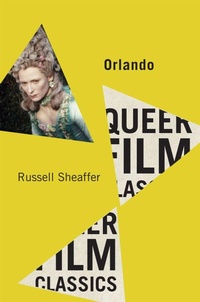
Orlando
Published on 11. November 2022
Book
Paperback/Softback
160 pages
978-0-2280-1460-7 (ISBN)
Description
A film that transcends time, Sally Potter's Orlando follows its titular character through nearly four hundred years of British history. Orlando starts life as a young man in the 1600s and then, mid-film, becomes a woman in the 1800s. Plot, production, and performance have all contributed to the film becoming a touchstone for Tilda Swinton's ethereal and gender-bending mode.
A Russian-French-Dutch-American-Italian-British co-production, Orlando was hailed as a monumental work of international art house cinema upon its release in 1992. Some understood Potter's film, a work of ruthless and ingenious adaptation, as moving away from the lesbian content of Virginia Woolf's novel. Russell Sheaffer uses a detailed analysis of screenplay drafts and more than three decades of reception to argue that while the film moves away from a direct investment in same-sex relationships, Orlando's articulations of embodiment, desire, and time have made the film continually more queer in the years since its release.
Taking cues from adaptation theory and gender studies, this book meticulously charts the distinct shift from lesbian feminist text to queer film classic, arguing that the film is as much an adaptation of Woolf's A Room of One's Own as it is of its eponymous novel.
A Russian-French-Dutch-American-Italian-British co-production, Orlando was hailed as a monumental work of international art house cinema upon its release in 1992. Some understood Potter's film, a work of ruthless and ingenious adaptation, as moving away from the lesbian content of Virginia Woolf's novel. Russell Sheaffer uses a detailed analysis of screenplay drafts and more than three decades of reception to argue that while the film moves away from a direct investment in same-sex relationships, Orlando's articulations of embodiment, desire, and time have made the film continually more queer in the years since its release.
Taking cues from adaptation theory and gender studies, this book meticulously charts the distinct shift from lesbian feminist text to queer film classic, arguing that the film is as much an adaptation of Woolf's A Room of One's Own as it is of its eponymous novel.
Reviews / Votes
"An original and timely reading of Sally Potter's 1992 film. I was utterly captivated by Sheaffer's reading of the ways in which the cinematic language and visual grammar of Potter's film take up the call of Woolf's 'common sentence,' with the film's oscillating point of view, invitation to the audience through its use of direct address, and collaborative sharing of the filmic gaze suggesting ways in which women can queerly both originate and inherit each other's stories. This culminates in a rich concluding discussion of the film's final scene, when Orlando's daughter turns the camera on her mother." Peter Dickinson, author of My Vancouver Dance History: Story, Movement, CommunityMore details
Series
Language
English
Place of publication
Montreal
Canada
Target group
Professional and scholarly
Illustrations
32 photos
Dimensions
Height: 203 mm
Width: 153 mm
Thickness: 14 mm
Weight
252 gr
ISBN-13
978-0-2280-1460-7 (9780228014607)
Copyright in bibliographic data and cover images is held by Nielsen Book Services Limited or by the publishers or by their respective licensors: all rights reserved.
Schweitzer Classification
Other editions
Person
Russell Sheaffer is an experimental filmmaker and producer. He lives in San Diego.