


Responding to Drinking Problems
1st Edition
Published on 1. December 2023
Book
Hardback
272 pages
978-1-032-61148-8 (ISBN)
Description
In the 1970s family doctors, social workers, researchers and administrators had been aware of the inadequacy of the response to drinking problems for some time. However, there had been no systematic examination of why such agents felt negatively about drinkers and disinclined to respond to them. Originally published in 1978, this book develops a radical new perspective on the prevalence and causes of drinking problems, combining reviews of historical and contemporary literature with the authors' own research studies.
This perspective is then linked to the need for an integrated response from both medical and social services, with a particular accent on the need for a community response. By focusing on the relationship between helper and helped a solution is sought to the question which has troubled the field for many years: why are agents like family doctors and social workers so inadequate in recognising and responding to people with drinking problems?
The crucial aspects within the therapeutic relationship are pinpointed and experimental studies are described which show how training, casework, supervision and the redeployment of expertise can help improve recognition rates and responses to individual drinkers. This book thus expresses the need for major changes both in our attitudes and understanding of people with drinking problems and the difficulties of agents who try to help them. It should still be of historical interest to social scientists and those involved in helping people with drinking problems.
This perspective is then linked to the need for an integrated response from both medical and social services, with a particular accent on the need for a community response. By focusing on the relationship between helper and helped a solution is sought to the question which has troubled the field for many years: why are agents like family doctors and social workers so inadequate in recognising and responding to people with drinking problems?
The crucial aspects within the therapeutic relationship are pinpointed and experimental studies are described which show how training, casework, supervision and the redeployment of expertise can help improve recognition rates and responses to individual drinkers. This book thus expresses the need for major changes both in our attitudes and understanding of people with drinking problems and the difficulties of agents who try to help them. It should still be of historical interest to social scientists and those involved in helping people with drinking problems.
More details
Series
Language
English
Place of publication
London
United Kingdom
Publishing group
Taylor & Francis Ltd
Target group
College/higher education
Professional and scholarly
Postgraduate, Professional, and Undergraduate
Dimensions
Height: 222 mm
Width: 145 mm
Thickness: 18 mm
Weight
477 gr
ISBN-13
978-1-032-61148-8 (9781032611488)
Copyright in bibliographic data and cover images is held by Nielsen Book Services Limited or by the publishers or by their respective licensors: all rights reserved.
Schweitzer Classification
Other editions
Additional editions
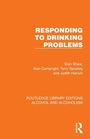
Stan Shaw | Alan Cartwright | Terry Spratley
Responding to Drinking Problems
Book
approx. 12/2025
1st Edition
Routledge
€46.80
Not yet published
Stan Shaw | Alan Cartwright | Terry Spratley
Responding to Drinking Problems
E-Book
12/2023
1st Edition
Taylor & Francis
€39.49
Available for download
Stan Shaw | Alan Cartwright | Terry Spratley
Responding to Drinking Problems
E-Book
12/2023
1st Edition
Taylor & Francis
€39.49
Available for download
Persons
Stan Shaw, Alan Cartwright, Terry Spratley, Judith Harwin
Content
Acknowledgements. Introduction. Part One - Alcohol: Its Uses and Abuses 1. The Good and Bad Effects of Alcohol 2. Concepts of Alcohol Abuse Part Two - Drinking Problems: Epidemiology and Etiology 3. The Prevalence and Causes of Drinking Problems Part Three - The Existing Response 4. Concepts of the Response 5. Seeking, Refusing or Hiding from Help 6. The Anxieties of General Community Agents 7. Role Insecurity and Low Therapeutic Commitment Part Four - Theories About Improving the Response 8. Previous Theories about Improving the Response 9. Developing Role Security and Therapeutic Commitment Part Five - Experiments in Improving the Response 10. The CAT Training Courses: Improving the Recognition of Drinking Problems 11. The CAT Consultation Service: Improving the Response to Individual Clients with Drinking Problems 12. A Case Illustration of the CAT Consultation Service Part Six - Conclusion 13. Towards a Community Response. References. Index.