

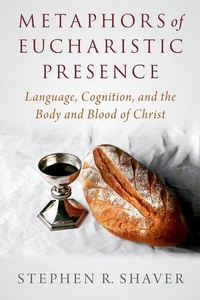
Metaphors of Eucharistic Presence
Language, Cognition, and the Body and Blood of Christ
Published on 31. March 2022
Book
Hardback
304 pages
978-0-19-758080-6 (ISBN)
Description
In Metaphors of Eucharistic Presence: Language, Cognition, and the Body and Blood of Christ, Stephen R. Shaver brings together the fields of cognitive linguistics and liturgical theology to propose a new approach to the ecumenically controversial issue of eucharistic presence. Drawing from the work of cognitive linguists such as George Lakoff, Gilles Fauconnier, and Mark Turner, and theologians such as Robert Masson and John Sanders, Shaver argues that there is no clear division between literal and figurative language: rather, human cognition is grounded in sensorimotor experience, and phenomena such as metaphor and conceptual blending are basic building blocks of thought. Complex realities are ordinarily understood by means of more than one metaphor. Inherited models of eucharistic presence, then, are not necessarily mutually exclusive but can serve as complementary members of a shared ecumenical repertoire.
The central element of this repertoire is the motif of identity--the eucharistic bread and wine are the body and blood of Christ--grounded in the Synoptic and Pauline institution narratives. From a cognitive standpoint, this metaphor can be understood both as figurative and as true in the proper sense, resolving a dichotomy that has divided the churches since the Reformation. The identity motif is complemented by four major non-scriptural motifs: representation, change, containment, and conduit.
Inaugurating a new interdisciplinary conversation, this book contributes to ongoing ecumenical reconciliation not only by addressing eucharistic presence but also by demonstrating an approach which may hold promise in other historically controverted areas. Meanwhile for cognitive linguists it offers an intriguing case study in the application of that discipline to theological questions.
The central element of this repertoire is the motif of identity--the eucharistic bread and wine are the body and blood of Christ--grounded in the Synoptic and Pauline institution narratives. From a cognitive standpoint, this metaphor can be understood both as figurative and as true in the proper sense, resolving a dichotomy that has divided the churches since the Reformation. The identity motif is complemented by four major non-scriptural motifs: representation, change, containment, and conduit.
Inaugurating a new interdisciplinary conversation, this book contributes to ongoing ecumenical reconciliation not only by addressing eucharistic presence but also by demonstrating an approach which may hold promise in other historically controverted areas. Meanwhile for cognitive linguists it offers an intriguing case study in the application of that discipline to theological questions.
Reviews / Votes
He [Shaver] pushes contemporary eucharistic theology in a way that will likely prove to be invaluable. His work builds upon Hunsinger's writing with a remarkable freshness and offers a framework for taking an old conversation in a new direction. * Cody C. Warta, St Mary's College, University of St Andrews, International Journal of Systematic Theology * Shaver's book provides a constructive and innovative contribution to contemporary sacramental and ecumenical theology. * Robert Masson, Heythrop Journal * Those with ears to hear and eyes to see will find some helpful goods to bring to the meal that still divides. * Bryan D. Spinks, Journal of Ecclesiastical History * There is much in this excellent volume to stimulate theological, liturgical, and metaphysical reflection on the eucharist. * David Grumett, Journal of Theological Studies *More details
Language
English
Place of publication
New York
United States
Target group
Professional and scholarly
Product notice
sewn/stitched
Cloth over boards
Dimensions
Height: 249 mm
Width: 163 mm
Thickness: 33 mm
Weight
567 gr
ISBN-13
978-0-19-758080-6 (9780197580806)
Copyright in bibliographic data and cover images is held by Nielsen Book Services Limited or by the publishers or by their respective licensors: all rights reserved.
Schweitzer Classification
Other editions
Additional editions
Stephen R. Shaver
Metaphors of Eucharistic Presence
Language, Cognition, and the Body and Blood of Christ
E-Book
11/2021
OUP eBook
€57.49
Available for download
Stephen R. Shaver
Metaphors of Eucharistic Presence
Language, Cognition, and the Body and Blood of Christ
E-Book
11/2021
OUP eBook
€57.49
Available for download
Person
Stephen R. Shaver is the rector of the Episcopal Church of the Incarnation in Santa Rosa, California. He earned his Ph.D. in Liturgical Studies from the Graduate Theological Union in Berkeley, CA, where he has taught courses in eucharistic theology and liturgical leadership.
Content
Preface
Abbreviations
Chapter 1. Introduction: Theology in Multiple Metaphors
1.1 Liturgical theology and the embodied mind
1.2 An additive method
1.3 Metaphors of eucharistic presence
1.4 Some notes on scope and standpoint
Chapter 2. Metaphor, Embodied Realism, and Sacramental Truth
2.1 Introducing conceptual metaphor theory
2.2 More complex metaphors
2.3 Metonymy
2.4 Polysemy and prototypicality: beyond classical categories
2.5 Beyond objectivism: embodied realism for theologians
Conclusions
Chapter 3. Conceptual Blending and Two Ways of Feeding on Jesus
3.1 Conceptual blending
3.2 Asymmetric blends: bread is Jesus, Jesus is bread
3.3 The Synoptic/Pauline metaphor: this loaf and wine are jesus' body and blood
3.4 The Johannine metaphor: Jesus' flesh and blood are heavenly life-giving bread and drink
Conclusions
Chapter 4. Identity: The Great Divide
4.1 The identity motif in Christian tradition
4.2 Zwingli: "is" as a trope
4.3 Luther: "is" as literal predication
4.4 Some illustrative exchanges
4.5 A cognitive-linguistic assessment
4.6 Broader implications of the great divide
Conclusions
Chapter 5. Identity: Bridging the Divide
5.1 Overcoming the dichotomy: Robert Masson and the tectonic process
5.2 Building on Masson's work: radial extension and prototypicality
5.3 The Synoptic/Pauline metaphor as a tectonic shift
5.4 Polysemy: identity and distinction in tension
Conclusions
Chapter 6. Representation
6.1 Symbols as material anchors
6.2 The Y2 construction: a more complex integration network
6.3 Representation and Identity in coexistence
6.4 Revisiting the polysemy networks from Chapter 5
Conclusions
Chapter 7. Change
7.1 Development and variations of the change motif
7.2 Reformed and Lutheran responses to the change motif
7.3 The eucharistic gifts as bread and wine
Conclusions
Chapter 8. Containment
8.1 Development and variations of the containment motif
8.2 Post-Reformation responses to the containment motif
8.3 Transubstantiation: a special combination of change and containment
Conclusions
Chapter 9. Conduit
9.1 Verticality and the emergence of the conduit motif
9.2 Visual conduit language
9.3 Reformed and Roman visual piety: an unexpected convergence
Conclusions
Chapter 10. Bringing the Repertoire Together
10.1 Affirmations in common: the ecumenical repertoire of metaphors
10.2 Embodied entailments: the duration of Christ's presence
10.3 Embodied entailments: adoration
Conclusions
Selected Bibliography in Cognitive Linguistics
Abbreviations
Chapter 1. Introduction: Theology in Multiple Metaphors
1.1 Liturgical theology and the embodied mind
1.2 An additive method
1.3 Metaphors of eucharistic presence
1.4 Some notes on scope and standpoint
Chapter 2. Metaphor, Embodied Realism, and Sacramental Truth
2.1 Introducing conceptual metaphor theory
2.2 More complex metaphors
2.3 Metonymy
2.4 Polysemy and prototypicality: beyond classical categories
2.5 Beyond objectivism: embodied realism for theologians
Conclusions
Chapter 3. Conceptual Blending and Two Ways of Feeding on Jesus
3.1 Conceptual blending
3.2 Asymmetric blends: bread is Jesus, Jesus is bread
3.3 The Synoptic/Pauline metaphor: this loaf and wine are jesus' body and blood
3.4 The Johannine metaphor: Jesus' flesh and blood are heavenly life-giving bread and drink
Conclusions
Chapter 4. Identity: The Great Divide
4.1 The identity motif in Christian tradition
4.2 Zwingli: "is" as a trope
4.3 Luther: "is" as literal predication
4.4 Some illustrative exchanges
4.5 A cognitive-linguistic assessment
4.6 Broader implications of the great divide
Conclusions
Chapter 5. Identity: Bridging the Divide
5.1 Overcoming the dichotomy: Robert Masson and the tectonic process
5.2 Building on Masson's work: radial extension and prototypicality
5.3 The Synoptic/Pauline metaphor as a tectonic shift
5.4 Polysemy: identity and distinction in tension
Conclusions
Chapter 6. Representation
6.1 Symbols as material anchors
6.2 The Y2 construction: a more complex integration network
6.3 Representation and Identity in coexistence
6.4 Revisiting the polysemy networks from Chapter 5
Conclusions
Chapter 7. Change
7.1 Development and variations of the change motif
7.2 Reformed and Lutheran responses to the change motif
7.3 The eucharistic gifts as bread and wine
Conclusions
Chapter 8. Containment
8.1 Development and variations of the containment motif
8.2 Post-Reformation responses to the containment motif
8.3 Transubstantiation: a special combination of change and containment
Conclusions
Chapter 9. Conduit
9.1 Verticality and the emergence of the conduit motif
9.2 Visual conduit language
9.3 Reformed and Roman visual piety: an unexpected convergence
Conclusions
Chapter 10. Bringing the Repertoire Together
10.1 Affirmations in common: the ecumenical repertoire of metaphors
10.2 Embodied entailments: the duration of Christ's presence
10.3 Embodied entailments: adoration
Conclusions
Selected Bibliography in Cognitive Linguistics