

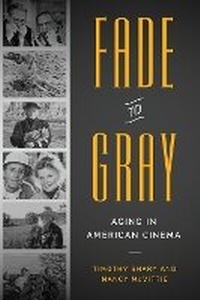
Fade to Gray
Aging in American Cinema
Published on 6. September 2016
Book
Paperback/Softback
288 pages
978-1-4773-1063-2 (ISBN)
Description
Winner, Choice Outstanding Academic Title, 2017
Americans are living longer and reinventing both work and retirement, but Hollywood movies barely hint at this reality of contemporary society. In many popular films, older characters fade into irrelevance, inactivity, or absurdity, or else they stay in the background as wise elders while younger characters provide the action. Most American films do not attempt to portray the rich variety of experiences or the sensitive aging issues that people confront in the years beyond fifty.
Fade to Gray offers one of the first extended studies of the portrayal of older people in American cinema from the silent era to the present. Writing in an accessible style for both general audiences and scholars, Timothy Shary and Nancy McVittie examine social attitudes toward aging through an analysis of hundreds of individual films, including such classics as You Can't Take It With You (1938), Rosemary's Baby (1968), Grumpy Old Men (1993), and Nebraska (2013). They show how representations of the aging process and depictions of older people embracing or enduring the various experiences of longer lives have evolved over the past century, as well as how film industry practices have both reflected and influenced perceptions of aging in American society. Exposing the social and political motivations for negative cinematic portrayals of the elderly, Fade to Gray also gives visibility to films that provide opportunities for better understanding and appreciation of the aged and the aging process.
Americans are living longer and reinventing both work and retirement, but Hollywood movies barely hint at this reality of contemporary society. In many popular films, older characters fade into irrelevance, inactivity, or absurdity, or else they stay in the background as wise elders while younger characters provide the action. Most American films do not attempt to portray the rich variety of experiences or the sensitive aging issues that people confront in the years beyond fifty.
Fade to Gray offers one of the first extended studies of the portrayal of older people in American cinema from the silent era to the present. Writing in an accessible style for both general audiences and scholars, Timothy Shary and Nancy McVittie examine social attitudes toward aging through an analysis of hundreds of individual films, including such classics as You Can't Take It With You (1938), Rosemary's Baby (1968), Grumpy Old Men (1993), and Nebraska (2013). They show how representations of the aging process and depictions of older people embracing or enduring the various experiences of longer lives have evolved over the past century, as well as how film industry practices have both reflected and influenced perceptions of aging in American society. Exposing the social and political motivations for negative cinematic portrayals of the elderly, Fade to Gray also gives visibility to films that provide opportunities for better understanding and appreciation of the aged and the aging process.
Reviews / Votes
"Fade to Gray proves a worthwhile and often insightful study that makes a compelling case for the vital importance of cinematic representation." (PopMatters)More details
Language
English
Place of publication
Austin, TX
United States
Target group
Professional and scholarly
Dimensions
Height: 229 mm
Width: 152 mm
Thickness: 20 mm
Weight
481 gr
ISBN-13
978-1-4773-1063-2 (9781477310632)
Copyright in bibliographic data and cover images is held by Nielsen Book Services Limited or by the publishers or by their respective licensors: all rights reserved.
Schweitzer Classification
Persons
TIMOTHY SHARY is the author or editor of several books on the representational politics of age and gender, including Generation Multiplex: The Image of Youth in American Cinema Since 1980 and Youth Culture in Global Cinema.
NANCY MCVITTIE is an instructor in the Department of Communication, Media, and Theatre at Northeastern Illinois University.
NANCY MCVITTIE is an instructor in the Department of Communication, Media, and Theatre at Northeastern Illinois University.
Content
Acknowledgments
Preface
Introduction
The Study of Aging in Cinema
Filmography and Terminology
Chapter 1: Generational Conflict in Prewar Hollywood Film
Elder Depictions in Early Cinema and the Silent Era
The Neediest among Us
Solid Pillars in Unstable Times
Elders in the Nuclear Era
Chapter 2: The Sensational Specter of Aging
An Audience Lost
The Formation of "Adult Films"
Competing for the Adult Market
Gender and Generation in Melodrama
Chapter 3: The Horrific and the Hilarious
The Horror of Aging
Youth Films Exploit Elders
Elder Kitsch at Its Limits
Chapter 4: The Emergence of the Elder Odyssey
The Road to a Subgenre of Penultimate Quests
The Elder Odyssey in Expansion
Investigating and Evading
The Road from Here
Chapter 5: The Repression and Release of Old Romance
The May-December Romance as a Genre Device
Calmly Increasing Honesty
Elder Romance Matures
The Life Left in Love
Chapter 6: Deceptions and Delusions of Elder Death
Early Elder Death
Death Gets Darker
Elder Legacies
Conclusion
Appendix A: Filmography of Significant Elder Roles in American Cinema
Appendix B: Subject Lists of Elder Films
Notes
Bibliography
Index
Preface
Introduction
The Study of Aging in Cinema
Filmography and Terminology
Chapter 1: Generational Conflict in Prewar Hollywood Film
Elder Depictions in Early Cinema and the Silent Era
The Neediest among Us
Solid Pillars in Unstable Times
Elders in the Nuclear Era
Chapter 2: The Sensational Specter of Aging
An Audience Lost
The Formation of "Adult Films"
Competing for the Adult Market
Gender and Generation in Melodrama
Chapter 3: The Horrific and the Hilarious
The Horror of Aging
Youth Films Exploit Elders
Elder Kitsch at Its Limits
Chapter 4: The Emergence of the Elder Odyssey
The Road to a Subgenre of Penultimate Quests
The Elder Odyssey in Expansion
Investigating and Evading
The Road from Here
Chapter 5: The Repression and Release of Old Romance
The May-December Romance as a Genre Device
Calmly Increasing Honesty
Elder Romance Matures
The Life Left in Love
Chapter 6: Deceptions and Delusions of Elder Death
Early Elder Death
Death Gets Darker
Elder Legacies
Conclusion
Appendix A: Filmography of Significant Elder Roles in American Cinema
Appendix B: Subject Lists of Elder Films
Notes
Bibliography
Index