

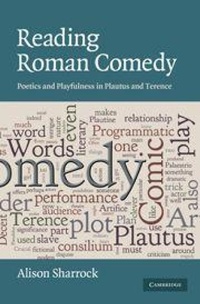
Reading Roman Comedy
Poetics and Playfulness in Plautus and Terence
1st Edition
Published on 12. January 2012
Book
Paperback/Softback
334 pages
978-1-107-40387-1 (ISBN)
Description
For many years the domain of specialists in early Latin, in complex metres, and in the reconstruction of texts, Roman comedy is now established in the mainstream of Classical literary criticism. Where most books stress the original performance as the primary location for the encountering of the plays, this book finds the locus of meaning and appreciation in the activity of a reader, albeit one whose manner of reading necessarily involves the imaginative reconstruction of performance. The texts are treated, and celebrated, as literary devices, with programmatic beginnings, middles, ends, and intertexts. All the extant plays of Plautus and Terence have at least a bit part in this book, which seeks to expose the authors' fabulous artificiality and artifice, while playing along with their differing but interrelated poses of generic humility.
Reviews / Votes
"...consistently illuminating. ...this study will be accessible to any reader with a strong interest in the subtleties of Roman comedy." --Choice "If this book helps to open the eyes of non-specialists to the richness of Roman comedy, it will have performed a great service." --PhoenixMore details
Series
Language
English
Place of publication
Cambridge
United Kingdom
Target group
Professional and scholarly
Product notice
Paperback (trade)
Illustrations
Worked examples or Exercises
Dimensions
Height: 229 mm
Width: 152 mm
Thickness: 20 mm
Weight
544 gr
ISBN-13
978-1-107-40387-1 (9781107403871)
Copyright in bibliographic data and cover images is held by Nielsen Book Services Limited or by the publishers or by their respective licensors: all rights reserved.
Schweitzer Classification
Other editions
Additional editions
Book
09/2009
Cambridge University Press
€77.90
Shipment within 15-20 days
Person
Content
1. Art and artifice; 2. Beginnings; 3. Plotting and playwrights; 4. Repeat performance; 5. Endings.