

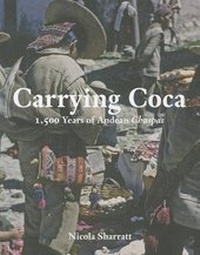
Carrying Coca
1,500 Years of Andean Chuspas
Published on 13. May 2014
Book
Paperback/Softback
128 pages
978-0-300-20072-0 (ISBN)
Description
Coca bags, or chuspas, represent one of the most enduring and resilient forms in the rich history of Andean weaving traditions. These small, elaborately decorated bags have been a constant presence in the archaeological, written, and visual record of the Andes for at least 1,500 years. In the details of their design and decoration, chuspa styles are testament to centuries of shifting trends and technologies in Andean textile arts. However, as carriers of coca leaves, chuspas are much more than aesthetically pleasing and technically sophisticated artworks. For millennia coca leaves have occupied an essential and unparalleled place in the daily lives, social customs, and ritual practices of Andean communities, in which chuspas also play central roles owing to their actual and symbolic connection with coca. Worldwide reactions to the plant and legislation of its uses have affected Andean traditions surrounding coca leaves since the Spanish conquest of the Andes in the sixteenth century and continue into the present.
Focusing on the collection of the American Museum of Natural History and examples from other museum collections around the world, this book examines the multifaceted history of coca bags, investigating their function and reception and the changes in their appearance. The book reveals how their history is a consequence not only of variations in Andean textile traditions, but also of the story of the sacred and contested substance they carry.
Distributed for the Bard Graduate Center
Exhibition Schedule:
Bard Graduate Center
(03/27/14-08/03/14)
Focusing on the collection of the American Museum of Natural History and examples from other museum collections around the world, this book examines the multifaceted history of coca bags, investigating their function and reception and the changes in their appearance. The book reveals how their history is a consequence not only of variations in Andean textile traditions, but also of the story of the sacred and contested substance they carry.
Distributed for the Bard Graduate Center
Exhibition Schedule:
Bard Graduate Center
(03/27/14-08/03/14)
More details
Language
English
Place of publication
United States
Target group
College/higher education
Product notice
Paperback (trade)
Illustrations
70 color illus.
Dimensions
Height: 222 mm
Width: 178 mm
Weight
272 gr
ISBN-13
978-0-300-20072-0 (9780300200720)
Copyright in bibliographic data and cover images is held by Nielsen Book Services Limited or by the publishers or by their respective licensors: all rights reserved.
Schweitzer Classification