

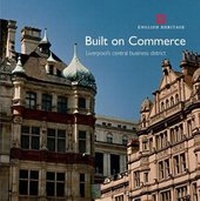
Built on Commerce
Liverpool's Central Business District
Published on 31. March 2008
Book
Paperback/Softback
104 pages
978-1-905624-34-8 (ISBN)
Description
The vast trade which passed through Liverpool's historic docks was managed and organised in an increasingly specialised and sophisticated business district. New and ever-larger offices, banks, warehouses and salerooms, often innovative in design and of spectacular architectural quality, were built in a highly concentrated area, which powerfully represents the confidence and prosperity of the period. This book, attractively illustrated by photographs and drawings, tells the story of the business quarter from the 18th century to the present day and emphasises that conservation of historic commercial buildings is important in retaining the area's distinctive character.
Reviews / Votes
"Each book tells its story in a concise and consistantly well-illustrated manner - Together they tell an epic story of a great city, a multitudinous tale of human endeavor, creativity, wealth, poverty and shared struggle." Context March 2009More details
Series
Language
English
Place of publication
United Kingdom
Publishing group
Liverpool University Press
Illustrations
103 illustrations; 103 Illustrations
Dimensions
Height: 210 mm
Width: 210 mm
Weight
310 gr
ISBN-13
978-1-905624-34-8 (9781905624348)
Copyright in bibliographic data and cover images is held by Nielsen Book Services Limited or by the publishers or by their respective licensors: all rights reserved.
Schweitzer Classification
Content
Acknowledgements
Foreword
1. The development of the business district
2. Specialised zones
3. Office buildings
Origin and development
Form and function
Lighting and technology
4. Servicing the commercial centre
5. Change, decline and legacy
6. Conserving the commercial centre
Notes
References and further reading
Foreword
1. The development of the business district
2. Specialised zones
3. Office buildings
Origin and development
Form and function
Lighting and technology
4. Servicing the commercial centre
5. Change, decline and legacy
6. Conserving the commercial centre
Notes
References and further reading