

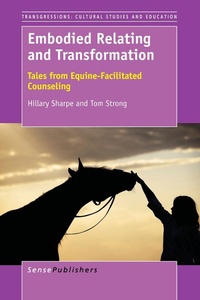
Embodied Relating and Transformation
Tales from Equine-Facilitated Counseling
Published on 1. January 2015
Book
Paperback/Softback
144 pages
978-94-6300-266-0 (ISBN)
Description
What kinds of embodied and relational learning can come from developing a responsive relationship with a horse? What insights might such ways of learning offer counselors and educators? In this book, the authors explore how women challenged by disordered eating develop transformative relational and embodied experiences through Equine-Facilitated Counseling (EFC).
Embodiment refers to how we engage with others and the world in often habitual and taken for granted ways that shape who we are and the relationships we have. These habitual ways of being provide us with a sense of stability, but they can sometimes become constraining and problematic (as in the case of eating disorders). Our corporeal engagement with the world structures such habits, but it can also afford us opportunities to experiment, modify, and challenge problematic patterns, and in some instances, create new and preferred ones.
The horses that participate in EFC present a vastly different sort of other who can help clients interrupt their sedimented ways of being and foster moments of responsivity that hold the power to become transformative. This theoretical context presents a different way of thinking about and practicing counseling--one that adds to a growing language of embodiment across a variety of disciplines. Chapters set forth a theoretical context for understanding the following: relationally embodied processes of stability and change, EFC, client stories from our research associated with riding horses in EFC, and implications we see for practice across different healing and learning contexts.
Embodiment refers to how we engage with others and the world in often habitual and taken for granted ways that shape who we are and the relationships we have. These habitual ways of being provide us with a sense of stability, but they can sometimes become constraining and problematic (as in the case of eating disorders). Our corporeal engagement with the world structures such habits, but it can also afford us opportunities to experiment, modify, and challenge problematic patterns, and in some instances, create new and preferred ones.
The horses that participate in EFC present a vastly different sort of other who can help clients interrupt their sedimented ways of being and foster moments of responsivity that hold the power to become transformative. This theoretical context presents a different way of thinking about and practicing counseling--one that adds to a growing language of embodiment across a variety of disciplines. Chapters set forth a theoretical context for understanding the following: relationally embodied processes of stability and change, EFC, client stories from our research associated with riding horses in EFC, and implications we see for practice across different healing and learning contexts.
More details
Series
Language
English
Place of publication
Germany
Target group
Professional and scholarly
Product notice
Paperback (trade)
Unsewn / adhesive bound
Dimensions
Height: 231 mm
Width: 151 mm
Thickness: 12 mm
Weight
231 gr
ISBN-13
978-94-6300-266-0 (9789463002660)
Copyright in bibliographic data and cover images is held by Nielsen Book Services Limited or by the publishers or by their respective licensors: all rights reserved.
Schweitzer Classification
Other editions
Additional editions
Hillary Sharpe | Tom Strong
Embodied Relating and Transformation
Tales from Equine-Facilitated Counseling
Book
01/2015
Brill
€114.50
Shipment within 15-20 days