


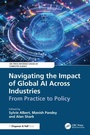
Navigating the Impact of Global AI Across Industries
Description
Artificial intelligence is transforming industries, societal norms, and the way we approach work and problem-solving. This book explores the implications of this transformation across diverse sectors, including business, education, healthcare, and beyond. It emphasizes the need for adaptability to manage rapid change, innovation to leverage AI's capabilities, and responsible stewardship to address ethical, governance, and sustainability challenges.
Bringing together a team of global contributors, this book examines the practicalities of AI implementation, addressing challenges and identifying strategies to facilitate smoother transitions to this transformative technology. It tackles critical issues such as governance, ethics, trust, and sustainability, which are essential to shaping the future of AI adoption. By offering insights into current practices and emerging trends, the book equips readers with the tools to navigate the complexities of AI and build resilient organizations in an era of constant change.
This book serves as an essential reference for professionals, researchers, policymakers, and anyone interested in the evolving role of AI. It is particularly relevant for those seeking to understand how AI can be leveraged to foster innovation, flexibility, and responsiveness in volatile environments. These elements are critical to ensuring AI's legacy is both effective and beneficial.
More details
Other editions
Additional editions
Persons
Dr. Sylvie Albert is a Professor of Leadership, Innovation and Strategy at the University of Winnipeg. Dr. Albert published several books on the development of Smart/ Intelligent/ Networked/ Sustainable Communities covering a range of topics from collaboration, innovation, measurement, and implementation with many examples from cities internationally.
Dr. Manish Pandey is a Professor of Economics at the University of Winnipeg where he has also held various senior leadership positions. His extensive portfolio of research focuses on productivity and comparative performance in labour economics, public economics, macroeconomics, and immigration.
Dr. Alan R. Shark, associate professor at Schar School of Policy and Government at George Mason University and member of the Center for Human AI Innovation in Society (CHAIS). Alan is the founder and Co-Chair of the Standing Panel on Technology Leadership, and member of ASPA's Section on Science and Technology in Government. He has over 12 book titles bearing his name.
Content
Foreword
Prologue
List of Contributors
1. Introduction
Sylvie Albert
2. Artificial Intelligence Adoption and the Labour Market: Impacts and Policy Options
Manish Pandey
3. The Global AI Regulatory Environment
Alfredo M. Ronchi
4. AI in food systems
Jeremy Millard, Alessandra de Seneen, Sébastien Grappe, Stéphane Grumbach
5. AI's Impact on Higher Education
Alan R. Shark
6. AI, Today and Tomorrow within the Financial World
Razak Shaikh
7. Artificial Intelligence and Its Impact on Local Governments
Alan R. Shark & Giorgio Prister
8. A Framework for Harnessing Responsible AI to Improve Government Services - Insights from Research
Dan Chenok and Phaedra Boinidiris
9. AI in the Health Sector
Mariane Cimino
10. AI in the Insurance Industry
Yelena Kropivnitskaya
11. AI in Criminal Justice and Public Safety: Navigating Opportunities and Challenges in Governmental Adoption
Paul Wormeli & Sarah Zhao
12. AI and The Ongoing Transition of Communications and Media Culture
Mohit Rajhans
13. The Strategic Role of AI in Trucking in North America
Dave Fulawka
14. Ensuring AI takes a Human-First Approach
Jeremy Millard & Latif Ladid
15. AI Responsibility: Bridging Ethical Guidelines to Enforceable Practice Through Digital Humanism
Craig S. Wright
16. Thoughts on AI and Sustainability
Daniele Tumietto
17. Conclusion: Shaping AI's Global Future
Sylvie Albert, Manish Pandey & Alan Shark