

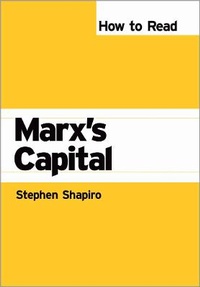
How to Read Marx's Capital
Published on 20. March 2008
Book
Hardback
192 pages
978-0-7453-2562-0 (ISBN)
Description
Capital Volume I is essential reading on many undergraduate courses, but the structure and style of the book can be confusing for students, leading them to abandon the text. This book is a clear guide to reading Marx's classic text, which explains the reasoning behind the book's structure and provides help with the more technical aspects that non-economists may find taxing.
Students are urged to think for themselves and engage with Marx's powerful methods of argument and explanation. Shapiro shows that Capital is key to understanding critical theory and cultural production.
This highly focused book will prove invaluable to students of politics, cultural studies and literary theory.
Students are urged to think for themselves and engage with Marx's powerful methods of argument and explanation. Shapiro shows that Capital is key to understanding critical theory and cultural production.
This highly focused book will prove invaluable to students of politics, cultural studies and literary theory.
More details
Series
Language
English
Place of publication
London
United Kingdom
Target group
Professional and scholarly
Product notice
Library binding
Dimensions
Height: 177 mm
Width: 125 mm
Weight
278 gr
ISBN-13
978-0-7453-2562-0 (9780745325620)
Copyright in bibliographic data and cover images is held by Nielsen Book Services Limited or by the publishers or by their respective licensors: all rights reserved.
Schweitzer Classification
Other editions
Additional editions
Stephen Shapiro
How to Read Marx's Capital
E-Book
03/2008
1st Edition
Pluto Press
€83.69
Available for download
Person
Stephen Shapiro is Professor of American Literature at the University of Warwick. He is the author of How to Read Marx's Capital (Pluto, 2008) and How to Read Foucault's Discipline and Punishment (Pluto, 2011).
Content
Preface
Acknowledgements
Part One: Commodities and Money
1. The Commodity
2. The Process of Exchange
3. Money, or the Circulation of Commodities
Part Two: The Transformation of Money into Capital
4. The General Formula for Capital
5. Contradictions in the General Formula
6. The Sale and Purchase of Labour-power
Part Three: The Production of Absolute Surplus-Value
7. The Labour Process and the Valorisation Process
8. Constant Capital and Variable Capital
9. The Rate of Surplus-Value
10. The Working Day
11. The Rate and Mass of Surplus-Value
Part Four: The Production of Relative Surplus-Value
12. The Concept of Relative Surplus-Value
13. Co-operation
14. The Division of Labour and Manufacture
15. Machinery and Large-Scale Industry
Part Five: The Production of Absolute and Relative Surplus-Value
16. Absolute and Relative Surplus-Value
17. Changes of Magnitude in the Price of Labour-power and in Surplus-value
18: Different Formulae for the Rate of Surplus-Value
Part Six: Wages
19. The Transformation of the Value (and Respectively the Price) of Labour-power into Wages
20. Time-Wages
21. Piece Wages
22. National Differences in Wages
Part Seven: The Process of Accumulation of Capital
23. Simple Reproduction
24. The Transformation of Surplus-Value into Capital
25. The General Law of Capitalist Accumulation
Part Eight: So-Called Primitive ["Originating"] Accumulation
26. The Secret of Primitive Accumulation
27. The Expropriation of the Agricultural Population from the Land
28. Bloody Legislation Against the Expropriated Since the End of the Fifteenth Century. The Forcing Down of Wages by Act of Parliament
29. The Genesis of the Capitalist Farmer
30. Impact of the Agricultural Revolution on Industry. The Creation of a Home Market for Industrial Capital
31. The Genesis of the Industrial Capitalist
32. The Historical Tendency of Capitalist Accumulation
33. The Modern Theory of Colonisation
Suggestions for Further Reading
Index
Acknowledgements
Part One: Commodities and Money
1. The Commodity
2. The Process of Exchange
3. Money, or the Circulation of Commodities
Part Two: The Transformation of Money into Capital
4. The General Formula for Capital
5. Contradictions in the General Formula
6. The Sale and Purchase of Labour-power
Part Three: The Production of Absolute Surplus-Value
7. The Labour Process and the Valorisation Process
8. Constant Capital and Variable Capital
9. The Rate of Surplus-Value
10. The Working Day
11. The Rate and Mass of Surplus-Value
Part Four: The Production of Relative Surplus-Value
12. The Concept of Relative Surplus-Value
13. Co-operation
14. The Division of Labour and Manufacture
15. Machinery and Large-Scale Industry
Part Five: The Production of Absolute and Relative Surplus-Value
16. Absolute and Relative Surplus-Value
17. Changes of Magnitude in the Price of Labour-power and in Surplus-value
18: Different Formulae for the Rate of Surplus-Value
Part Six: Wages
19. The Transformation of the Value (and Respectively the Price) of Labour-power into Wages
20. Time-Wages
21. Piece Wages
22. National Differences in Wages
Part Seven: The Process of Accumulation of Capital
23. Simple Reproduction
24. The Transformation of Surplus-Value into Capital
25. The General Law of Capitalist Accumulation
Part Eight: So-Called Primitive ["Originating"] Accumulation
26. The Secret of Primitive Accumulation
27. The Expropriation of the Agricultural Population from the Land
28. Bloody Legislation Against the Expropriated Since the End of the Fifteenth Century. The Forcing Down of Wages by Act of Parliament
29. The Genesis of the Capitalist Farmer
30. Impact of the Agricultural Revolution on Industry. The Creation of a Home Market for Industrial Capital
31. The Genesis of the Industrial Capitalist
32. The Historical Tendency of Capitalist Accumulation
33. The Modern Theory of Colonisation
Suggestions for Further Reading
Index