

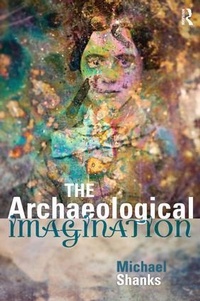
The Archaeological Imagination
1st Edition
Published on 31. March 2012
Book
Paperback/Softback
167 pages
978-1-59874-362-3 (ISBN)
Description
Archaeology is a way of acting and thinking-about what is left of the past, about the temporality of what remains, about material and temporal processes to which people and their goods are subject, about the processes of order and entropy, of making, consuming and discarding at the heart of human experience. These elements, and the practices that archaeologists follow to uncover them, is the essence of the archaeological imagination. In this extended essay, renowned archaeological theorist Michael Shanks offers his colleagues and students a window on this imaginative world of past and present and the creative role archaeology can play in uncovering it, analyzing it, and interpreting it.
More details
Language
English
Place of publication
Walnut Creek
United States
Target group
College/higher education
Product notice
Paperback (trade)
Unsewn / adhesive bound
Illustrations
illustrations, references, index
Dimensions
Height: 229 mm
Width: 155 mm
Thickness: 10 mm
Weight
281 gr
ISBN-13
978-1-59874-362-3 (9781598743623)
Copyright in bibliographic data and cover images is held by Nielsen Book Services Limited or by the publishers or by their respective licensors: all rights reserved.
Schweitzer Classification
Other editions
Additional editions
Michael Shanks
The Archaeological Imagination
Book
03/2012
1st Edition
Left Coast Press Inc
€230.65
Shipment within 3-4 weeks
Person
Michael Shanks is the Omar and Althea Dwyer Hoskins Professor of Classical Archaeology at Stanford University, a Director of Stanford Humanities Lab, Director of Metamedia in Stanford Archaeology Center, and a founder of Stanford Strategy Center. He has worked on the archaeology of early farmers in northern Europe, antiquarians in Scotland, Greek cities in the Mediterranean as well as the applications of archaeology to the contemporary world. His archaeology lab at Stanford is pioneering the use of Web 2.0 technologies to facilitate collaborative multidisciplinary research networks in design history, media materialities and long-term historical trends. His books, including ReConstructing Archaeology (1987), Social Theory and Archaeology (1987), Experiencing the Past (1992), Art and the Early Greek State (1999) and Theatre/Archaeology (2001) have made him a key figure in contemporary archaeological thought.
Content
Introduction; Chapter 1 We Are All Archaeologists Now; Chapter 2 Debatable Lands; Chapter 3 An Archaeological Narratology; Chapter 4 The Archaeological Imagination;