

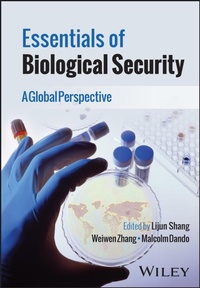
Essentials of Biological Security
A Global Perspective
1st Edition
Published on 11. April 2024
Book
Hardback
320 pages
978-1-394-18901-4 (ISBN)
Description
Essentials of Biological Security A guide to minimizing the threat of misusing benignly intended and dual-use biological research
In Essentials of Biological Security: A Global Perspective, a team of distinguished researchers delivers a fundamental resource designed to raise awareness and understanding of biological security as it pertains to the malign manipulation of benignly intended scientific research.
Written by experts who have spent decades involved in biological security issues, the book is systematically organized to make it accessible to a wide range of life scientists likely to encounter dangerous opportunities for the deliberate misuse of their research. Readers will also find:
A thorough introduction to biological security and the chemical and biological weapons (CBW) threat spectrum
Comprehensive explorations of the history of biological weapons from antiquity to modern day
Practical discussions of dual-use technologies and how to minimize their risk
Expert analyses of the Biological and Toxin Weapons Convention and other relevant international agreements and organizations
Perfect for professionals working in life sciences, medicine, global health, biosafety, and biosecurity, Essentials of Biological Security: A Global Perspective will also benefit anyone with an interest in and being responsible for biological security.
In Essentials of Biological Security: A Global Perspective, a team of distinguished researchers delivers a fundamental resource designed to raise awareness and understanding of biological security as it pertains to the malign manipulation of benignly intended scientific research.
Written by experts who have spent decades involved in biological security issues, the book is systematically organized to make it accessible to a wide range of life scientists likely to encounter dangerous opportunities for the deliberate misuse of their research. Readers will also find:
A thorough introduction to biological security and the chemical and biological weapons (CBW) threat spectrum
Comprehensive explorations of the history of biological weapons from antiquity to modern day
Practical discussions of dual-use technologies and how to minimize their risk
Expert analyses of the Biological and Toxin Weapons Convention and other relevant international agreements and organizations
Perfect for professionals working in life sciences, medicine, global health, biosafety, and biosecurity, Essentials of Biological Security: A Global Perspective will also benefit anyone with an interest in and being responsible for biological security.
More details
Language
English
Place of publication
New York
United States
Target group
Professional and scholarly
Product notice
sewn/stitched
Cloth over boards
Dimensions
Height: 249 mm
Width: 172 mm
Thickness: 21 mm
Weight
760 gr
ISBN-13
978-1-394-18901-4 (9781394189014)
Copyright in bibliographic data and cover images is held by Nielsen Book Services Limited or by the publishers or by their respective licensors: all rights reserved.
Schweitzer Classification
Other editions
Additional editions
E-Book
02/2024
1st Edition
Wiley
€110.99
Available for download
E-Book
02/2024
1st Edition
Wiley
€110.99
Available for download
Persons
Lijun Shang, PhD, is Professor of Biomedical Sciences in the School of Human Sciences at London Metropolitan University, UK. He is the founding Director of the Biological Security Research Centre. His research focuses primarily on ion channels in the fields of health and disease.
Weiwen Zhang, PhD, is Baiyang Chair Professor of Microbiology and Biochemical Engineering at Tianjin University of China, China. His recent research is focused on synthetic biology and governance of dual-use issues, and he currently serves as Chief Scientist of the National Key Research and Development Program of Synthetic Biology in China.
Malcolm Dando, PhD, is a Fellow of the UK Royal Society of Biology. He is Emeritus Professor at the University of Bradford, UK and is the author of Neuroscience and the Problem of Dual Use: Neuroethics in New Brain Projects.
Weiwen Zhang, PhD, is Baiyang Chair Professor of Microbiology and Biochemical Engineering at Tianjin University of China, China. His recent research is focused on synthetic biology and governance of dual-use issues, and he currently serves as Chief Scientist of the National Key Research and Development Program of Synthetic Biology in China.
Malcolm Dando, PhD, is a Fellow of the UK Royal Society of Biology. He is Emeritus Professor at the University of Bradford, UK and is the author of Neuroscience and the Problem of Dual Use: Neuroethics in New Brain Projects.
Content
Chapter 1: Biosecurity After the Pandemic
Chapter 2: Falling between the Cracks and by the Sides: Can Disarmament Treaties Respond to Scientific and Technological Developments?
Chapter 3: A Multifaceted Threat
Chapter 4: Biological Weapons from the Ancient World to 1945
Chapter 5: Biological Weapons From 1946 to 2000
Chapter 6: The Problem of Dual Use in the 21st Century
Chapter 7: Key Cutting-edge Biotechnologies Today
Chapter 8: Convergence of Science and Technology
Chapter 9: Role of the Life Science Community in Strengthening the Web of Prevention for Biosafety and Biosecurity
Chapter 10: The 1925 Geneva Protocol and the BTWC
Chapter 11: Constraining the Weaponization of Pathogens and Toxic Chemicals through International Human Rights Law and International Humanitarian Law
Chapter 12: The Role of International Organisations in Biosecurity and the Prevention of Biological Warfare
Chapter 13: Laboratory Biorisk Management as a Key Tool for Scientists to Understand Future Biological Threats and Strengthen the Biological Weapons Convention
Chapter 14: Examples of Biorisk Management National Regulatory Frameworks
Chapter 15: Lessons from ePPP Research and the COVID-19 Pandemic
Chapter 16: The Hague Ethical Guidelines and the Tianjin Biosecurity Guidelines
Chapter 17: Engaging Scientists in Biorisk Management
Chapter 19: Where is the Governance of Dual-Use Science Going?
Chapter 20: Towards an International Biosecurity Education Network (IBSEN)
Appendix: The Tianjin Biosecurity Guidelines
Chapter 2: Falling between the Cracks and by the Sides: Can Disarmament Treaties Respond to Scientific and Technological Developments?
Chapter 3: A Multifaceted Threat
Chapter 4: Biological Weapons from the Ancient World to 1945
Chapter 5: Biological Weapons From 1946 to 2000
Chapter 6: The Problem of Dual Use in the 21st Century
Chapter 7: Key Cutting-edge Biotechnologies Today
Chapter 8: Convergence of Science and Technology
Chapter 9: Role of the Life Science Community in Strengthening the Web of Prevention for Biosafety and Biosecurity
Chapter 10: The 1925 Geneva Protocol and the BTWC
Chapter 11: Constraining the Weaponization of Pathogens and Toxic Chemicals through International Human Rights Law and International Humanitarian Law
Chapter 12: The Role of International Organisations in Biosecurity and the Prevention of Biological Warfare
Chapter 13: Laboratory Biorisk Management as a Key Tool for Scientists to Understand Future Biological Threats and Strengthen the Biological Weapons Convention
Chapter 14: Examples of Biorisk Management National Regulatory Frameworks
Chapter 15: Lessons from ePPP Research and the COVID-19 Pandemic
Chapter 16: The Hague Ethical Guidelines and the Tianjin Biosecurity Guidelines
Chapter 17: Engaging Scientists in Biorisk Management
Chapter 19: Where is the Governance of Dual-Use Science Going?
Chapter 20: Towards an International Biosecurity Education Network (IBSEN)
Appendix: The Tianjin Biosecurity Guidelines