

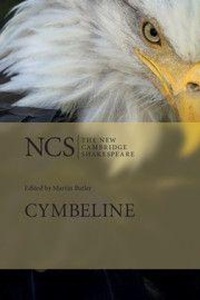
Cymbeline
Cymbeline
Published on 10. March 2005
Book
Hardback
268 pages
978-0-521-22878-7 (ISBN)
Description
The New Cambridge Shakespeare appeals to students worldwide for its up-to-date scholarship and emphasis on performance. The series features line-by-line commentaries and textual notes on the plays and poems. Introductions are regularly refreshed with accounts of new critical, stage and screen interpretations. Edited and introduced by Martin Butler, this first New Cambridge Shakespeare edition of Cymbeline takes full account of the critical and historical scholarship produced in the late twentieth century. It foregrounds the romance, tragicomedy and Jacobean stagecraft that shape the play and offers a refreshingly unsentimental reading of the heroine, Innogen. Butler pays greater attention than his predecessors to the politics of 1610, especially to questions of British union and nationhood. He also offers a lively account of Cymbeline's stage history from 1610 to the present day. The text has been edited from the 1623 Folio and features a detailed commentary on its linguistic and historical features.
More details
Series
Language
English
Place of publication
Cambridge
United Kingdom
Target group
College/higher education
Professional and scholarly
Interest Age: 12 years
Illustrations
14 Halftones, unspecified
Dimensions
Height: 235 mm
Width: 157 mm
Thickness: 20 mm
Weight
571 gr
ISBN-13
978-0-521-22878-7 (9780521228787)
Copyright in bibliographic data and cover images is held by Nielsen Book Services Limited or by the publishers or by their respective licensors: all rights reserved.
Schweitzer Classification
Other editions
Additional editions
William Shakespeare | Martin Butler
Cymbeline
E-Book
08/2013
1st Edition
Cambridge University Press
€9.99
Available for download
Book
03/2005
Cambridge University Press
€18.00
Shipment within 15-20 days
Persons
A Midsummer Night's Dream is a comedy written by William Shakespeare in 1595/96. It portrays the events surrounding the marriage of Theseus, the Duke of Athens, to Hippolyta, the former queen of the Amazons. These include the adventures of four young Athenian lovers and a group of six amateur actors (the mechanicals) who are controlled and manipulated by the fairies who inhabit the forest in which most of the play is set.The play is one of Shakespeare's most popular works for the stage and is widely performed across the world. It is unknown exactly when A Midsummer Night's Dream was written or first performed, but on the basis of topical references and an allusion to Edmund Spenser's Epithalamion, it is usually dated 1595 or early 1596. Some have theorised that the play might have been written for an aristocratic wedding (for example that of Elizabeth Carey, Lady Berkeley), while others suggest that it was written for the Queen to celebrate the feast day of St. John, but no evidence exists to support this theory. In any case, it would have been performed at The Theatre and, later, The Globe. Though it is not a translation or adaptation of an earlier work, various sources such as Ovid's Metamorphoses and Chaucer's "The Knight's Tale" served as inspiration. According to John Twyning, the play's plot of four lovers undergoing a trial in the woods was intended as a "riff" on Der Busant, a Middle High German poem. According to Dorothea Kehler, the writing period can be placed between 1594 and 1596, which means that Shakespeare had probably already completed Romeo and Juliet and had yet to start working on The Merchant of Venice. The play belongs to the early-middle period of the author, when Shakespeare devoted his attention to the lyricism of his works.
Content
Introduction (Date, Romance and folktale, Tragedy and tragicomedy, The woman's part, Romans and Britons, Cymbeline on stage); The play; 'Hark, hark, the lark'; Textual analysis; Reading list.