

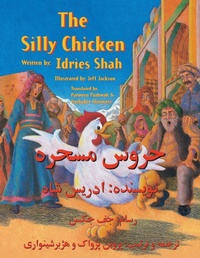
The Silly Chicken
English-Dari Edition
Published on 28. March 2017
Book
Paperback/Softback
40 pages
978-1-946270-18-4 (ISBN)
Description
(Bilingual English-Dari edition) This is a delightful and humorous tale about a chicken who learns to speak as we do - with unexpected consequences. The surprising events that follow intrigue young children and, and at the same time, alert them in a very amusing way to the dangers of being too quick to believe everything they hear. Illustrator Jeff Jackson creates a lively and lighthearted world, rich in color and expression, in which anything can happen. This tale is one of the many hundreds of Sufi developmental stories collected by Idries Shah from oral and written sources in Central Asia and the Middle East. For more than a thousand years, it has entertained young people and helped foster in them the ability to examine their assumptions and to think for themselves.
More details
Series
Language
English
Target group
Children/juvenile
US School Grade: Kindergarten, Interest Age: From 3 to 7 years
Product notice
Paperback (trade)
Unsewn / adhesive bound
Illustrations
Illustrations
Dimensions
Height: 280 mm
Width: 216 mm
Thickness: 4 mm
Weight
179 gr
ISBN-13
978-1-946270-18-4 (9781946270184)
Copyright in bibliographic data and cover images is held by Nielsen Book Services Limited or by the publishers or by their respective licensors: all rights reserved.
Schweitzer Classification
Persons
Idries Shah spent much of his life collecting and publishing Sufi classical narratives and teaching stories from oral and written sources in the Middle East and Central Asia. The tales he retold especially for children are published by Hoopoe Books in beautifully illustrated editions and have been widely commended - by Western educators and psychologists, the U.S. Library of Congress, National Public Radio and other media - for their unique ability to foster social-emotional development, thinking skills and perception in children and adults alike. Told for centuries, these stories express universal themes from the cultures that produced them, showing how much we have in common and can learn from each other. As noted by reviewers, such stories are more than just entertaining; familiarity with them provokes flexibility of thought, since each one contains levels of meaning that unfold in accordance with an individual's experience and understanding.