

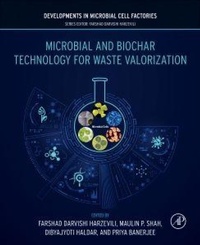
Microbial and Biochar Technology for Waste Valorization
Published on 1. June 2026
Book
Paperback/Softback
600 pages
978-0-443-27763-4 (ISBN)
Description
Microbial and Biochar Technology for Waste Valorization delves into the innovative integration of microbial and biochar technologies, presenting a compelling case for their combined utilization in waste reuse to aid environmental sustainability. The book opens with a discussion of current and emerging environmental issues and the need for implementing integrated microbe-biochar processes. Initial chapters explore the fundamentals of biochar, its sources, synthesis routes, characterization methods, its impact on soil, environment, and water microbiomes, and approaches to biochar production.
The book then delves deeper into its role in environmental remediation, its suitability as a microbe carrier, and the combination of biochar and microbes for various applications, including microbial fuel cells, biofertilizer, biopesticide, and water treatment processes. Final sections highlight the use of machine learning and AI for predicting biochar characteristics, biochar's potential in promoting a circular economy and carbon neutrality, and future directions for biochar-microbe applications.
The book then delves deeper into its role in environmental remediation, its suitability as a microbe carrier, and the combination of biochar and microbes for various applications, including microbial fuel cells, biofertilizer, biopesticide, and water treatment processes. Final sections highlight the use of machine learning and AI for predicting biochar characteristics, biochar's potential in promoting a circular economy and carbon neutrality, and future directions for biochar-microbe applications.
More details
Series
Language
English
Place of publication
San Diego
United States
Publishing group
Elsevier Science Publishing Co Inc
Target group
Professional and scholarly
College/higher education
Dimensions
Height: 235 mm
Width: 191 mm
Weight
450 gr
ISBN-13
978-0-443-27763-4 (9780443277634)
Copyright in bibliographic data and cover images is held by Nielsen Book Services Limited or by the publishers or by their respective licensors: all rights reserved.
Schweitzer Classification
Other editions
Additional editions
Maulin P. Shah | Dibyajyoti Haldar | Priya Banerjee
Microbial and Biochar Technology for Waste Valorization
E-Book
05/2026
Elsevier
€166.99
Available for download
Persons
Dr. Maulin P. Shah is an active researcher and microbial biotechnologist with diverse research interest. His primary interest is the environment, the quality of our living resources and the ways that bacteria can help to manage and degrade toxic wastes and restore environmental health. Consequently, His work has been focused to assess the impact of industrial pollution on microbial diversity of wastewater following cultivation dependant and cultivation independent analysis.
Dr. Dibyajyoti Haldar is an Associate Professor in the Division of Biotechnology at Manipal Institute of Technology, Manipal Academy of Higher Education (MAHE), India. Prior to this he was Assistant Professor at Karunya Institute of Technology and Sciences, Coimbatore, India. Dr. Haldar completed his Post-Doc as an Institute Post-doctoral Fellow at Centre for the Environment of Indian Institute of Technology, Guwahati. He obtained his Ph.D. degree in Biochemical Engineering from National Institute of Technology Agartala, India and M. Tech in Environmental Science and Technology from National Institute of Technology Durgapur, India. of Technology Durgapur (NITDGP), India. His research work includes conversion of lignocellulosic biomass into fermentable sugars, enzymatic hydrolysis and kinetics, biofuels, and formation of value-added products derived from agricultural wastes and processes intensification. Dr. Haldar has published more than 50 research and review articles in various SCI-Indexed reputed international journals of high impact factors. Apart from that, Dr. Haldar is the co-author of 4 books published by Elsevier. Moreover, he has also contributed few book chapters published by international publishers.
In 2023, Dr. Haldar was enlisted on the World's Top 2% Scientist list ranked by Stanford University, USA.
Priya Banerjee is currently Assistant Professor at the Department of Environmental Studies, Centre for Distance and Online Education, Rabindra Bharati University, Kolkata, India. She completed her PhD from the Department of Environmental Science, University of Calcutta, Kolkata, India. She has published numerous journal articles, book chapters and edited 8 books. She has also participated in various national and international seminars and received awards for best presentations. Her current research interests include smart waste management, resource circularity and environmental sustainability. She has been teaching for the last ten years and is presently in research collaborations with several national and international institutes.
Dr. Dibyajyoti Haldar is an Associate Professor in the Division of Biotechnology at Manipal Institute of Technology, Manipal Academy of Higher Education (MAHE), India. Prior to this he was Assistant Professor at Karunya Institute of Technology and Sciences, Coimbatore, India. Dr. Haldar completed his Post-Doc as an Institute Post-doctoral Fellow at Centre for the Environment of Indian Institute of Technology, Guwahati. He obtained his Ph.D. degree in Biochemical Engineering from National Institute of Technology Agartala, India and M. Tech in Environmental Science and Technology from National Institute of Technology Durgapur, India. of Technology Durgapur (NITDGP), India. His research work includes conversion of lignocellulosic biomass into fermentable sugars, enzymatic hydrolysis and kinetics, biofuels, and formation of value-added products derived from agricultural wastes and processes intensification. Dr. Haldar has published more than 50 research and review articles in various SCI-Indexed reputed international journals of high impact factors. Apart from that, Dr. Haldar is the co-author of 4 books published by Elsevier. Moreover, he has also contributed few book chapters published by international publishers.
In 2023, Dr. Haldar was enlisted on the World's Top 2% Scientist list ranked by Stanford University, USA.
Priya Banerjee is currently Assistant Professor at the Department of Environmental Studies, Centre for Distance and Online Education, Rabindra Bharati University, Kolkata, India. She completed her PhD from the Department of Environmental Science, University of Calcutta, Kolkata, India. She has published numerous journal articles, book chapters and edited 8 books. She has also participated in various national and international seminars and received awards for best presentations. Her current research interests include smart waste management, resource circularity and environmental sustainability. She has been teaching for the last ten years and is presently in research collaborations with several national and international institutes.
Editor
Environmental Microbiology Consultant, Gujarat, India
Department of Biotechnology Manipal Institute of Technology Manipal Academy of Higher Education (MAHE), Manipal Karnataka, India
Assistant Professor, Department of Environmental Studies, Centre for Distance and Online Education, Rabindra Bharati University, Kolkata, India
Content
1. Different types of waste biomass for biochar synthesis
2. Biochar and its impact on soil, environment, and water microbiome
3. Advantages and limitations of thermo-chemical reactions for biochar generation
4. Biochar modifications for environmental applications
5. Energy production from engineered biochar
6. Biochar applications in environmental remediation
7. Biochar for augmenting bacterial growth
8. Biochar as a microbe carrier
9. Integrated application of microorganisms and biochar for pollution remediation
10. Application of biochar in microbial fuel cells (MFC)
11. Application of biochar in microbial electrochemical cells
12. Biochar and microbes as biofertilizers
13. Biochar and microbes as biopesticides
14. Response of microbial communities to biochar-amended soils
15. Effect of biochar on the carbon-sequestering ability of microbes
16. Biochar and microbial signaling
17. Machine learning and AI for predicting biochar characteristics
18. Microbe-immobilized biochar as an approach to the circular economy (CE)
19. Modified biochar for industrial applications
20. Sustainability of modified biochar-based water treatment processes
2. Biochar and its impact on soil, environment, and water microbiome
3. Advantages and limitations of thermo-chemical reactions for biochar generation
4. Biochar modifications for environmental applications
5. Energy production from engineered biochar
6. Biochar applications in environmental remediation
7. Biochar for augmenting bacterial growth
8. Biochar as a microbe carrier
9. Integrated application of microorganisms and biochar for pollution remediation
10. Application of biochar in microbial fuel cells (MFC)
11. Application of biochar in microbial electrochemical cells
12. Biochar and microbes as biofertilizers
13. Biochar and microbes as biopesticides
14. Response of microbial communities to biochar-amended soils
15. Effect of biochar on the carbon-sequestering ability of microbes
16. Biochar and microbial signaling
17. Machine learning and AI for predicting biochar characteristics
18. Microbe-immobilized biochar as an approach to the circular economy (CE)
19. Modified biochar for industrial applications
20. Sustainability of modified biochar-based water treatment processes