

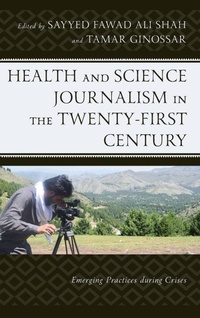
Health and Science Journalism in the Twenty-First Century
Emerging Practices during Crises
Published on 15. February 2025
Book
Hardback
232 pages
978-1-6669-4958-2 (ISBN)
Description
This edited volume explores the evolving practices and essential role of health and science journalists as they cover topics like conflict, displacement, and global pandemics. Amid a changing media landscape and new communication technologies, journalists in various countries report facing similar key challenges, stressors, and threats to professionalism. Contributors identify and explore these shared challenges, including funding cuts, unrealistic expectations for productivity, public mistrust and disregard for facts, and increasingly polarized coverage, and they note that these challenges are further intensified for journalists living and working in the Global South. Factors like the COVID-19 pandemic and geopolitical conflict continue to disrupt economic and social systems and increase global inequities, including health outcomes, making the role of health and science journalists more crucial than ever. Contributors to this volume provide diverse perspectives and methodologies across a spectrum of communities and regions, unpacking the numerous roles that journalists and media organizations play during crises with chapters investigating topics including newsroom experiences, perceived influences on their professional identities, and the use of AI in journalism. Ultimately, this book illustrates the dramatic changes and new challenges to health and science journalism in the twenty-first century and highlights the resilience and adaptability of these journalists as they navigate unprecedented challenges to inform the public. Scholars of journalism, communication, public health, sociology, and political science will find this book of particular interest.
Reviews / Votes
I am very impressed with the new book, Health and Science Journalism in the 21st Century: Emerging Practices during Crises edited by Sayyed Fawad Ali Shah and Tamar Ginossar. The book clearly describes the crucial roles that journalism performs in disseminating relevant health information to key publics, especially during health crises, while also carefully examining major communication challenges faced by journalists. Given the experience of serious communication problems that emerged during the COVID global pandemic, the chapter authors examine the powerful problematic influences that partisan politics had on the framing of health and science information by different news sources that ultimately transformed the pandemic into an infodemic! The sharing of misinformation, disinformation, and conspiracy theories frequently distorted the presentation of relevant health and science information. The same kinds of difficult communication issues challenged media coverage of many other health crises, including the dissemination of important information about climate change, vaccination, nutrition, floods, and wildfires! The book not only identifies these problems but also suggests how to overcome these communication challenges by applying key principles of media ethics, health and media literacy, fact-checking, collaboration, and multi-channel dissemination of relevant health and science information. I highly recommend this book to all those who are interested in media, journalism, communication, public health, and effective responses to public health crises! * Gary L. Kreps, Professor of Communication, George Mason University, USA *More details
Language
English
Place of publication
United States
Publishing group
Bloomsbury Publishing Plc
Target group
Professional and scholarly
Illustrations
11 BW Illustrations, 4 Tables
Dimensions
Height: 235 mm
Width: 157 mm
Thickness: 17 mm
Weight
502 gr
ISBN-13
978-1-6669-4958-2 (9781666949582)
Copyright in bibliographic data and cover images is held by Nielsen Book Services Limited or by the publishers or by their respective licensors: all rights reserved.
Schweitzer Classification
Other editions
Additional editions
Health and Science Journalism in the Twenty-First Century
Emerging Practices During Crises
E-Book
03/2025
1st Edition
Lexington Books
€90.99
Available for download
Health and Science Journalism in the Twenty-First Century
Emerging Practices During Crises
E-Book
02/2025
Lexington Books
€90.99
Available for download
Persons
Sayyed Fawad Ali Shah is assistant professor in the School of Communication and Journalism at Auburn University.
Tamar Ginossar is professor in the Department of Communication and Journalism and the BA/MD Program at the University of New Mexico.
Tamar Ginossar is professor in the Department of Communication and Journalism and the BA/MD Program at the University of New Mexico.
Content
Chapter One: Health Journalists' Views of Their Work Amid a Pandemic and U.S. Partisan Political Conflict
Maria E. Len-Rios, Amanda Hinnant, and Rachel Young
Chapter Two: Crisis Journalism and Professional Role Conceptions: A Survey of Journalists in Bangladesh
Khairul Islam and Pradeep Sopory
Chapter Three: Fighting COVID-19 Vaccine Hesitancy in Africa: Reflections of Journalistic Attitudes in Coverage
Abena Yeboah-Banin, Gilbert Kuuim Muobom Tietaah, Audrey Gadzekpo, Jade Ampomaah Baah, and Daniel Kwame Ampofo Adjei
Chapter Four: Journalists' Perspectives on Artificial Intelligence and Health and Science News Coverage in Ghana
Gifty Appiah Adjei
Chapter Five: Collaboration is Key: How Rapidly Mobilized Journalist-Researcher Task Forces can Tackle Crisis Communication During a Global Pandemic
Natasha A. Strydhorst, Asheley R. Landrum, Kat Snow, Sue Ellen, Sevda Eris, Scott Burg
Chapter Six: Communicating Health Information to Rural Communities in the 21st Century: Local Journalists as Trusted Messengers
Ch'Ree Essary, Natasha Strydhorst, Javier Morales Riech, Asheley R. Landrum
Chapter Seven: Journalists' Responsibility in Communicating about Public and Corporate Health Crises: Opportunities Afforded by Social Media
Janine Nadine Blessing, Cassandra L.C. Troy, Nicholas Eng, Jin Chen
Chapter Eight: Literacy in Science and Journalism as a Weapon in the Post-truth Era Crisis
Avshalom Ginossar
Chapter Nine: Understanding Climate Journalism in Pakistan
Shabir Hussain and Jamal Ud Din
Maria E. Len-Rios, Amanda Hinnant, and Rachel Young
Chapter Two: Crisis Journalism and Professional Role Conceptions: A Survey of Journalists in Bangladesh
Khairul Islam and Pradeep Sopory
Chapter Three: Fighting COVID-19 Vaccine Hesitancy in Africa: Reflections of Journalistic Attitudes in Coverage
Abena Yeboah-Banin, Gilbert Kuuim Muobom Tietaah, Audrey Gadzekpo, Jade Ampomaah Baah, and Daniel Kwame Ampofo Adjei
Chapter Four: Journalists' Perspectives on Artificial Intelligence and Health and Science News Coverage in Ghana
Gifty Appiah Adjei
Chapter Five: Collaboration is Key: How Rapidly Mobilized Journalist-Researcher Task Forces can Tackle Crisis Communication During a Global Pandemic
Natasha A. Strydhorst, Asheley R. Landrum, Kat Snow, Sue Ellen, Sevda Eris, Scott Burg
Chapter Six: Communicating Health Information to Rural Communities in the 21st Century: Local Journalists as Trusted Messengers
Ch'Ree Essary, Natasha Strydhorst, Javier Morales Riech, Asheley R. Landrum
Chapter Seven: Journalists' Responsibility in Communicating about Public and Corporate Health Crises: Opportunities Afforded by Social Media
Janine Nadine Blessing, Cassandra L.C. Troy, Nicholas Eng, Jin Chen
Chapter Eight: Literacy in Science and Journalism as a Weapon in the Post-truth Era Crisis
Avshalom Ginossar
Chapter Nine: Understanding Climate Journalism in Pakistan
Shabir Hussain and Jamal Ud Din