

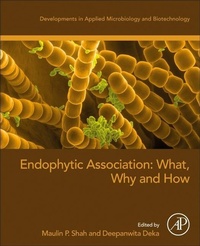
Endophytic Association: What, Why and How
Published on 14. November 2022
Book
Paperback/Softback
578 pages
978-0-323-91245-7 (ISBN)
Description
Endophytic Association: What, Why, and How focuses on the endophytic association of plants, how they have originated inside the host, their importance, and how they are beneficial for the environment, as well as humans. The book discusses how using endophytic microbes in agricultural fields can be enriched without impacting environment negatively, and how they can be utilized for pharmaceutical purposes, including bioremediation. It includes advanced and up-to-date information, as well as future directions for young researchers and scientists who are working in the field of agriculture, pharmaceuticals, bio nanotechnology and bioremediation of environmental contaminants for environmental protection and sustainable development.
More details
Series
Language
English
Place of publication
Oxford
United Kingdom
Publishing group
Elsevier Science & Technology
Target group
Professional and scholarly
Product notice
Paperback (trade)
Unsewn / adhesive bound
Illustrations
100 illustrations (50 in full color); Illustrations
Dimensions
Height: 234 mm
Width: 192 mm
Thickness: 28 mm
Weight
1157 gr
ISBN-13
978-0-323-91245-7 (9780323912457)
Copyright in bibliographic data and cover images is held by Nielsen Book Services Limited or by the publishers or by their respective licensors: all rights reserved.
Schweitzer Classification
Other editions
Additional editions
Maulin P. Shah | Deepanwita Deka
Endophytic Association: What, Why and How
E-Book
11/2022
Academic Press
€130.00
Available for download
Persons
Dr. Maulin P. Shah is a distinguished environmental scientist, academician, and globally recognized expert in the fields of environmental biotechnology and sustainable
wastewater treatment. He has made significant contributions to advancing eco-friendly
technologies for pollution control, particularly through innovative biological treatment processes. Dr. Shah holds extensive academic and research experience, with a strong focus on
industrial wastewater treatment, bioremediation, and microalgae-based technologies. His work emphasizes the integration of sustainability principles with practical engineering solutions, helping industries reduce their environmental footprint.
Remarkably, Dr. Shah has edited over 300+ books covering a wide spectrum of cutting-edge domains, including industrial wastewater microbiology, bioremediation, biodegradation, algal biotechnology, biofuel, bioenergy, circular economy, metagenomics related to wastewater treatment, and enzyme engineering. This exceptional editorial contribution reflects his deep expertise and unparalleled commitment to advancing global knowledge in environmental science.
Over the years, he has also authored and contributed to numerous high-impact
research papers and scholarly books published by reputed international publishers. His
publications are widely cited and serve as essential references for researchers, academicians, and industry professionals worldwide.
He is actively associated as an Editorial Board Member in more than 30 high-reputed
international journals affiliated with leading organizations and publishers such as
International Water Association, American Chemical Society, Royal Society of Chemistry,
Elsevier, Springer, Taylor & Francis, Wiley, IOP Publishing, Apple Academic Press,
Scrivener Publishing, and Bentham Science Publishers. His extensive editorial involvement
highlights his leadership and recognition in the global scientific community.
Dr. Shah is widely recognized for his collaborative research with leading scientists
across the globe, promoting interdisciplinary solutions to complex environmental challenges.
His work effectively bridges the gap between fundamental research and real-world industrial
applications. In addition to his research excellence, he has been invited as a keynote speaker at numerous national and international conferences, where he shares valuable insights on sustainable development, wastewater management, and environmental innovation. He is also deeply committed to mentoring students and young researchers, fostering academic growth and inspiring future leaders in environmental science and engineering.
Beyond academia, Dr. Shah contributes to industry-oriented solutions and policy-
relevant research aimed at environmental protection, resource recovery, and sustainable
development. Through his relentless dedication and visionary approach, Dr. Maulin P. Shah
has established himself as a leading authority in environmental sustainability, committed to
building a cleaner, greener, and more sustainable future. Dr. Deepanwita Deka received her B.Sc. degree (2009) and M.Sc. degree (2011) in Botany with specialization Microbiology from Gauhati University, Guwahati, Assam, India. She earned her M.Phil. and Ph.D. degree in 2013 and 2020 respectively from Microbial Ecology Laboratory, Department of Botany, Gauhati University. She efficiently worked on Plant and Pharmaceutical microbiology during her M.Phil. and Ph.D. research. She is an active researcher and her research interests cover mainly Plant-microbe interactions, Agricultural microbiology, Pharmaceutical microbiology, Environmental Microbiology, Bioremediation, Myco-Nanoparticles etc. Dr. Deka received many scholarships, awards and fellowship during her education. She has many publications in different National and International Journals and Books (Elsevier, Springer, CRC Press etc.) on various aspects of microbiology covering her interests. She is the editor of 3 books international repute (1 Elsevier and 2 Springer).
wastewater treatment. He has made significant contributions to advancing eco-friendly
technologies for pollution control, particularly through innovative biological treatment processes. Dr. Shah holds extensive academic and research experience, with a strong focus on
industrial wastewater treatment, bioremediation, and microalgae-based technologies. His work emphasizes the integration of sustainability principles with practical engineering solutions, helping industries reduce their environmental footprint.
Remarkably, Dr. Shah has edited over 300+ books covering a wide spectrum of cutting-edge domains, including industrial wastewater microbiology, bioremediation, biodegradation, algal biotechnology, biofuel, bioenergy, circular economy, metagenomics related to wastewater treatment, and enzyme engineering. This exceptional editorial contribution reflects his deep expertise and unparalleled commitment to advancing global knowledge in environmental science.
Over the years, he has also authored and contributed to numerous high-impact
research papers and scholarly books published by reputed international publishers. His
publications are widely cited and serve as essential references for researchers, academicians, and industry professionals worldwide.
He is actively associated as an Editorial Board Member in more than 30 high-reputed
international journals affiliated with leading organizations and publishers such as
International Water Association, American Chemical Society, Royal Society of Chemistry,
Elsevier, Springer, Taylor & Francis, Wiley, IOP Publishing, Apple Academic Press,
Scrivener Publishing, and Bentham Science Publishers. His extensive editorial involvement
highlights his leadership and recognition in the global scientific community.
Dr. Shah is widely recognized for his collaborative research with leading scientists
across the globe, promoting interdisciplinary solutions to complex environmental challenges.
His work effectively bridges the gap between fundamental research and real-world industrial
applications. In addition to his research excellence, he has been invited as a keynote speaker at numerous national and international conferences, where he shares valuable insights on sustainable development, wastewater management, and environmental innovation. He is also deeply committed to mentoring students and young researchers, fostering academic growth and inspiring future leaders in environmental science and engineering.
Beyond academia, Dr. Shah contributes to industry-oriented solutions and policy-
relevant research aimed at environmental protection, resource recovery, and sustainable
development. Through his relentless dedication and visionary approach, Dr. Maulin P. Shah
has established himself as a leading authority in environmental sustainability, committed to
building a cleaner, greener, and more sustainable future. Dr. Deepanwita Deka received her B.Sc. degree (2009) and M.Sc. degree (2011) in Botany with specialization Microbiology from Gauhati University, Guwahati, Assam, India. She earned her M.Phil. and Ph.D. degree in 2013 and 2020 respectively from Microbial Ecology Laboratory, Department of Botany, Gauhati University. She efficiently worked on Plant and Pharmaceutical microbiology during her M.Phil. and Ph.D. research. She is an active researcher and her research interests cover mainly Plant-microbe interactions, Agricultural microbiology, Pharmaceutical microbiology, Environmental Microbiology, Bioremediation, Myco-Nanoparticles etc. Dr. Deka received many scholarships, awards and fellowship during her education. She has many publications in different National and International Journals and Books (Elsevier, Springer, CRC Press etc.) on various aspects of microbiology covering her interests. She is the editor of 3 books international repute (1 Elsevier and 2 Springer).
Content
1. Pathogen Control Using Mangrove Endophytic Fungi
2. Endophytic fungi mediated synthesis of gold and silver nanoparticles
3. Endophytes: A novel tool for sustainable agriculture
4. The Role of Bioactive metabolites synthesized by endophytes against MDR Human Pathogens
5. Endophyte induced bioremediation of toxic metals/metalloids
6. Endophytes for biological control of plant diseases
7. Exploring the role of Endophytes and their Bioactive metabolite against various MDR microbes causing diseases in humans
8. Endophytic Bacteria for Drug Discovery and Bioremediation of Heavy Metals
9. Mechanism of biological Control of plant diseases by Endophytes
10. The Role of Endophytes to Boost the Plant Immunity
11. Endophytes based nanoparticles: a novel source of biological activities
12. Nanoparticles: Characters, Applications and Synthesis by Endophytes
13. Nanoparticles: Characters, Applications and Synthesis by Endophytes
14. Endophytes and their secondary metabolites against human pathogenic MDR microbes
15. Sustainable agricultural approach through endophytes
16. Role of endophytes in Bio-nanotechnology
17. Antagonistic activity of endophytic nanoparticles against plant and human pathogens
18. Molecular mechanism of production of nanoparticles by endophytes
19. Management of Plant Diseases using Endophytes as Biocontrol Agents: Present status and future prospects
20. Application of bioactive metabolites produced by endophytes against MDR microbes causing diseases in humans
21. Importance of Endophytes and Mechanisms of their Interactions with Host-Plants
22. Endophytic microbes: A potential source of bioactive metabolites with therapeutic values
23. Plant growth-promoting potential of endophytic bacteria for sustainable agriculture
24. Green Synthesis of Nanoparticles by Endophytes
25. Endophytes: Potential agents for sustainable agriculture practices
26. Induction of stress tolerance in plants by endophytes for sustainable development
2. Endophytic fungi mediated synthesis of gold and silver nanoparticles
3. Endophytes: A novel tool for sustainable agriculture
4. The Role of Bioactive metabolites synthesized by endophytes against MDR Human Pathogens
5. Endophyte induced bioremediation of toxic metals/metalloids
6. Endophytes for biological control of plant diseases
7. Exploring the role of Endophytes and their Bioactive metabolite against various MDR microbes causing diseases in humans
8. Endophytic Bacteria for Drug Discovery and Bioremediation of Heavy Metals
9. Mechanism of biological Control of plant diseases by Endophytes
10. The Role of Endophytes to Boost the Plant Immunity
11. Endophytes based nanoparticles: a novel source of biological activities
12. Nanoparticles: Characters, Applications and Synthesis by Endophytes
13. Nanoparticles: Characters, Applications and Synthesis by Endophytes
14. Endophytes and their secondary metabolites against human pathogenic MDR microbes
15. Sustainable agricultural approach through endophytes
16. Role of endophytes in Bio-nanotechnology
17. Antagonistic activity of endophytic nanoparticles against plant and human pathogens
18. Molecular mechanism of production of nanoparticles by endophytes
19. Management of Plant Diseases using Endophytes as Biocontrol Agents: Present status and future prospects
20. Application of bioactive metabolites produced by endophytes against MDR microbes causing diseases in humans
21. Importance of Endophytes and Mechanisms of their Interactions with Host-Plants
22. Endophytic microbes: A potential source of bioactive metabolites with therapeutic values
23. Plant growth-promoting potential of endophytic bacteria for sustainable agriculture
24. Green Synthesis of Nanoparticles by Endophytes
25. Endophytes: Potential agents for sustainable agriculture practices
26. Induction of stress tolerance in plants by endophytes for sustainable development