

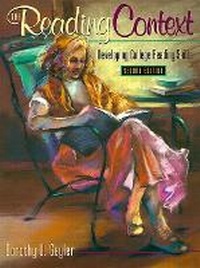
The Reading Context
Developing College Reading Skills
2nd Edition
Published on 22. May 2000
Book
Paperback/Softback
485 pages
978-0-205-30925-2 (ISBN)
Description
The Reading Context shows students how reading is a three-step process through a clear and easy-to-remember "prepare - read - respond" strategy.
The book starts where developmental students need to start: with an explanation of the context created by author, work, and reader. It also stresses the importance of thinking about who the writer is, what the author's purpose is, what kind of work students are about to read, and what they expect to gain from it.
Selections have been chosen to hold student interest while representing the kinds of material they will meet in their college assignments - textbook material from geology to psychology, from advertising to history, from health to economics. Chapters are filled with short pieces for illustration and practice and conclude with two or three longer selections. In each chapter, clear explanations of strategies to improve reading are supported by many exercises.
The text's eleven chapters form three sections. Chapters 1-4 comprise the "nuts and bolts" strategies for reading and introduce the idea of the reading context and active reading. In chapters 5-8, students examine an author's use of writing strategies as aids to comprehension and develop their own writing-to-learn strategies. Chapters 9-11 provide students with opportunities to read more widely: to study expressive and persuasive writing and explore a variety of works all designed to improve critical thinking skills.
The book starts where developmental students need to start: with an explanation of the context created by author, work, and reader. It also stresses the importance of thinking about who the writer is, what the author's purpose is, what kind of work students are about to read, and what they expect to gain from it.
Selections have been chosen to hold student interest while representing the kinds of material they will meet in their college assignments - textbook material from geology to psychology, from advertising to history, from health to economics. Chapters are filled with short pieces for illustration and practice and conclude with two or three longer selections. In each chapter, clear explanations of strategies to improve reading are supported by many exercises.
The text's eleven chapters form three sections. Chapters 1-4 comprise the "nuts and bolts" strategies for reading and introduce the idea of the reading context and active reading. In chapters 5-8, students examine an author's use of writing strategies as aids to comprehension and develop their own writing-to-learn strategies. Chapters 9-11 provide students with opportunities to read more widely: to study expressive and persuasive writing and explore a variety of works all designed to improve critical thinking skills.
More details
Edition
2nd edition
Language
English
Place of publication
United States
Publishing group
Pearson Education (US)
Target group
Professional and scholarly
Dimensions
Height: 233 mm
Width: 190 mm
Thickness: 21 mm
Weight
769 gr
ISBN-13
978-0-205-30925-2 (9780205309252)
Copyright in bibliographic data and cover images is held by Nielsen Book Services Limited or by the publishers or by their respective licensors: all rights reserved.
Schweitzer Classification
Other editions
New editions
Book
07/2003
3rd Edition
Pearson
€71.91
Article is exhausted; no reprint
Content
Preface.
1.The Reading Context.
The Reading Process.
Your Reading Profile.
The Engaged Reader.
Selection 1. Lester A. Lefton, Learning to Learn.
Selection 2. Douglas Colligan, The Light Stuff.
2.Reading Actively.
Why Have a Reading Strategy?
Prepare-Read-Respond: How the Parts Connect.
Prepare.
Read.
Respond: Reflect and Review.
Selection 1. Lester A. Lefton, Hypnosis.
Selection 2. Edward J. Tarbuck and Frederick K. Lutgens, The Nature of Scientific Inquiry.
Selection 3. Robert J. Samuelson, The Triumph of the Psycho-Fact: If We Feel It's True, Then It Is - Even If It Isn't.
3.Concentrating on Main Ideas.
The Role of Previous Knowledge.
Identifying the Topic.
Understanding Main Ideas.
Distinguishing among Supporting Details.
Identifying Main Ideas in Longer Passages.
Selection 1. James M. Henslin, The Amish - Gemeinschaft Community in a Gesellschaft Society.
Selection 2. Dianne Hales and Dr. Robert Hales, Does Your Body-Talk Do You In?
Selection 3. Robert E. Ricklefs, The Behavior of the Baboon Has Evolved in a Social Context.
4.Building Word Power.
Context Clues.
Learning from Word Parts: Prefixes, Roots, and Suffixes.
Using the Dictionary.
What Each Dictionary Entry Contains.
Strategies for Learning New Words.
Some Important Words from Various Disciplines.
Selection 1. Sydney J. Harris, Opposing Principles Help Balance Society.
Selection 2. Lester A. Lefton, What Is Prejudice?
Selection 3. Roger L. Welsch, Belly Up to the Bar: This Round's on Me.
5.Recognizing A Writer's Structures and Strategies.
Listing.
Examples.
Definition.
Ordering: Chronology and Process.
Comparison and Contrast.
Cause and Effect.
Problem/Solution.
Mixed Patterns.
Selection 1. Stephen E. Lucas, Differences between Public Speaking and Conversation.
Selection 2. James M. Henslin, The Effects of the Automobile.
Selection 3. Andrew Vachss, A Hard Look at How We Treat Children.
6.Writing Strategies to Reinforce Reading.
Why Write?
Highlighting/Underlining.
Annotating.
Outlining.
Mapping.
Note Taking.
Summary.
Selection 1. Charles W.L. Hill, The Internet and the World Wide Web.
Selection 2. Patricia Churchland and Paul Churchland, Computer IQ.
Selection 3. Charles Krauthammer, Saved by Immigrants.
7.Reading for College Classes.
Scanning.
Skimming.
Reading Graphics.
Applying Reading Skills to a Textbook Chapter.
Selection 1. Tom L. McKnight, Rainforest Removal.
Selection 2. Mark A. Norell, Eugene S. Gaffney, and Lowell Dingus, How Large Were the Biggest Dinosaurs?
Selection 3. Ronald J. Ebert and Ricky W. Griffin, Crafty Brewers with a Marketing Angle.
8.Studying for College Classes.
Preparing for Class.
Participating in Class.
Strategies for Retention.
Preparing for Testing.
Selection 1. Vincent Ryan Ruggiero, The Basis of Moral Judgment.
Selection 2. James M. Rubenstein, The Impact of Religion on the Landscape.
Selection 3. Abigail Trafford, The Unheeding Addict.
9.Reading Expressive Writing.
Characteristics of Expressive Writing.
Connotation.
Sentence Style.
Figurative Language.
Reading Descriptive Essays.
Reading Narrative Essays.
Reading Fiction.
Reading Poetry.
Selection 1. Tracy Kidder, Mrs. Zajac.
Selection 2. James Thurber, The Secret Life of Walter Mitty.
Selection 3. Annie Dillard, The Chase.
10.Reading - and Thinking - Critically.
Characteristics of the Critical Reader.
Understanding Facts.
Understanding Opinion.
Recognizing Your Biases.
The Writer's Stance.
Evaluating Arguments and Taking a Stand.
Selection 1. Lester C. Thurow, Why Women Are Paid Less Than Men.
Selection 2. Peter H. Gibbon, Apologize for Columbus?
Selection 3. John Feinstein, Lemon Bowl.
11.Living and Working in the Twenty-First Century.
Rebecca J. Donatelle and Lorraine G. Davis, Environmental Health (Chapter 23 from Access to Health).
Reed Karaim, The Noisy Death of Silence.
Amy E. Schwartz, Visions of the On-Line University - In 3-D.
Peter F. Drucker, The Emerging Knowledge Society.
William Raspberry, Will Our Future Be Workable?
Ellen Goodman, Where Is Home?
Joseph A. Califano, Jr., A Weapon in the War on Drugs: Dining In.
Richard Rodriguez, El Futuro: The New California.
Alun M. Anderson, Facing Science Fact - Not Fiction.
Glossary.
Index.
1.The Reading Context.
The Reading Process.
Your Reading Profile.
The Engaged Reader.
Selection 1. Lester A. Lefton, Learning to Learn.
Selection 2. Douglas Colligan, The Light Stuff.
2.Reading Actively.
Why Have a Reading Strategy?
Prepare-Read-Respond: How the Parts Connect.
Prepare.
Read.
Respond: Reflect and Review.
Selection 1. Lester A. Lefton, Hypnosis.
Selection 2. Edward J. Tarbuck and Frederick K. Lutgens, The Nature of Scientific Inquiry.
Selection 3. Robert J. Samuelson, The Triumph of the Psycho-Fact: If We Feel It's True, Then It Is - Even If It Isn't.
3.Concentrating on Main Ideas.
The Role of Previous Knowledge.
Identifying the Topic.
Understanding Main Ideas.
Distinguishing among Supporting Details.
Identifying Main Ideas in Longer Passages.
Selection 1. James M. Henslin, The Amish - Gemeinschaft Community in a Gesellschaft Society.
Selection 2. Dianne Hales and Dr. Robert Hales, Does Your Body-Talk Do You In?
Selection 3. Robert E. Ricklefs, The Behavior of the Baboon Has Evolved in a Social Context.
4.Building Word Power.
Context Clues.
Learning from Word Parts: Prefixes, Roots, and Suffixes.
Using the Dictionary.
What Each Dictionary Entry Contains.
Strategies for Learning New Words.
Some Important Words from Various Disciplines.
Selection 1. Sydney J. Harris, Opposing Principles Help Balance Society.
Selection 2. Lester A. Lefton, What Is Prejudice?
Selection 3. Roger L. Welsch, Belly Up to the Bar: This Round's on Me.
5.Recognizing A Writer's Structures and Strategies.
Listing.
Examples.
Definition.
Ordering: Chronology and Process.
Comparison and Contrast.
Cause and Effect.
Problem/Solution.
Mixed Patterns.
Selection 1. Stephen E. Lucas, Differences between Public Speaking and Conversation.
Selection 2. James M. Henslin, The Effects of the Automobile.
Selection 3. Andrew Vachss, A Hard Look at How We Treat Children.
6.Writing Strategies to Reinforce Reading.
Why Write?
Highlighting/Underlining.
Annotating.
Outlining.
Mapping.
Note Taking.
Summary.
Selection 1. Charles W.L. Hill, The Internet and the World Wide Web.
Selection 2. Patricia Churchland and Paul Churchland, Computer IQ.
Selection 3. Charles Krauthammer, Saved by Immigrants.
7.Reading for College Classes.
Scanning.
Skimming.
Reading Graphics.
Applying Reading Skills to a Textbook Chapter.
Selection 1. Tom L. McKnight, Rainforest Removal.
Selection 2. Mark A. Norell, Eugene S. Gaffney, and Lowell Dingus, How Large Were the Biggest Dinosaurs?
Selection 3. Ronald J. Ebert and Ricky W. Griffin, Crafty Brewers with a Marketing Angle.
8.Studying for College Classes.
Preparing for Class.
Participating in Class.
Strategies for Retention.
Preparing for Testing.
Selection 1. Vincent Ryan Ruggiero, The Basis of Moral Judgment.
Selection 2. James M. Rubenstein, The Impact of Religion on the Landscape.
Selection 3. Abigail Trafford, The Unheeding Addict.
9.Reading Expressive Writing.
Characteristics of Expressive Writing.
Connotation.
Sentence Style.
Figurative Language.
Reading Descriptive Essays.
Reading Narrative Essays.
Reading Fiction.
Reading Poetry.
Selection 1. Tracy Kidder, Mrs. Zajac.
Selection 2. James Thurber, The Secret Life of Walter Mitty.
Selection 3. Annie Dillard, The Chase.
10.Reading - and Thinking - Critically.
Characteristics of the Critical Reader.
Understanding Facts.
Understanding Opinion.
Recognizing Your Biases.
The Writer's Stance.
Evaluating Arguments and Taking a Stand.
Selection 1. Lester C. Thurow, Why Women Are Paid Less Than Men.
Selection 2. Peter H. Gibbon, Apologize for Columbus?
Selection 3. John Feinstein, Lemon Bowl.
11.Living and Working in the Twenty-First Century.
Rebecca J. Donatelle and Lorraine G. Davis, Environmental Health (Chapter 23 from Access to Health).
Reed Karaim, The Noisy Death of Silence.
Amy E. Schwartz, Visions of the On-Line University - In 3-D.
Peter F. Drucker, The Emerging Knowledge Society.
William Raspberry, Will Our Future Be Workable?
Ellen Goodman, Where Is Home?
Joseph A. Califano, Jr., A Weapon in the War on Drugs: Dining In.
Richard Rodriguez, El Futuro: The New California.
Alun M. Anderson, Facing Science Fact - Not Fiction.
Glossary.
Index.