

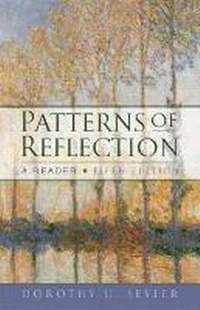
Patterns of Reflection
A Reader
5th Edition
Published on 18. February 2004
Book
Paperback/Softback
512 pages
978-0-321-16516-9 (ISBN)
Description
This brief, engaging reader provides readable selections organized by both rhetorical patterns and themes. Featuring more than ninety brief selections, this accessible compilation features a dual organization with readings that illustrate a specific rhetorical pattern while exploring a relevant theme. Selections range from professional essays to annotated student essays, short stories, poems, a cartoon, four-color fine art, advertisements, and photographs. Each chapter is enriched by an introduction that provides specific guidelines for understanding the rhetorical pattern illustrated, vocabulary work, detailed questions for each reading, and topics for writing.
More details
Edition
5th edition
Language
English
Place of publication
United States
Publishing group
Pearson Education (US)
Target group
Professional and scholarly
Dimensions
Height: 216 mm
Width: 140 mm
Weight
517 gr
ISBN-13
978-0-321-16516-9 (9780321165169)
Copyright in bibliographic data and cover images is held by Nielsen Book Services Limited or by the publishers or by their respective licensors: all rights reserved.
Schweitzer Classification
Other editions
New editions
Book
08/2006
6th Edition
Pearson
€34.65
Article exhausted; check for reprint
Previous edition
Book
08/2001
4th Edition
Pearson
€44.75
Article exhausted; check for reprint
Content
Each chapter concludes with "Making Connections" and "Topics and Guidelines for Writing."
1. On Reading and Writing.
The Challenges and Rewards of Writing.
Good Reasons for Reading.
Guidelines for Active Reading.
Guided Reading: Ellen Goodman, "Learning to Brake for Butterflies."
Writing Focus: Using Summary, Analysis, and Synthesis.
Getting Started: Richard Wilbur, "The Writer."
Gail Godwin, "The Watcher at the Gates."
Terry McMillan, "On Reading and Becoming a Writer."
Kurt Vonnegut, "How to Write with Style."
2. Using Narration: Growing Up, Growing Wiser.
When to Use Narration.
How to Use Narration.
Writing Focus: Preparing Your Finished Essay.
Getting Started: Reflections on Growing Up.
Elizabeth Wong, "The Struggle to Be an All-American Girl."
Santha Rama Rau, "By Any Other Name."
N. Scott Momaday, "The End of My Childhood."
Luis J. Rodriguez, "Always Running."
Gaye Wagner, "Death of an Officer."
Barbara Kingsolver, "How Mr. Dewey Decimal Saved My Life."
Tom Toles Cartoon.
3. Using Description: Reflecting on People and Places.
When to Use Description.
How to Use Descriptive Details.
Writing Focus: It's All about Words!
Getting Started: Reflections on a Painting.
Six Paintings.
Pieter Bruegel the Elder, The Peasant Dance.
Francisco de Goya, The Third of May 1808.
Edgar Degas, The Dance Class.
Vincent Van Gogh, The Night Cafe.
Pablo Picasso, Three Dancers.
Salvador Dali, The Persistence of Memory.
Tracy Kidder, "Mrs. Zajac."
Amy Tan, "Lost Lives of Women."
Pat Mora, "Remembering Lobo."
Diane Ackerman, "Let It Snow."
Lance Morrow, "Africa."
Doris Lessing, "My Father."
Student Essay: Alexa Skandar, "Time's Trophy."
4. Using Comparison and Contrast: Ways of Learning.
When to Use Comparison and Contrast.
How to Use Comparison and Contrast.
Writing Focus: Coherence Is Crucial.
Nancy Masterson Sakamoto, "Conversational Ballgames."
E. B. White, "Education."
Diane Ravitch, "Girls Are Beneficiaries of Gender Gap."
Judith Viorst, "Boys and Girls: Anatomy and Destiny."
Michele Tolela Myers, "Cyber U: What's Missing."
Liane Norman, "Pedestrian Students and High-Flying Squirrels."
Linda Pastan, "Marks."
Student Essay: Denisse M. Bonilla, "The Faded Stain."
5. Explaining and Illustrating: Examining Media Images.
When to Use Examples.
How to Use Examples.
Writing Focus: Vary Your Sentences.
Getting Started: Thinking about Advertising.
Four Ads: Got Milk? Fila, Gladware, Council for Biotechnology.
Jack McGarvey, "To Be or Not to Be as Defined by TV."
Gloria Steinem, "Sex, Lies, and Advertising."
Stephanie Mencimer, "Violent Femmes."
Stephen Hunter, "Look Out Below: At the Movies, Subtext Plays a Summer Role."
Suzanne Fields, "Bad Raps: Music Rebels Revel in Their Thug Life."
Dave Barry, "Call Hating."
6. Using Process Analysis: How We Work and Play.
When To Use Process Analysis.
How to Use Process Analysis.
Writing Focus: Punctuating Properly.
Getting Started: Reflections on Your Favorite Game.
Benjamin Levy, "Say My Name, Say My Name."
John Aigner, "Putting Your Job Interview into Rehearsal."
William G. Nickels, Jim McHugh, and Susan McHugh, "Learning to Act Like a Professional."
Suzette H. Elgin, "Improving Your Body Language Skills."
Carol Krucoff, "Restoring Recess."
Ernest Hemingway, "Camping Out."
Garry Kasparov, "The Day That I Sensed a New Kind of Intelligence."
7. Using Division and Classification: Examining Human Connections and Misconnections.
When to Use Division and Classification.
How to Use Division and Classification.
Writing Focus: Words to Live Without!
Getting Started: Classifying Recent Reading or Viewing.
Russell Baker, "The Plot Against People."
Judith Martin, "The Roles of Manners."
Franklin E. Zimring, "Hot Boxes for Ex-Smokers."
Curt Suplee, "The Science and Secrets of Personal Space."
Peter Drucker, "There's Three Kinds of Teams."
Ralph Whitehead, Jr., "Class Acts: America's Changing Middle Class."
Student Essay: Garrett Berger, "Buying Time."
8. Using Definition: Understanding Ideas and Values.
When to Use Definition.
How to Use Definition.
Writing Focus: Using Metaphors, Avoiding Cliches.
Getting Started: Reflections on E. B. White's Ideas of Democracy.
Margaret Mead and Rhoda Metraux, "On Friendship."
John Ciardi, "Is Everybody Happy?"
Robert Keith Miller, "Discrimination Is a Virtue."
K. C. Cole, "Entropy."
Andrew Vachss, "The Difference Between Sick and Evil."
Roger Rosenblatt, "Still Obsessive After All These Years."
Alastair Reid, "Curiosity."
Student Essay: Laura Mullins, "Paragon or Parasite?."
9. Using Causal Analysis: Examining Family and Community Issues.
When to Use Causal Analysis.
How to Use Causal Analysis.
Writing Focus: References to Authors, Works, and the Words of Others.
Getting Started: Reflections on Why You Are in College.
Amitai Etzioni, "Duty: The Forgotten Virtue."
Rosalind C. Barnett and Caryl Rivers, "Family Values Go to Work."
Keith Ablow, "When Parents Are Toxic to Children."
Linda J. Waite, "Social Science Finds: 'Marriage Matters'."
John Cloud, "Will Gay Marriage Be Legal?."
Stephanie Coontz, "Not Much Sense in Those Census Stories."
Langston Hughes, "Dream Deferred."
10. Using Argument and Persuasion: Preserving the Health of Our World.
The Characteristics of Argument.
How to Use Argument and Persuasion.
Writing Focus: Forms of Ineffective Argument.
Getting Started: Reflections on the Challenges Facing Ourselves, Our Society, Our World.
Molly Ivins, "Ban the Things. Ban Them All."
Ned Andrews, "Why Guns Matter."
Linda Collier, "Adult Crime, Adult Time."
Richard Cohen, "Kids Who Kill Are Still Kids."
Goodwin Liu, "The Myth and Math of Affirmative Action."
Gregory Rodriguez, "California's Big Squeeze."
Ben Wattenberg, "Don't Wobble on Immigration."
George J. Borjas, "Illegal Aliens."
Andrew Goldstein, "Too Green for Their Own Good?."
Jared Diamond, "Lessons from Lost Worlds."
Student Essay: David M. Ouellette, "Blame It on the Media and Other Ways to Dress a Wolf in Sheep's Clothing."
11.Works for Further Reading and Analysis.
Elizabeth Cady Stanton, "Declaration of Sentiments."
Kate Chopin, "The Story of an Hour."
Amy Lowell, "Patterns."
Isaac Asimov, "Science and the Sense of Wonder."
Richard Rodriguez, "Border Hazards."
Suzanne Britt, "Neat People vs. Sloppy People."
Lisa Mundy, "A Date to Remember."
Glossary.
Index.
Acknowledgments.
1. On Reading and Writing.
The Challenges and Rewards of Writing.
Good Reasons for Reading.
Guidelines for Active Reading.
Guided Reading: Ellen Goodman, "Learning to Brake for Butterflies."
Writing Focus: Using Summary, Analysis, and Synthesis.
Getting Started: Richard Wilbur, "The Writer."
Gail Godwin, "The Watcher at the Gates."
Terry McMillan, "On Reading and Becoming a Writer."
Kurt Vonnegut, "How to Write with Style."
2. Using Narration: Growing Up, Growing Wiser.
When to Use Narration.
How to Use Narration.
Writing Focus: Preparing Your Finished Essay.
Getting Started: Reflections on Growing Up.
Elizabeth Wong, "The Struggle to Be an All-American Girl."
Santha Rama Rau, "By Any Other Name."
N. Scott Momaday, "The End of My Childhood."
Luis J. Rodriguez, "Always Running."
Gaye Wagner, "Death of an Officer."
Barbara Kingsolver, "How Mr. Dewey Decimal Saved My Life."
Tom Toles Cartoon.
3. Using Description: Reflecting on People and Places.
When to Use Description.
How to Use Descriptive Details.
Writing Focus: It's All about Words!
Getting Started: Reflections on a Painting.
Six Paintings.
Pieter Bruegel the Elder, The Peasant Dance.
Francisco de Goya, The Third of May 1808.
Edgar Degas, The Dance Class.
Vincent Van Gogh, The Night Cafe.
Pablo Picasso, Three Dancers.
Salvador Dali, The Persistence of Memory.
Tracy Kidder, "Mrs. Zajac."
Amy Tan, "Lost Lives of Women."
Pat Mora, "Remembering Lobo."
Diane Ackerman, "Let It Snow."
Lance Morrow, "Africa."
Doris Lessing, "My Father."
Student Essay: Alexa Skandar, "Time's Trophy."
4. Using Comparison and Contrast: Ways of Learning.
When to Use Comparison and Contrast.
How to Use Comparison and Contrast.
Writing Focus: Coherence Is Crucial.
Nancy Masterson Sakamoto, "Conversational Ballgames."
E. B. White, "Education."
Diane Ravitch, "Girls Are Beneficiaries of Gender Gap."
Judith Viorst, "Boys and Girls: Anatomy and Destiny."
Michele Tolela Myers, "Cyber U: What's Missing."
Liane Norman, "Pedestrian Students and High-Flying Squirrels."
Linda Pastan, "Marks."
Student Essay: Denisse M. Bonilla, "The Faded Stain."
5. Explaining and Illustrating: Examining Media Images.
When to Use Examples.
How to Use Examples.
Writing Focus: Vary Your Sentences.
Getting Started: Thinking about Advertising.
Four Ads: Got Milk? Fila, Gladware, Council for Biotechnology.
Jack McGarvey, "To Be or Not to Be as Defined by TV."
Gloria Steinem, "Sex, Lies, and Advertising."
Stephanie Mencimer, "Violent Femmes."
Stephen Hunter, "Look Out Below: At the Movies, Subtext Plays a Summer Role."
Suzanne Fields, "Bad Raps: Music Rebels Revel in Their Thug Life."
Dave Barry, "Call Hating."
6. Using Process Analysis: How We Work and Play.
When To Use Process Analysis.
How to Use Process Analysis.
Writing Focus: Punctuating Properly.
Getting Started: Reflections on Your Favorite Game.
Benjamin Levy, "Say My Name, Say My Name."
John Aigner, "Putting Your Job Interview into Rehearsal."
William G. Nickels, Jim McHugh, and Susan McHugh, "Learning to Act Like a Professional."
Suzette H. Elgin, "Improving Your Body Language Skills."
Carol Krucoff, "Restoring Recess."
Ernest Hemingway, "Camping Out."
Garry Kasparov, "The Day That I Sensed a New Kind of Intelligence."
7. Using Division and Classification: Examining Human Connections and Misconnections.
When to Use Division and Classification.
How to Use Division and Classification.
Writing Focus: Words to Live Without!
Getting Started: Classifying Recent Reading or Viewing.
Russell Baker, "The Plot Against People."
Judith Martin, "The Roles of Manners."
Franklin E. Zimring, "Hot Boxes for Ex-Smokers."
Curt Suplee, "The Science and Secrets of Personal Space."
Peter Drucker, "There's Three Kinds of Teams."
Ralph Whitehead, Jr., "Class Acts: America's Changing Middle Class."
Student Essay: Garrett Berger, "Buying Time."
8. Using Definition: Understanding Ideas and Values.
When to Use Definition.
How to Use Definition.
Writing Focus: Using Metaphors, Avoiding Cliches.
Getting Started: Reflections on E. B. White's Ideas of Democracy.
Margaret Mead and Rhoda Metraux, "On Friendship."
John Ciardi, "Is Everybody Happy?"
Robert Keith Miller, "Discrimination Is a Virtue."
K. C. Cole, "Entropy."
Andrew Vachss, "The Difference Between Sick and Evil."
Roger Rosenblatt, "Still Obsessive After All These Years."
Alastair Reid, "Curiosity."
Student Essay: Laura Mullins, "Paragon or Parasite?."
9. Using Causal Analysis: Examining Family and Community Issues.
When to Use Causal Analysis.
How to Use Causal Analysis.
Writing Focus: References to Authors, Works, and the Words of Others.
Getting Started: Reflections on Why You Are in College.
Amitai Etzioni, "Duty: The Forgotten Virtue."
Rosalind C. Barnett and Caryl Rivers, "Family Values Go to Work."
Keith Ablow, "When Parents Are Toxic to Children."
Linda J. Waite, "Social Science Finds: 'Marriage Matters'."
John Cloud, "Will Gay Marriage Be Legal?."
Stephanie Coontz, "Not Much Sense in Those Census Stories."
Langston Hughes, "Dream Deferred."
10. Using Argument and Persuasion: Preserving the Health of Our World.
The Characteristics of Argument.
How to Use Argument and Persuasion.
Writing Focus: Forms of Ineffective Argument.
Getting Started: Reflections on the Challenges Facing Ourselves, Our Society, Our World.
Molly Ivins, "Ban the Things. Ban Them All."
Ned Andrews, "Why Guns Matter."
Linda Collier, "Adult Crime, Adult Time."
Richard Cohen, "Kids Who Kill Are Still Kids."
Goodwin Liu, "The Myth and Math of Affirmative Action."
Gregory Rodriguez, "California's Big Squeeze."
Ben Wattenberg, "Don't Wobble on Immigration."
George J. Borjas, "Illegal Aliens."
Andrew Goldstein, "Too Green for Their Own Good?."
Jared Diamond, "Lessons from Lost Worlds."
Student Essay: David M. Ouellette, "Blame It on the Media and Other Ways to Dress a Wolf in Sheep's Clothing."
11.Works for Further Reading and Analysis.
Elizabeth Cady Stanton, "Declaration of Sentiments."
Kate Chopin, "The Story of an Hour."
Amy Lowell, "Patterns."
Isaac Asimov, "Science and the Sense of Wonder."
Richard Rodriguez, "Border Hazards."
Suzanne Britt, "Neat People vs. Sloppy People."
Lisa Mundy, "A Date to Remember."
Glossary.
Index.
Acknowledgments.