

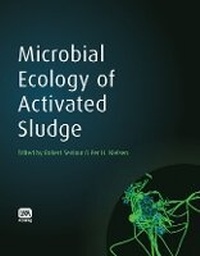
Microbial Ecology of Activated Sludge
2nd Edition
Published on 15. January 2010
Book
Hardback
684 pages
978-1-84339-032-9 (ISBN)
Description
Microbial Ecology of Activated Sludge, written for both microbiologists and engineers, critically reviews our current understanding of the microbiology of activated sludge, the most commonly used process for treating both domestic and industrial wastes. The contributors are all internationally recognized as leading research workers in activated sludge microbiology, and all have made valuable contributions to our present understanding of the process.
The book pays particular attention to how the application of molecular methods has changed our perceptions of the identity of the filamentous bacteria causing the operational disorders of bulking and foaming, and the bacteria responsible for nitrification and denitrification and phosphorus accumulation in nutrient removal processes. Special attention is given to how it is now becoming possible to relate the composition of the community of microbes present in activated sludge, and the in situ function of individual populations there, and how such information might be used to manage and control these systems better. Detailed descriptions of some of these molecular methods are provided to allow newcomers to this field of study an opportunity to apply them in their research. Comprehensive descriptions of organisms of interest and importance are also given, together with high quality photos of activated sludge microbes.
Activated sludge processes have been used globally for nearly 100 years, and yet we still know very little of how they work. In the past 15 years the advent of molecular culture independent methods of study have provided tools enabling microbiologists to understand which organisms are present in activated sludge, and critically, what they might be doing there. Microbial Ecology of Activated Sludge will be the first book available to deal comprehensively with the very exciting new information from applying these methods, and their impact on how we now view microbiologically mediated processes taking place there. As such it will be essential reading for microbial ecologists, environmental biotechnologists and engineers involved in designing and managing these plants. It will also be suitable for postgraduate students working in this field.
The book pays particular attention to how the application of molecular methods has changed our perceptions of the identity of the filamentous bacteria causing the operational disorders of bulking and foaming, and the bacteria responsible for nitrification and denitrification and phosphorus accumulation in nutrient removal processes. Special attention is given to how it is now becoming possible to relate the composition of the community of microbes present in activated sludge, and the in situ function of individual populations there, and how such information might be used to manage and control these systems better. Detailed descriptions of some of these molecular methods are provided to allow newcomers to this field of study an opportunity to apply them in their research. Comprehensive descriptions of organisms of interest and importance are also given, together with high quality photos of activated sludge microbes.
Activated sludge processes have been used globally for nearly 100 years, and yet we still know very little of how they work. In the past 15 years the advent of molecular culture independent methods of study have provided tools enabling microbiologists to understand which organisms are present in activated sludge, and critically, what they might be doing there. Microbial Ecology of Activated Sludge will be the first book available to deal comprehensively with the very exciting new information from applying these methods, and their impact on how we now view microbiologically mediated processes taking place there. As such it will be essential reading for microbial ecologists, environmental biotechnologists and engineers involved in designing and managing these plants. It will also be suitable for postgraduate students working in this field.
More details
Edition
2nd Revised edition
Language
English
Place of publication
London
United Kingdom
Target group
College/higher education
Professional and scholarly
Edition type
Revised edition
Dimensions
Height: 234 mm
Width: 156 mm
Thickness: 18 mm
ISBN-13
978-1-84339-032-9 (9781843390329)
Copyright in bibliographic data and cover images is held by Nielsen Book Services Limited or by the publishers or by their respective licensors: all rights reserved.
Schweitzer Classification
Other editions
Additional editions
Robert Seviour | Per Halkjaer Nielsen
Microbial Ecology of Activated Sludge
E-Book
01/2010
2nd Edition
IWA Publishing
€183.99
Available for download