

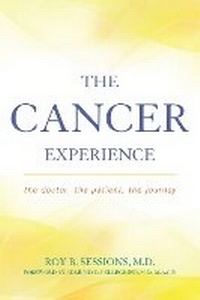
The Cancer Experience
The Doctor, the Patient, the Journey
Published on 5. April 2012
Book
Hardback
208 pages
978-1-4422-1621-1 (ISBN)
Description
Navigating the tumultuous waters of cancer treatment and decision making is difficult for all patients. It is also difficult for doctors and other medical personnel. This books deals with a variety of emotion-related and ethics issues that form much of the basis of the world of cancer related medicine: the responsibilities of the physician relative to truth, full disclosure, patient autonomy, death and dying, physician assisted suicide, and suicide in general among cancer patients. These and many other matters are discussed using real stories from the author's extensive personal career in working with cancer patients and their families. This is not a book on treating cancer, but instead is a work that seeks to stimulate a dialog about these issues as well as the spiritual aspects of hope and other factors relating to the plight of cancer patients and their families.
Written for health care professionals and cancer victims and their families alike, the core of the book centers around questions of medical ethics, doctor-patient relationships, decision making during cancer treatment (from medical and patient points of view). Given the emotional commitment and energy level required to work with cancer patients in a moral and ethical manner, medical students and residents will ask themselves: do I really want to be a cancer physician? Can I handle the ups and downs of treating people who may (or may not) be destined to fight and lose the battle against this strong nemesis? How will I answer the tough questions regarding medical approaches to cancer? How will I respond to patients who indicate a desire to commit suicide or request my help in doing so? What can I tell families whose loved one is choosing treatments that will not help and will deteriorate his quality of life? Basing his responses on the Oath of Hippocrates, the author illustrates how adaptable this oath actually is when considering the secular society in which we function.
The Cancer Experience instructs doctors, medical students, and health care workers involved in cancer care on the proper role of medicine, the role of the doctor, and the opportunities for connecting with patients as they help them make decisions regarding treatment and end of life issues. It helps patients understand the issues facing doctors as they assist them, care for them, and try to maintain both close personal relationships but enough emotional and professional distance in order to protect themselves from the stress and strain when medicine fails and patients must face the hardest choices. Here the author promotes a return to traditional medical values that promote closer doctor-patient relationships in an effort to promote trust, civility, and partnership.
Written for health care professionals and cancer victims and their families alike, the core of the book centers around questions of medical ethics, doctor-patient relationships, decision making during cancer treatment (from medical and patient points of view). Given the emotional commitment and energy level required to work with cancer patients in a moral and ethical manner, medical students and residents will ask themselves: do I really want to be a cancer physician? Can I handle the ups and downs of treating people who may (or may not) be destined to fight and lose the battle against this strong nemesis? How will I answer the tough questions regarding medical approaches to cancer? How will I respond to patients who indicate a desire to commit suicide or request my help in doing so? What can I tell families whose loved one is choosing treatments that will not help and will deteriorate his quality of life? Basing his responses on the Oath of Hippocrates, the author illustrates how adaptable this oath actually is when considering the secular society in which we function.
The Cancer Experience instructs doctors, medical students, and health care workers involved in cancer care on the proper role of medicine, the role of the doctor, and the opportunities for connecting with patients as they help them make decisions regarding treatment and end of life issues. It helps patients understand the issues facing doctors as they assist them, care for them, and try to maintain both close personal relationships but enough emotional and professional distance in order to protect themselves from the stress and strain when medicine fails and patients must face the hardest choices. Here the author promotes a return to traditional medical values that promote closer doctor-patient relationships in an effort to promote trust, civility, and partnership.
Reviews / Votes
Going through cancer treatment experience is difficult not only for patients but also for doctors. In a new book, titled The Cancer Experience: The Doctor, The Patient, The Journey, Dr. Roy Sessions deals with a variety of emotion-related and ethics issues that encompass much of the basis of the cancer treatment experience....Sessions aims to stimulate a dialogue about matters related to cancer treatment as well as the spiritual aspects of hope and other factors relating to the plight of cancer patients and their families. * EMaxHealth: Daily Health News * This is a book much needed, and no one is more qualified than Roy Sessions-by vast experience and personal character-to have written it. -- Sherwin B. Nuland M.D., clinical professor of surgery, Yale University School of Medicine; fellow, Yale Institute for Social and Policy Studies; author of the National Book Award-winning, How We Die: Reflections on Life's Final Chapter Dr. Sessions, a seasoned, highly respected surgeon, presents an informative, personalized tour through the frightening, often mysterious world of the cancer experience. The self-revelatory tone of the book, particularly in terms of explicating the overriding importance of the relationship between physician and patient, and the central bioethical principles guiding that collaboration, provides invaluable information and support to cancer patients and the people with whom they share their lives. -- Stephen A. Green, M.D., M.A., clinical professor of psychiatry at Georgetown University School of Medicine and co-editor of Psychiatric Ethics From the foreword: This is a book replete with clinical wisdom earned through the author's dedication to the care of some of medicine's most desperately ill patients. It will be of interest and instructional value to medical students, aspiring and practicing oncologists-medical, surgical, radiation-as well as physicians generally. But Sessions intends his book for the general public as well. Importantly, he makes the case that a better understanding of doctors by patients and their families is beneficial for all concerned. The cases Sessions describe will resonate with our own experiences or those of our families and friends. His thoughts extend well beyond the cancer experience to include other serious life-threatening trauma and illness.More details
Language
English
Place of publication
United States
Publishing group
Bloomsbury Publishing Plc
Target group
Professional and scholarly
Dimensions
Height: 236 mm
Width: 162 mm
Thickness: 21 mm
Weight
458 gr
ISBN-13
978-1-4422-1621-1 (9781442216211)
Copyright in bibliographic data and cover images is held by Nielsen Book Services Limited or by the publishers or by their respective licensors: all rights reserved.
Schweitzer Classification
Other editions
Additional editions
E-Book
04/2012
1st Edition
Bloomsbury eBooks US
€81.49
Available for download
E-Book
04/2012
1st Edition
Rowman & Littlefield Publishers
€81.49
Available for download
Persons
Roy B. Sessions, M.D., retired from active practice in 2008 and is currently a Professor of Otolaryngology Head and Neck Surgery at The Medical University of South Carolina. During his almost 40 year career he is responsible for over 140 scientific publications, including 3 editions of Cancer Of The Head And Neck: A Multidisciplinary Approach (with Harrison and Hong). The first of these won the Doody International Medical Book of the Year Award among 4000 other textbooks. He has been associated with Sloan Kettering Cancer Center/Cornell Medical College and Beth Israel Cancer Center/Albert Einstein College of Medicine in New York City and served 10 years as the Chairman of the Department of Otolaryngology - Head and Neck Surgery at Georgetown University School of Medicine. During his academic career, he served as a consultant to the NCI, and was a member of the Editorial Board of their journal, the PDQ. Dr. Sessions has lectured extensively in the U.S. and internationally, including Germany, China, UK, Italy, France, Ecuador, Brazil, and Japan.
Content
Author's Note on Terminology
Foreword
Acknowledgments
Part I: Intellectual Considerations
Prologue
1- Influences on My Development
2- Why the Book?
3- Protecting What's Good through the Educational Process: Capitalizing on the Gene Pool
4- Oncology Is Not for the Emotionally Stingy
5- Hope
6- Finding New Purpose after Enduring the Cancer Olympics
7- Changing Times, Changing Methods, Unchanging Mission
8- Seeking Functionality within a Moral Framework
9- A Practical Adaptation of the Original Oath in Search for Modern Relevance
10- Death and Dying: Natural and Otherwise
11- Suicide: Patient Conceived, Planned, and Consummated
Part II: Interacting with Cancer Patients and Their Families
12- Informal Physician-Patient Communication
13- Patient Confidentiality and Special Patient Circumstances
14- Essentials of Communication Skills: Listening, Hearing, Reading Body Language
15- Gaining the Patient's Confidence
16- The Cancer Specialist as a Teacher of the Patient and Family: The Lead-Up to Treatment
17- The Physician as an Educator after Treatment: Using the Cancer as a Tool
18- The Journey from the Referring Doctor to the Oncologist: Uncertainty, Anxiety, and Hope along the Way 125
19- More on Physician Leadership: Being in Charge
20- Influences on Cancer Patients' Attitudes and Receptiveness
21- Communication When There Is Still Optimism for Cure
22- Communication Once Treatment Failure Is Obvious
23- Hospice Care
24- Facing Death and Dying with the Patient
Epilogue
Notes
Bibliography
Index
About the Author
Foreword
Acknowledgments
Part I: Intellectual Considerations
Prologue
1- Influences on My Development
2- Why the Book?
3- Protecting What's Good through the Educational Process: Capitalizing on the Gene Pool
4- Oncology Is Not for the Emotionally Stingy
5- Hope
6- Finding New Purpose after Enduring the Cancer Olympics
7- Changing Times, Changing Methods, Unchanging Mission
8- Seeking Functionality within a Moral Framework
9- A Practical Adaptation of the Original Oath in Search for Modern Relevance
10- Death and Dying: Natural and Otherwise
11- Suicide: Patient Conceived, Planned, and Consummated
Part II: Interacting with Cancer Patients and Their Families
12- Informal Physician-Patient Communication
13- Patient Confidentiality and Special Patient Circumstances
14- Essentials of Communication Skills: Listening, Hearing, Reading Body Language
15- Gaining the Patient's Confidence
16- The Cancer Specialist as a Teacher of the Patient and Family: The Lead-Up to Treatment
17- The Physician as an Educator after Treatment: Using the Cancer as a Tool
18- The Journey from the Referring Doctor to the Oncologist: Uncertainty, Anxiety, and Hope along the Way 125
19- More on Physician Leadership: Being in Charge
20- Influences on Cancer Patients' Attitudes and Receptiveness
21- Communication When There Is Still Optimism for Cure
22- Communication Once Treatment Failure Is Obvious
23- Hospice Care
24- Facing Death and Dying with the Patient
Epilogue
Notes
Bibliography
Index
About the Author