

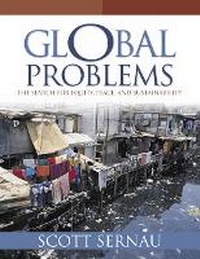
Global Problems
The Search for Equity, Peace, and Sustainability
Published on 7. November 2005
Book
Paperback/Softback
384 pages
978-0-205-34392-8 (ISBN)
Description
This text uses sociological perspectives to examine the various dimensions of globalization, and the issues of inequality, war and violence, and environmental sustainability that are occurring on a global scale. The opening chapter summarizes the fundamental debates and issues associated with globalization, and vivid examples from everyday life show readers how their lived experiences are interconnected with global forces and processes.
More details
Language
English
Place of publication
United States
Publishing group
Pearson Education (US)
Target group
Professional and scholarly
Dimensions
Height: 232 mm
Width: 178 mm
Weight
544 gr
ISBN-13
978-0-205-34392-8 (9780205343928)
Copyright in bibliographic data and cover images is held by Nielsen Book Services Limited or by the publishers or by their respective licensors: all rights reserved.
Schweitzer Classification
Other editions
New editions
Book
02/2009
2nd Edition
Pearson
€62.08
Article exhausted; check for reprint
Person
Scott Sernau (Ph.D. Cornell University) is Professor of Sociology at Indiana University South Bend where he regularly teaches courses on globalization, social and international inequalities, family, urban society, and race and ethnic relations. He is the author of Economies of Exclusion: Underclass Poverty and Labor Market Change, Critical Choices: Applying Sociological Insight, Bound: Living in the Globalized World, andWorlds Apart: Social Inequalities in a Global Economy. He has won numerous campus and statewide teaching awards and serves on the IU Faculty Colloquium on Excellence in Teaching.
Content
Introduction: The Global Century.
Dateline: New York (World Trade Center).
Dateline: South Pacific (Amazon millionaires).
Globalization and issues of power and opportunity, exploitation and exclusion, empowerment and integration.
Poverty, violence, and environmental destruction and the search for equity, peace, and sustainability.
I. SEEKING AN EQUITABLE WORLD: ISSUES OF INEQUALITY.
1. Class: A World of Rich and Poor.
Dateline: Cantrall, Illinois; Mojokerto, Indonesia.
Inequalities Between and Among Nations.
Theories of Class and Economy.
An Old Argument: Modernization and Dependency Theories.
Looking Back and Looking Ahead: Humanizing Development.
2. Work: The Global Assembly Line.
Dateline Benin (slave ship); Seattle.
The Division of Labor.
The New Frontier.
Made by Small Hands.
Free Trade and Fair Trade.
Race to the Bottom.
Ordering the World Market.
Reversing the Race to the Bottom.
3. Gender and Family: Overburdened Women and Displaced Men.
Dateline: Benton Harbor (single parenting).
Nietzsche undone: from superman to super mom.
Tired, stressed women and angry, alienated men.
Locked In and Shut Out.
Global family changes.
Feminist theory and world feminist movements.
4. Education: Access and Success.
Dateline: Congo and Pakistan.
The Foundations of Education.
And who will care for the children?
Education Around the World.
Opening Doors, Opening Minds.
II. SEEKING A PEACEFUL WORLD: ISSUES OF CONFLICT
5. Crime: Fear in the Streets.
Dateline: Columbia.
Seeking security.
Street crime and youth violence in the US and around the world.
Incarceration around the world.
This cokes for you: international drug trade.
International crime cartels.
6. War: States of Terror.
Dateline: Angola, civil war.
How states made war and how war made states.
Empires in Collision.
From Limited War to Total War to Cold War.
From world war to regional conflict.
The Global Arms Trade.
Military expenditures. Mills and Eisenhower on the military-industrial complex.
Weapons of Mass Destruction.
Heroes or humanitarians: What then should the military do?
The last great war? Theories of peace and conflict.
7. Democracy and Human Rights: Having Our Say.
Dateline: Sudan (lost boys, lost girls).
From bands to states.
Nationalism and independence.
Democracy and its alternatives: forms of government.
ODonnell and authoritarianism versus democracy.
Is God a democrat?
Campaign problems: Germany, Mexico, US.
Guerilla movements. Sri Lanka and Columbia. Central America. Freedom fights and terrorists.
Soldier boys (and girls): Child soldiers
After the repression: the return of Pinochet, South African Truth Commission, Argentine Mothers of the Plaza de Mayo,
UN Statement on human rights.
US policy from Carter to Bush. Tiananmen Square and the China debate.
International law and the world court.
8. Ethnicity and Religion: Deep Roots and Unholy Hate.
Dateline: Pakistan.
The links between ethnicity, religion and power.
Ethno-religious tensions and conflict in Northern Ireland, the Middle East, India, Indonesia and New York.
Huntington and the clash of civilizations.
Barber on Jihad and McWorld: Resurgent fundamentalism.
Horowitz and ethnic competition theory.
The God of the poor: Liberation theory.
Identity and international terrorism. Terror, counter-terror and state terror
III. SEEKING A SUSTAINABLE WORLD: ENVIRONMENTAL ISSUES.
9. Urbanization: Cities Without Limits.
Dateline Arizona (Mesa). Ethiopian shoeshine boys.
The urban millennium: Worldwide urbanization.
Central place theory.
Sprawl and hyper-urbanization.
The global ghetto: spread of shanty towns.
Seeking livable cities.
10. Population and Health: Only the Poor Die Young.
Dateline Mexico: AIDS
The population bomb debate.
Demographic transition theory.
Life expectancy and infant mortality.
Controversies over population control: China and India, the Cairo conference and the Vatican.
Controversies over health care reform.
Chinas barefoot doctors.
11. Technology and Energy: Panacea or Pandoras Box?
Brazil, Chad on energy.
The Internet and the computer age.
Daniel Bell and the coming of post-industrial society.
The new "e-wealthy:" global opportunity or sweatshop.com?
Global consumerism and energy consumption.
The debate over global warming.
The search for appropriate technology and for alternative energy sources.
12. Ecology: How Much Can One Planet Take?
Dateline Cameroon (Baka).
Pollution.
Deforestation and desertification: the Amazon and the Sahel.
Who invited you?-The global exchange of invasive species, new "super-bugs."
Ecology and economy: The search for sustainable futures.
Dateline: New York (World Trade Center).
Dateline: South Pacific (Amazon millionaires).
Globalization and issues of power and opportunity, exploitation and exclusion, empowerment and integration.
Poverty, violence, and environmental destruction and the search for equity, peace, and sustainability.
I. SEEKING AN EQUITABLE WORLD: ISSUES OF INEQUALITY.
1. Class: A World of Rich and Poor.
Dateline: Cantrall, Illinois; Mojokerto, Indonesia.
Inequalities Between and Among Nations.
Theories of Class and Economy.
An Old Argument: Modernization and Dependency Theories.
Looking Back and Looking Ahead: Humanizing Development.
2. Work: The Global Assembly Line.
Dateline Benin (slave ship); Seattle.
The Division of Labor.
The New Frontier.
Made by Small Hands.
Free Trade and Fair Trade.
Race to the Bottom.
Ordering the World Market.
Reversing the Race to the Bottom.
3. Gender and Family: Overburdened Women and Displaced Men.
Dateline: Benton Harbor (single parenting).
Nietzsche undone: from superman to super mom.
Tired, stressed women and angry, alienated men.
Locked In and Shut Out.
Global family changes.
Feminist theory and world feminist movements.
4. Education: Access and Success.
Dateline: Congo and Pakistan.
The Foundations of Education.
And who will care for the children?
Education Around the World.
Opening Doors, Opening Minds.
II. SEEKING A PEACEFUL WORLD: ISSUES OF CONFLICT
5. Crime: Fear in the Streets.
Dateline: Columbia.
Seeking security.
Street crime and youth violence in the US and around the world.
Incarceration around the world.
This cokes for you: international drug trade.
International crime cartels.
6. War: States of Terror.
Dateline: Angola, civil war.
How states made war and how war made states.
Empires in Collision.
From Limited War to Total War to Cold War.
From world war to regional conflict.
The Global Arms Trade.
Military expenditures. Mills and Eisenhower on the military-industrial complex.
Weapons of Mass Destruction.
Heroes or humanitarians: What then should the military do?
The last great war? Theories of peace and conflict.
7. Democracy and Human Rights: Having Our Say.
Dateline: Sudan (lost boys, lost girls).
From bands to states.
Nationalism and independence.
Democracy and its alternatives: forms of government.
ODonnell and authoritarianism versus democracy.
Is God a democrat?
Campaign problems: Germany, Mexico, US.
Guerilla movements. Sri Lanka and Columbia. Central America. Freedom fights and terrorists.
Soldier boys (and girls): Child soldiers
After the repression: the return of Pinochet, South African Truth Commission, Argentine Mothers of the Plaza de Mayo,
UN Statement on human rights.
US policy from Carter to Bush. Tiananmen Square and the China debate.
International law and the world court.
8. Ethnicity and Religion: Deep Roots and Unholy Hate.
Dateline: Pakistan.
The links between ethnicity, religion and power.
Ethno-religious tensions and conflict in Northern Ireland, the Middle East, India, Indonesia and New York.
Huntington and the clash of civilizations.
Barber on Jihad and McWorld: Resurgent fundamentalism.
Horowitz and ethnic competition theory.
The God of the poor: Liberation theory.
Identity and international terrorism. Terror, counter-terror and state terror
III. SEEKING A SUSTAINABLE WORLD: ENVIRONMENTAL ISSUES.
9. Urbanization: Cities Without Limits.
Dateline Arizona (Mesa). Ethiopian shoeshine boys.
The urban millennium: Worldwide urbanization.
Central place theory.
Sprawl and hyper-urbanization.
The global ghetto: spread of shanty towns.
Seeking livable cities.
10. Population and Health: Only the Poor Die Young.
Dateline Mexico: AIDS
The population bomb debate.
Demographic transition theory.
Life expectancy and infant mortality.
Controversies over population control: China and India, the Cairo conference and the Vatican.
Controversies over health care reform.
Chinas barefoot doctors.
11. Technology and Energy: Panacea or Pandoras Box?
Brazil, Chad on energy.
The Internet and the computer age.
Daniel Bell and the coming of post-industrial society.
The new "e-wealthy:" global opportunity or sweatshop.com?
Global consumerism and energy consumption.
The debate over global warming.
The search for appropriate technology and for alternative energy sources.
12. Ecology: How Much Can One Planet Take?
Dateline Cameroon (Baka).
Pollution.
Deforestation and desertification: the Amazon and the Sahel.
Who invited you?-The global exchange of invasive species, new "super-bugs."
Ecology and economy: The search for sustainable futures.