

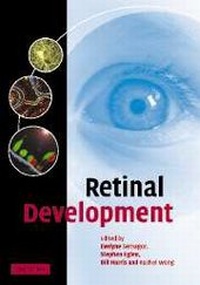
Retinal Development
Published on 14. September 2006
Book
Hardback
400 pages
978-0-521-83798-9 (ISBN)
Description
This advanced text, first published in 2006, takes a developmental approach to the presentation of our understanding of how vertebrates construct a retina. Written by experts in the field, each of the seventeen chapters covers a specific step in the process, focusing on the underlying molecular, cellular, and physiological mechanisms. There is also a special section on emerging technologies, including genomics, zebrafish genetics, and stem cell biology that are starting to yield important insights into retinal development. Primarily aimed at professionals, both biologists and clinicians working with the retina, this book provides a concise view of vertebrate retinal development. Since the retina is 'an approachable part of the brain', this book will also be attractive to all neuroscientists interested in development, as processes required to build this exquisitely organized system are ultimately relevant to all other parts of the central nervous system.
Reviews / Votes
Review of the hardback: 'Edited by leading members of the field, Sernagor, Eglen, Harris, and Wong, the 17 chapters of Retinal Development are well organized, clearly written, nicely illustrated, and succinct. The volume is carefully edited to avoid the redundancy that often weighs down a multi-author volume. In fact it is so well done that I may leave it on our lunchroom table - and see what develops.' Peter Sterling Review of the hardback: 'This book is an excellent resource for those working in the field of retinal biology, developmental neuroscience, or developmental biology.' Professor Connie Cepko, Harvard University Review of the hardback: ' ... an excellent overview on the different steps of retinal development and the current knowledge in the field, starting from the early specification of the eye-field in the embryo up to the light-evoked responses in the retina after birth. It therefore brings out beautifully the broad spectrum of research and its importance for general developmental neurobiology ... Retinal Development is a comprehensive book that features a collection of excellent reviews. but rather than giving only an up-to-date view on the status quo in retinal research, it goes a step further and brings out some of the important open questions still to be answered, to understand the development of the retina as well as the nervous system in general. The book is therefore not only appropriate for specialists in the field of retinal research, but certainly for a wider scientific audience.' Robert Hindges, MRC Centre for Developmental Neurobiology, Kings College London Review of the hardback: ' ... until now, a reference resource in the form of a review collection that guides the reader through the state-of-the-art approaches for studying retinal development has not been available ... as such, the book Retinal Development is especially welcome and is also a delightful read.' DevelopmentMore details
Language
English
Place of publication
Cambridge
United Kingdom
Target group
Professional and scholarly
Dimensions
Height: 260 mm
Width: 183 mm
Thickness: 24 mm
Weight
965 gr
ISBN-13
978-0-521-83798-9 (9780521837989)
Copyright in bibliographic data and cover images is held by Nielsen Book Services Limited or by the publishers or by their respective licensors: all rights reserved.
Schweitzer Classification
Other editions
New editions
Evelyne Sernagor | Stephen Eglen | Bill Harris
Retinal Development
Book
11/2012
Cambridge University Press
€71.70
Shipment within 15-20 days
Additional editions
Evelyne Sernagor | Stephen Eglen | Bill Harris
Retinal Development
Book
11/2012
Cambridge University Press
€71.70
Shipment within 15-20 days
Evelyne Sernagor | Stephen Eglen | Bill Harris
Retinal Development
E-Book
11/2006
1st Edition
Cambridge University Press
€48.99
Available for download
Persons
Evelyne Sernagor is a neurophysiologist studying the role of early experience in guiding the development of retinal circuitry. She is a Senior Lecturer in Developmental Neuroscience at Newcastle University Medical School in the School of Neurology, Neurobiology and Psychiatry. Stephen Eglen is a lecturer in computational biology at the Department of Applied Mathematics and Theoretical Physics, University of Cambridge. He uses theoretical modelling techniques to understand and predict mechanisms of neural development. Bill Harris has worked in the field of retinal development for over 30 years, studying problems of eye field specification, proliferation, cell determination, and neural connectivity. He is a Professor at Cambridge University in the Department of Physiology, Development and Neuroscience. Rachel Wong is Professor of Neurobiology at Washington University in St. Louis, USA. She uses live-imaging techniques and electrophysiological approaches to study the assembly of neural circuits in the vertebrate retina.
Content
Foreword Alan Bird; Preface; 1. Introduction Rachel O. L. Wong; 2. Formation of the eye field Michael E. Zuber and William A. Harris; 3. Retinal neurogenesis David H. Rapaport; 4. Cell migration Leanne Godinho and Brian Link; 5. Cell determination Michalis Agathocleous and William A. Harris; 6. Neurotransmitters and neurotrophins Rachael A. Pearson; 7. Emergence of the fovea Anita Hendrickson and Jan M. Provis; 8. Optic nerve formation David W. Sretavan; 9. Glial cells in the developing retina Kathleen Zahs and Manuel Esguerra; 10. Retinal mosaics Stephen J. Eglen and Lucia Galli-Resta; 11. Programmed cell death Rafael Linden and Benjamin E Reese; 12. Dendritic growth Jeff S. Mumm and Christian Lohmann; 13. Synaptogenesis and early neural activity Evelyne Sernagor; 14. Emergence of light responses Evelyne Sernagor and Leo M. Chalupa; New Perspectives: 15. Regeneration (and stem cells) Jennie Close and Thomas A. Reh; 16. Genomics Seth Blackshaw; 17. Zebrafish models of retinal development and disease James M Fadool and John E. Dowling.