

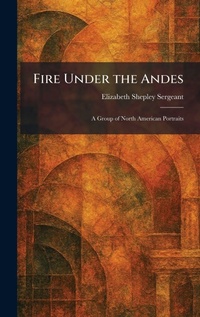
Fire Under the Andes
Description
"Fire Under the Andes" is a sophisticated and insightful collection of biographical portraits featuring some of the most influential figures in North American literature, art, and intellectual life during the early twentieth century. Elizabeth Shepley Sergeant employs a keen, observational style to capture the unique essence of her subjects, offering readers an intimate look at the personalities and creative forces that shaped modern American culture.
The work includes penetrating character studies of luminaries such as Amy Lowell, Eugene O'Neill, Robert Frost, and Willa Cather, among others. Rather than traditional chronological accounts, these sketches are vibrant psychological explorations that seek to uncover the "inner fire" and drive of each individual. Sergeant's prose serves as both a historical document of a pivotal era in American letters and a masterclass in the art of the literary portrait.
Through these essays, the reader gains a broader understanding of the intellectual landscape of the 1920s and the diverse spirit of North American creativity. "Fire Under the Andes" remains a valuable resource for those interested in the lives of great thinkers, the history of American modernism, and the evolution of biographical writing.
This work has been selected by scholars as being culturally important, and is part of the knowledge base of civilization as we know it. This work was reproduced from the original artifact, and remains as true to the original work as possible. Therefore, you may see the original copyright references, library stamps (as most of these works have been housed in our most important libraries around the world), and other notations in the work.
This work is in the public domain in the United States of America, and possibly other nations. Within the United States, you may freely copy and distribute this work, as no entity (individual or corporate) has a copyright on the body of the work.
As a reproduction of a historical artifact, this work may contain missing or blurred pages, poor pictures, errant marks, etc. Scholars believe, and we concur, that this work is important enough to be preserved, reproduced, and made generally available to the public. We appreciate your support of the preservation process, and thank you for being an important part of keeping this knowledge alive and relevant.