

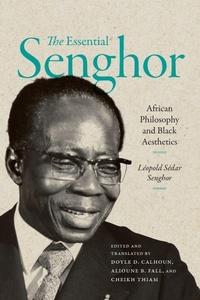
The Essential Senghor
African Philosophy and Black Aesthetics
Will be published approx. on 14. April 2026
Book
Paperback/Softback
416 pages
978-1-4780-3860-3 (ISBN)
Description
Senegalese poet, philosopher, and politician Leopold Sedar Senghor, together with Aime Cesaire and others, developed the influential and perennially relevant negritude movement-a Black artistic, philosophical, and political expression of Black presence in the modern colonial world. The Essential Senghor provides a new opportunity for English-language readers to engage with Senghor's critical and philosophical writings spanning from 1937 to 1985. This collection includes Senghor's key philosophical interventions in discourses on freedom, Blackness and being, humanism, history, and more. It portrays Senghor as a pivotal intellectual in the fields of African and Black studies whose work engages a wide range of disciplines, including literature, linguistics, anthropology, religion, and art history. The Essential Senghor invites readers not only to reflect on negritude and its importance for our political present, but also to reconsider intellectual genealogies of decolonial thought, Black liberation, and African philosophy.
Reviews / Votes
"This invaluable reader makes Senghor's thought directly available to an English-language audience, offering a very good overview of his philosophy, perfectly capturing his original text, and assembling selections with precision and care. It will become a touchstone for those in African studies, philosophy, art, and beyond."-Souleymane Bachir Diagne, author of, African Art as Philosophy: Senghor, Bergson and the Idea of NegritudeMore details
Language
English
Place of publication
North Carolina
United States
Target group
Professional and scholarly
Product notice
Paperback (trade)
Dimensions
Height: 229 mm
Width: 152 mm
Thickness: 24 mm
Weight
657 gr
ISBN-13
978-1-4780-3860-3 (9781478038603)
Copyright in bibliographic data and cover images is held by Nielsen Book Services Limited or by the publishers or by their respective licensors: all rights reserved.
Schweitzer Classification
Persons
Leopold Sedar Senghor (1906-2001) was a poet, philosopher, and the first president of Senegal.
Doyle D. Calhoun is University Assistant Professor of Francophone Postcolonial Studies at the University of Cambridge.
Alioune Fall is Assistant Professor of Black Studies and French at Providence College.
Cheikh Thiam is Department Chair of English and Professor of Black Studies at Amherst College.
Doyle D. Calhoun is University Assistant Professor of Francophone Postcolonial Studies at the University of Cambridge.
Alioune Fall is Assistant Professor of Black Studies and French at Providence College.
Cheikh Thiam is Department Chair of English and Professor of Black Studies at Amherst College.
Content
Translators’ Note vii
Acknowledgments xiii
Introduction. “Léopold Sédar Senghor (1906–2001): A Reintroduction” / Doyle D. Calhoun, Alioune B. Fall, and Cheikh Thiam 1
Part 1. Negritude: A Humanism for the Twentieth (and Twenty-First) Century
1. Constitutive Elements of a Civilization of Negro-American Inspiration 27
2. Negritude Is a Humanism of the Twentieth Century 63
3. Negritude and Modernity:, or, Negritude Is a Humanism of the Twentieth Century 75
4. Concerning Negritude 105
5. Negritude, as the Culture of Black Peoples, Shall Not Be Eclipsed 129
6. For a Modern and Negro-African Philosophy 145
7. As Manatees Go to Drink from the Source 175
Part 2. Negritude, Aesthetics, and Philosophy
8. What the Black Man Offers 189
9. The Contributions of Negro Poetry to the First Half of the Century 209
10. Negro-African Aesthetics 225
11. The Function and Meaning of the First World of Negro Arts 241
12. For a Negro Criticism 247
13. From French Poetry to Francophone Poetry; or, The Contributions of Negroes to Francophone Poetry 251
14. Oral Tradition and Modernity 271
Part 3. Negritude, Métissage, and the Dialogue of Cultures
15. The Problem of Culture in French West Africa 281
16. Perspectives on Black Africa; or, To Assimilate, Not Be Assimilated 295
17. Why an Indo-African Department of the University of Dakar? 329
18. Negritude and Mediterranean Civilization 343
19. French and African Languages 355
20. The Dialogue of Cultures 373
Index 387
Acknowledgments xiii
Introduction. “Léopold Sédar Senghor (1906–2001): A Reintroduction” / Doyle D. Calhoun, Alioune B. Fall, and Cheikh Thiam 1
Part 1. Negritude: A Humanism for the Twentieth (and Twenty-First) Century
1. Constitutive Elements of a Civilization of Negro-American Inspiration 27
2. Negritude Is a Humanism of the Twentieth Century 63
3. Negritude and Modernity:, or, Negritude Is a Humanism of the Twentieth Century 75
4. Concerning Negritude 105
5. Negritude, as the Culture of Black Peoples, Shall Not Be Eclipsed 129
6. For a Modern and Negro-African Philosophy 145
7. As Manatees Go to Drink from the Source 175
Part 2. Negritude, Aesthetics, and Philosophy
8. What the Black Man Offers 189
9. The Contributions of Negro Poetry to the First Half of the Century 209
10. Negro-African Aesthetics 225
11. The Function and Meaning of the First World of Negro Arts 241
12. For a Negro Criticism 247
13. From French Poetry to Francophone Poetry; or, The Contributions of Negroes to Francophone Poetry 251
14. Oral Tradition and Modernity 271
Part 3. Negritude, Métissage, and the Dialogue of Cultures
15. The Problem of Culture in French West Africa 281
16. Perspectives on Black Africa; or, To Assimilate, Not Be Assimilated 295
17. Why an Indo-African Department of the University of Dakar? 329
18. Negritude and Mediterranean Civilization 343
19. French and African Languages 355
20. The Dialogue of Cultures 373
Index 387