

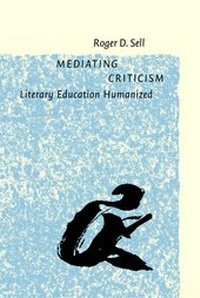
Mediating Criticism
Literary Education Humanized
Published on 7. December 2001
Book
Hardback
431 pages
978-90-272-2582-5 (ISBN)
Description
In the twentieth century, literature was under threat. Not only was there the challenge of new forms of oral and visual culture. Even literary education and literary criticism could sometimes actually distance novels, poems and plays from their potential audience. This is the trend which Roger D. Sell now seeks to reverse. Arguing that literature can still be a significant and democratic channel of human interactivity, he sees the most helpful role of teachers and critics as one of mediation. Through their own example they can encourage readers to empathize with otherness, to recognize the historical achievement of significant acts of writing, and to respond to literary authors' own faith in communication itself. By way of illustration, he offers major re-assessments of five canonical figures (Vaughan, Fielding, Dickens, T.S. Eliot, and Frost), and of two fascinating twentieth-century writers who were somewhat misunderstood (the novelist William Gerhardie and the poet Andrew Young).
More details
Language
English
Place of publication
Amsterdam
Netherlands
Target group
College/higher education
Professional and scholarly
Dimensions
Height: 245 mm
Width: 164 mm
Weight
720 gr
ISBN-13
978-90-272-2582-5 (9789027225825)
Copyright in bibliographic data and cover images is held by Nielsen Book Services Limited or by the publishers or by their respective licensors: all rights reserved.
Schweitzer Classification
Other editions
Additional editions
E-Book
12/2001
1st Edition
John Benjamins Publishing Company
€155.99
Available for download
Person
Content
1. Introduction; 2. Part I: Empathizing; 3. Summary; 4. 1. William Gerhardie's Chekhovism; 5. 2. Andrew Young's poetic secretion; 6. Part II: Recognizing achievement; 7. Summary; 8. 3. The impoliteness of The Waste Land; 9. 4. Henry Vaughan's unexpectedness; 10. 5. Decorum versus indecorum in Dombey and Son; 11. 6. Robert Frost's hiding and altering; 12. Part III: Responding to hopefulness; 13. Summary; 14. 7. Robert Frost and childhood; 15. 8. The pains and pleasures of David Copperfield; 16. 9. Fielding's reluctant naturalism; 17. Epilogue: Mediating critics and common [sic] readers [sic]; 18. Notes; 19. Bibliography; 20. Manuscripts; 21. Index