

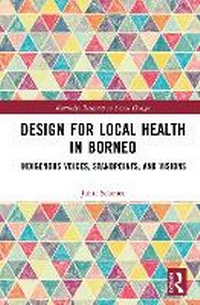
Design for Local Health in Borneo
Indigenous Voices, Standpoints and Visions
1st Edition
Will be published approx. on 15. October 2026
Book
Hardback
226 pages
978-1-041-21556-1 (ISBN)
Description
Examining how Indigenous Dayak communities living within coal mining concessions in Borneo experience and respond to intertwined health and environmental challenges, this book explores how their voices, knowledge, and lived realities can be meaningfully included in the design of local health systems and environmental health initiatives.
Drawing on qualitative fieldwork, the book centres Indigenous standpoints and highlights the importance of local knowledge in shaping more responsive and equitable health design systems. It examines how Dayak communities navigate everyday conditions, negotiate environmental and institutional pressures, and articulate their own visions of health and wellbeing. Engaging both Indigenous perspectives and design approaches from the Global North through the lens of the cultural interface, the book offers a critical account of current health design and environmental systems. It introduces the concept of localised design intention as a way to foreground context, values, and community agency, and to move beyond one-size-fits-all solutions towards approaches that are culturally grounded and socially just.
This book is intended for students, academics, and practitioners in design, health, and environmental fields, as well as policymakers and researchers working with Indigenous communities or interested in inclusive, participatory, and context-sensitive design approaches.
Drawing on qualitative fieldwork, the book centres Indigenous standpoints and highlights the importance of local knowledge in shaping more responsive and equitable health design systems. It examines how Dayak communities navigate everyday conditions, negotiate environmental and institutional pressures, and articulate their own visions of health and wellbeing. Engaging both Indigenous perspectives and design approaches from the Global North through the lens of the cultural interface, the book offers a critical account of current health design and environmental systems. It introduces the concept of localised design intention as a way to foreground context, values, and community agency, and to move beyond one-size-fits-all solutions towards approaches that are culturally grounded and socially just.
This book is intended for students, academics, and practitioners in design, health, and environmental fields, as well as policymakers and researchers working with Indigenous communities or interested in inclusive, participatory, and context-sensitive design approaches.
More details
Series
Language
English
Place of publication
London
United Kingdom
Publishing group
Taylor & Francis Ltd
Target group
College/higher education
Postgraduate and Undergraduate Advanced
Illustrations
19 s/w Photographien bzw. Rasterbilder, 19 s/w Abbildungen
19 Halftones, black and white; 19 Illustrations, black and white
Dimensions
Height: 234 mm
Width: 156 mm
ISBN-13
978-1-041-21556-1 (9781041215561)
Copyright in bibliographic data and cover images is held by Nielsen Book Services Limited or by the publishers or by their respective licensors: all rights reserved.
Schweitzer Classification
Person
Juhri Selamet is a design researcher, educator, and practitioner. Originally born and raised in Borneo, he holds a PhD in Design from the University of Technology Sydney (UTS), Australia, a Master of Design from the University of Illinois Chicago, USA, and a bachelor's degree from the Institut Teknologi Bandung (ITB), Indonesia.
Content
Chapter 1. Introduction: Situating Design for Local Health and Wellbeing Chapter 2. Navigating Design for Local Health from Indigenous Approaches Chapter 3. Kebersamaan: Togetherness in Rural Communities and the Lived Design of local Health Systems Chapter 4. Reframing the Visual Message: The role of Indigenous Visuality in Reimagining Health Equity and Representation Chapter 5. Pe' siu, Unheard Stories: Listening to Indigenous Voices and Knowledge in Designing for Community Health and Wellbeing Chapter 6. Madintang is Us: Envisioning a Healthy Future through Participatory Design Workshop Chapter 7. Conclusion: Localising Design for Indigenous Health and Wellbeing