

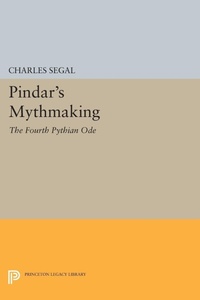
Pindar's Mythmaking
The Fourth Pythian Ode
Published on 14. July 2014
Book
Paperback/Softback
224 pages
978-0-691-61075-7 (ISBN)
Description
Combining historical and philological method with contemporary literary analysis, this study of Pindar's longest and most elaborate victory ode, the Fourth Pythian, traces the underlying mythical patterns, implicit poetics, and processes of mythopoesis that animate his poetry Originally published in 1986. The Princeton Legacy Library uses the latest print-on-demand technology to again make available previously out-of-print books from the distinguished backlist of Princeton University Press. These editions preserve the original texts of these important books while presenting them in durable paperback and hardcover editions. The goal of the Princeton Legacy Library is to vastly increase access to the rich scholarly heritage found in the thousands of books published by Princeton University Press since its founding in 1905.
More details
Series
Language
English
Place of publication
New Jersey
United States
Target group
College/higher education
Professional and scholarly
Product notice
Paperback (trade)
Dimensions
Height: 234 mm
Width: 156 mm
Thickness: 12 mm
Weight
348 gr
ISBN-13
978-0-691-61075-7 (9780691610757)
Copyright in bibliographic data and cover images is held by Nielsen Book Services Limited or by the publishers or by their respective licensors: all rights reserved.
Schweitzer Classification
Other editions
Additional editions
E-Book
07/2014
1st Edition
Princeton University Press
€40.49
Available for download
Person
Charles Segal
Content
*FrontMatter, pg. i*Contents, pg. vii*Preface, pg. ix*Abbreviations, pg. xii*Introduction, pg. 3*1. Heroic Guile: The Craft of the Hero and the Art of the Poet, pg. 15*2. The Language of Gods and Men, pg. 30*3. Trials of the Hero: Sexuality, Generational Passage, and the Seeds of Creation, pg. 52*4. Mythic Patterns I: Wandering and Foundation, pg. 72*5. Mythic Patterns II: The Voyage Beyond and Primordial Beginnings, pg. 89*6. The Wisdom of Oedipus, pg. 106*7. Poetry and/or Ideology, pg. 123*8. Pindar's Post-Oral Poetics: Between Inspiration and Textuality, pg. 153*9. Sexual Conflict and Ideology, pg. 165*10. Conclusion. Chionos: Time and Structure, pg. 180*Select Bibliography, pg. 195*Index of Works and Passages, pg. 201*Index of Names and Subjects, pg. 205