


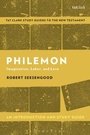
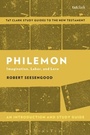
Philemon: An Introduction and Study Guide
Imagination, Labor and Love
Published on 10. August 2017
Book
Paperback/Softback
128 pages
978-0-567-67495-1 (ISBN)
Description
This guide explores and summarizes scholarship on Philemon, acquainting beginning students with what has been said about Philemon, and equipping them to understand the larger debates and conversations that surround it. It explores how different initial scholarly assumptions result in different interpretations and "meanings;" these meanings always have ethical implications. Reading Philemon challenges us to rethink the process of commentary and the communities interpretation creates.
Though only one chapter long, Paul's Letter to Philemon has generated a remarkable amount of commentary and scholarship over the centuries, figuring in debates over textual reconstruction, the formation of biblical canon, the culture of ancient Rome, Greek language and its translation, and the role of the Bible in Western politics and economics. The focus of this short letter is labor, love and captivity. Tradition since Chrysostom has argued the letter is an appeal to Philemon on behalf of a fugitive slave Onesimus, now a convert to Christianity. Yet this interpretation depends upon several assumptions and reconstructions. Other equally plausible contexts could be -- and have been -- argued.
Though only one chapter long, Paul's Letter to Philemon has generated a remarkable amount of commentary and scholarship over the centuries, figuring in debates over textual reconstruction, the formation of biblical canon, the culture of ancient Rome, Greek language and its translation, and the role of the Bible in Western politics and economics. The focus of this short letter is labor, love and captivity. Tradition since Chrysostom has argued the letter is an appeal to Philemon on behalf of a fugitive slave Onesimus, now a convert to Christianity. Yet this interpretation depends upon several assumptions and reconstructions. Other equally plausible contexts could be -- and have been -- argued.
Reviews / Votes
Seesengood provides an excellent, in-depth discussion of all the critical issues involved in interpreting Philemon. His succinct discussion of ancient slavery is invaluable. He takes to task the numerous scholars who contrast ancient slavery with slavery in the American South and suggest that the ancient variety was more humane (thereby making Paul's failure to condemn the institution of slavery more palatable). * Interpretation *More details
Series
Language
English
Place of publication
Edinburgh
United Kingdom
Publishing group
Bloomsbury Publishing PLC
Target group
College/higher education
Product notice
Paperback (trade)
Dimensions
Height: 234 mm
Width: 156 mm
Thickness: 7 mm
Weight
191 gr
ISBN-13
978-0-567-67495-1 (9780567674951)
Copyright in bibliographic data and cover images is held by Nielsen Book Services Limited or by the publishers or by their respective licensors: all rights reserved.
Schweitzer Classification
Other editions
Additional editions
E-Book
08/2017
1st Edition
T.& T.Clark Ltd
€22.99
Available for download
E-Book
08/2017
1st Edition
T.& T.Clark Ltd
€22.99
Available for download
Person
Robert Seesengood is Associate Professor of Religious Studies at Albright College, Pennsylvania, USA.
Content
Acknowledgments
Introduction
Chapter One: A Quick Overview of Paul's Letter to Philemon
Chapter Two: "I Appeal to You for My Child, Onesimus"
Chapter Three: Rethinking Onesimus and Philemon
Chapter Four: Rethinking Paul: Love, Labor and Affect in Philemon
Conclusion: Letters Lost in the Mail
Bibliography
Index
Introduction
Chapter One: A Quick Overview of Paul's Letter to Philemon
Chapter Two: "I Appeal to You for My Child, Onesimus"
Chapter Three: Rethinking Onesimus and Philemon
Chapter Four: Rethinking Paul: Love, Labor and Affect in Philemon
Conclusion: Letters Lost in the Mail
Bibliography
Index