

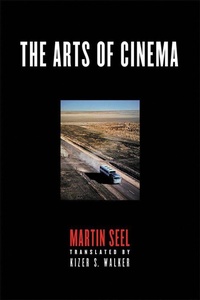
The Arts of Cinema
Published on 15. July 2018
Book
Hardback
180 pages
978-1-5017-0991-3 (ISBN)
Description
In The Arts of Cinema, Martin Seel explores film's connections to the other arts and the qualities that distinguish it from them. In nine concise and elegantly written chapters, he explores the cinema's singular aesthetic potential and uses specific examples from a diverse range of films-from Antonioni and Hitchcock to The Searchers and The Bourne Supremacy-to demonstrate the many ways this potential can be realized. Seel's analysis provides both a new perspective on film as a comprehensive aesthetic experience and a nuanced understanding of what the medium does to us once we are in the cinema.
Reviews / Votes
In his tremendously stimulating aesthetics of cinema, Martin Seel writes that films absorb the presence of the spectator more than all other works of art.... One of the merits of his book is that it is informed by a wide spectrum of film history, from the Marx Brothers to Fassbinder.(Frankfurter Allgemeine Zeitung) In his stimulating volume, the philosopher Seel looks for the essence and especially the particularity of the cinema, tracing the roots of cinema in other arts. According to Seel, film takes up elements from all of these arts and realizes its unique potential. Films like Hitchcock's North by Northwest or Antonioni's Zabriskie Point explode the boundaries of space and draw all of the spectator's senses into it.
(Deutschlandfunk [German Public Radio]) An exciting work of 'philosophy meets cinema'-intellectually sophisticated but written in a rich, playful style-this book is both impressive and delightful.
(academicworld.net) Seel grounds his philosophical work in close textual analysis of a small selection of representative films, including Hollywood classics, such as The Searchers; art films, such as Cache; and more recent action films, such as The Bourne Supremacy. As a work of philosophy and film theory, the book is notable for its lively engagement with complex ideas and for its inviting prose. It will appeal primarily to those with a strong interest in film aesthetics.
(Choice) Anyone who studies, watches, or appreciates films for their beauty and artistic value will enjoy Seel's musings in philosophy and art.
(Communication Booknotes Quarterly (CBQ))
More details
Language
English
Place of publication
Ithaca
United States
Product notice
Paper over boards
Dimensions
Height: 159 mm
Width: 235 mm
Thickness: 18 mm
Weight
420 gr
ISBN-13
978-1-5017-0991-3 (9781501709913)
Copyright in bibliographic data and cover images is held by Nielsen Book Services Limited or by the publishers or by their respective licensors: all rights reserved.
Schweitzer Classification
Other editions
Additional editions
Persons
Martin Seel is Professor of Philosophy at the Goethe University Frankfurt. He is the author of fourteen books of philosophy and aesthetics, including Aesthetics of Appearing. Kizer S. Walker is Director of Collections for Cornell University Library, Librarian for German Studies, and Managing Editor of the series Signale: Modern German Letters, Cultures, and Thought, copublished by Cornell University Press and Cornell University Library.
Content
Opening Credits: Affairs-The Site of the Cinema-"Film"-The Course of Things-The Film Program
1. Film as Architecture: A Beginning-Division of Space-Ambient Sound-Some Opening Credits-Landscapes-Two Extremes-An Ending-Spatial Imagination-More Opening Credits
2. Film as Music: A Prelude-Time Connections-Action (1)-Double Motion-Action (2)-Spaces of Time-Higher Rhythm-Explosion
3. Film as Image: People Waiting-Pictorial Appearing-Image and Movement-Photography and Film-Another Trip- The Promise of Photography-Image Analysis-The Promise of Film-Another Ending
4. Film as Spectacle: Anarchy-Division of Space, Again-Virtuality-Sculpturality- Actors-Voices-Theatricality-Attractionism-Ecstasy
5. Film as Narrative: Three Films-Abstinence-Narrative Disposition-Telling Stories-Perspectivity-Filmic Storytelling-Cinema's Temporal Form-The Present Past
6. Film as Exploration: In Baghdad-Urban Landscapes-Realities-Processes of Documentation-A Double Promise-Techniques of Fiction- Questions of Style-Loss of Control-References to the World-The End
7. Film as Imagination: At Bakersfield-An Illusionistic Interpretation-The Figure of the Illusionist-Illusion and Immersion-Imagination Not Illusion-Photography and Film, Again-Twofold Attention-Illusion as a Technique-Cache
8. Film as Emotion: The End, Yet Again-The Illusionist's Final Appearance- Motion and Emotion-Corporeality-Sensate Understanding- Expressivity-Engagement-Twofold Attention, Again-Mixed Emotions-Godard
9. Film as Philosophy: Flashbacks-Another Affair-Three Dimensions-Cine- anthropology-Active Passivity-An Encore-Landscapes, Once Again
Closing Credits: Notice-Thanks
1. Film as Architecture: A Beginning-Division of Space-Ambient Sound-Some Opening Credits-Landscapes-Two Extremes-An Ending-Spatial Imagination-More Opening Credits
2. Film as Music: A Prelude-Time Connections-Action (1)-Double Motion-Action (2)-Spaces of Time-Higher Rhythm-Explosion
3. Film as Image: People Waiting-Pictorial Appearing-Image and Movement-Photography and Film-Another Trip- The Promise of Photography-Image Analysis-The Promise of Film-Another Ending
4. Film as Spectacle: Anarchy-Division of Space, Again-Virtuality-Sculpturality- Actors-Voices-Theatricality-Attractionism-Ecstasy
5. Film as Narrative: Three Films-Abstinence-Narrative Disposition-Telling Stories-Perspectivity-Filmic Storytelling-Cinema's Temporal Form-The Present Past
6. Film as Exploration: In Baghdad-Urban Landscapes-Realities-Processes of Documentation-A Double Promise-Techniques of Fiction- Questions of Style-Loss of Control-References to the World-The End
7. Film as Imagination: At Bakersfield-An Illusionistic Interpretation-The Figure of the Illusionist-Illusion and Immersion-Imagination Not Illusion-Photography and Film, Again-Twofold Attention-Illusion as a Technique-Cache
8. Film as Emotion: The End, Yet Again-The Illusionist's Final Appearance- Motion and Emotion-Corporeality-Sensate Understanding- Expressivity-Engagement-Twofold Attention, Again-Mixed Emotions-Godard
9. Film as Philosophy: Flashbacks-Another Affair-Three Dimensions-Cine- anthropology-Active Passivity-An Encore-Landscapes, Once Again
Closing Credits: Notice-Thanks