

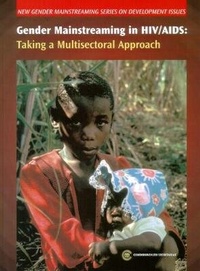
Gender Mainstreaming in HIV/AIDS
Taking a Multisectoral Approach
Published on 1. January 2002
Book
Paperback/Softback
186 pages
978-0-85092-655-2 (ISBN)
Description
Gender Mainstreaming in HIV/AIDS: Taking a Multisectoral Approach is the first in a new series of manuals from the Commonwealth Secretariat on gender mainstreaming in critical development issues. It is being co-published with the Maritime Centre of Excellence for Women's Health (Dalhousie University and the IWK Health Centre). By December 2001, 24.8 million people had died from HIV/AIDS and 40 million people were living with the disease. Women, especially young women, have increasing infection rates and the death rate among women is now almost as high as men. This has fed growing recognition that HIV/AIDS is not solely a health problem and that, to successfully address the pandemic, a gender perspective has to be mainstreamed into a broad-based and multisectoral response. The Commonwealth approach to gender mainstreaming is the Gender Management System (GMS), a holistic, system-wide approach to bringing a gender perspective to bear in the mainstream of all government policies, plans and programmes. Efforts to contain the spread of HIV/AIDS challenge governments and communities to develop policies and programmes that are dynamic and react to the pandemic as it evolves.
This calls for strong and creative leadership, including political will at the highest level and partnerships with all sectors of society. The manual offers a number of case studies from developing and developed countries, which illustrate how programmes that promote HIV prevention by addressing gender and the social and economic factors that increase people's risk of infection are more likely to succeed in changing behaviour. It also contains an extensive list of on-line resources. It is hoped that this co-publication will be used by development policy-makers, planners, field staff and others addressing the HIV/AIDS pandemic from a gender-aware, multisectoral perspective.
This calls for strong and creative leadership, including political will at the highest level and partnerships with all sectors of society. The manual offers a number of case studies from developing and developed countries, which illustrate how programmes that promote HIV prevention by addressing gender and the social and economic factors that increase people's risk of infection are more likely to succeed in changing behaviour. It also contains an extensive list of on-line resources. It is hoped that this co-publication will be used by development policy-makers, planners, field staff and others addressing the HIV/AIDS pandemic from a gender-aware, multisectoral perspective.
More details
Series
Language
English
Place of publication
London
United Kingdom
Target group
College/higher education
Professional and scholarly
Illustrations
Illustrations
Dimensions
Height: 250 mm
Width: 190 mm
ISBN-13
978-0-85092-655-2 (9780850926552)
Copyright in bibliographic data and cover images is held by Nielsen Book Services Limited or by the publishers or by their respective licensors: all rights reserved.
Schweitzer Classification
Content
Foreword Preface Executive Summary 1. Introduction Scope and Objectives of This Manual HIV/AIDS: An Overview A Gender Framework The Gender Management System Objectives 2. A Gender Analysis of HIV/AIDS Overview HIV/AIDS and Men HIV/AIDS and Women HIV/AIDS and Young People The Role of Gender-based Violence in the Spread of HIV/AIDS 3. A Multisectoral Response to HIV/AIDS The Need for a Multisectoral and Expanded Response Examples of HIV/AIDS Issues and Responses by Sector 4. Case Studies of Gender-based Responses to Combating HIV/AIDS Introduction Case Study: Participatory Research with Marginalised Communities (Canada) Case Study: HIV Prevention Programmes and Female Prostitutes (Canada) Case Study: Marketing the Female Condom (Zimbabwe) Case Study: HIV Counselling and Testing among Pregnant Women: Best Practices (Canada) Case Study: Involving Men in Preventing Gender Violence and HIV Transmission (International) Case Study: The School Without Walls: Sharing Knowledge and Skills with Community Groups (Southern Africa) Case Study: Integrating Sexual and Reproductive Health Programmes (Bangladesh) Case Study: Gender Differences in Sexual Health Promotion among Adolescents (Canada) 5. Tools and Resources Gender Sensitivity Checklist Online Resources List of Acronyms Bibliography Appendices 1. UN Guidelines on HIV-related Human Rights 2. Global and Commonwealth Mandates on Gender and HIV/AIDS