

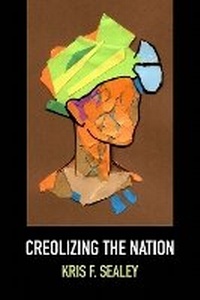
Creolizing the Nation
Published on 30. September 2020
Book
Hardback
232 pages
978-0-8101-4236-7 (ISBN)
Description
Creolizing the Nation identifies the nation-form as a powerful resource for political struggles against colonialism, racism, and other manifestations of Western hegemony in the Global South even as it acknowledges the homogenizing effects of the politics of nationalism. Drawing on Caribbean, decolonial, and Latina feminist resources, Kris F. Sealey argues that creolization provides a rich theoretical ground for rethinking the nation and deploying its political and cultural apparatus to imagine more just, humane communities.
Analyzing the work of thinkers such as Edouard Glissant, Frantz Fanon, Gloria AnzaldUa, MarIa Lugones, and Mariana Ortega, Sealey shows that a properly creolizing account of the nation provides an alternative imaginary out of which collective political life might be understood. Creolizing practices are always constitutive of anticolonial resistance, and their ongoing negotiations with power should be understood as everyday acts of sabotage. Sealey demonstrates that the conceptual frame of the nation is not fated to re-create colonial instantiations of nationalism but rather can support new possibilities for liberation and justice.
Analyzing the work of thinkers such as Edouard Glissant, Frantz Fanon, Gloria AnzaldUa, MarIa Lugones, and Mariana Ortega, Sealey shows that a properly creolizing account of the nation provides an alternative imaginary out of which collective political life might be understood. Creolizing practices are always constitutive of anticolonial resistance, and their ongoing negotiations with power should be understood as everyday acts of sabotage. Sealey demonstrates that the conceptual frame of the nation is not fated to re-create colonial instantiations of nationalism but rather can support new possibilities for liberation and justice.
Reviews / Votes
"A valiant effort to rescue the concept and role of the nation from those who would use it to marginalize and abuse. Charting a middle path between the monolithic forms of nationalism that seek to eliminate difference on the one hand, and the complete abandonment of any appeal to the nation on the other, Sealey draws on Caribbean and Latin American resources to argue that the nation must be understood in a creolizing way. Her rigorous yet engaging analysis allows her to offer a vision of the nation as a resource through which it becomes possible to build a more just, and ultimately more human community. This is an important and timely book." -Michael J. Monahan, author of The Creolizing Subject: Race, Reason, and the Politics of Purity"This book offers a brilliant articulation of the concept of creolization. Sealey's thesis is that with this concept the nation state can be rethought and reconstructed rather than abandoned, since the creolization paradigm reveals that coloniality has never achieved hegemony-there has always been sabotage, cracks from below-and that all of our cultural formations are creolized in substantial ways. She further shows that creolization is not equivalent to cosmopolitanism but has significant advantages over the letter. A must-read." -Linda MartIn Alcoff, Rape and Resistance: Understanding the Complexities of Sexual Violation
More details
Language
English
Place of publication
Evanston
United States
Target group
Professional and scholarly
Dimensions
Height: 229 mm
Width: 152 mm
Weight
633 gr
ISBN-13
978-0-8101-4236-7 (9780810142367)
Copyright in bibliographic data and cover images is held by Nielsen Book Services Limited or by the publishers or by their respective licensors: all rights reserved.
Schweitzer Classification
Other editions
Additional editions
Kris F. Sealey
Creolizing the Nation
E-Book
09/2020
1st Edition
Northwestern University Press
€96.99
Available for download
Person
Kris F. Sealey is an associate professor of philosophy at Fairfield University and the author of Moments of Disruption: Levinas, Sartre, and the Question of Transcendence.
Content
Acknowledgements
Introduction
Part I: Setting the Stage: Thinking 'Nation' through Creolization
Chapter 1. The Phenomenon of the Nation
Chapter 2. The Time and Place of Creolization
Part II: Living Ambiguously: Intersections between Creolization and Latina Feminisms
Chapter 3. On Glissant's Creolization
Chapter 4. Subjectivity Otherwise
Part III: The Poetics and Politics of "Community" Otherwise
Chapter 5. Difference, Borders and Community
Chapter 6. The Composite Community in Fanon's Postcolonial Moment
Conclusion: Creolizing as an Imperative
Notes
Selected Bibliography
Introduction
Part I: Setting the Stage: Thinking 'Nation' through Creolization
Chapter 1. The Phenomenon of the Nation
Chapter 2. The Time and Place of Creolization
Part II: Living Ambiguously: Intersections between Creolization and Latina Feminisms
Chapter 3. On Glissant's Creolization
Chapter 4. Subjectivity Otherwise
Part III: The Poetics and Politics of "Community" Otherwise
Chapter 5. Difference, Borders and Community
Chapter 6. The Composite Community in Fanon's Postcolonial Moment
Conclusion: Creolizing as an Imperative
Notes
Selected Bibliography