

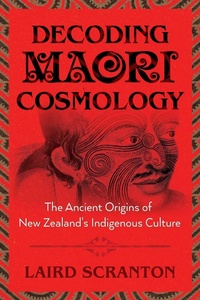
Decoding Maori Cosmology
The Ancient Origins of New Zealand's Indigenous Culture
Published on 14. June 2018
Book
Paperback/Softback
192 pages
978-1-62055-705-1 (ISBN)
Description
An exploration of New Zealand's Maori cosmology and how it relates to classic ancient symbolic traditions around the world
New evidence suggests that Maori culture of New Zealand is most likely centuries older than previously believed. The roots can be traced back to the archaic Goebekli Tepe site in Turkey, built around 10,000 BC.
Extending his global cosmology comparisons to New Zealand, Laird Scranton shows how the same cosmological concepts and linguistic roots that began at Goebekli Tepe are also evident in Maori culture and language. These are the same elements that underlie Dogon, ancient Egyptian, and ancient Chinese cosmologies as well as the Sakti Cult of India (a precursor to Vedic, Buddhist, and Hindu traditions) and the Neolithic culture of Orkney Island in northern Scotland. While the cultural and linguistic roots of the Maori are distinctly Polynesian, the author shows how the cosmology in New Zealand was sheltered from outside influences and likely reflects ancient sources better than other Polynesian cultures. In addition to shared creation concepts, he details a multitude of strikingly similar word pronunciations and meanings, shared by Maori language and the Dogon and Egyptian languages, as well as likely connections to various Biblical terms and traditions. He discusses the Maori use of standing stones to denote spiritual spaces and sanctuaries and how their esoteric mystery schools are housed in structures architecturally similar to those commonly found in Ireland. He discusses the symbolism of the Seven Mythic Canoes of the Maori and uncovers symbolic aspects of the elephant-headed Hindu god Ganesha in Maori cosmology.
The author also explores the outwardly similar pygmy traditions of Ireland and New Zealand, characterized by matching fairy mound constructions and mythic references in both regions. He reveals how the trail of a group of Little People who vanished from Orkney Island in ancient times might be traced first to Scotland, Ireland, and England and then on to New Zealand, accompanied by signature elements of the global cosmology first seen at Gobekli Tepe.
New evidence suggests that Maori culture of New Zealand is most likely centuries older than previously believed. The roots can be traced back to the archaic Goebekli Tepe site in Turkey, built around 10,000 BC.
Extending his global cosmology comparisons to New Zealand, Laird Scranton shows how the same cosmological concepts and linguistic roots that began at Goebekli Tepe are also evident in Maori culture and language. These are the same elements that underlie Dogon, ancient Egyptian, and ancient Chinese cosmologies as well as the Sakti Cult of India (a precursor to Vedic, Buddhist, and Hindu traditions) and the Neolithic culture of Orkney Island in northern Scotland. While the cultural and linguistic roots of the Maori are distinctly Polynesian, the author shows how the cosmology in New Zealand was sheltered from outside influences and likely reflects ancient sources better than other Polynesian cultures. In addition to shared creation concepts, he details a multitude of strikingly similar word pronunciations and meanings, shared by Maori language and the Dogon and Egyptian languages, as well as likely connections to various Biblical terms and traditions. He discusses the Maori use of standing stones to denote spiritual spaces and sanctuaries and how their esoteric mystery schools are housed in structures architecturally similar to those commonly found in Ireland. He discusses the symbolism of the Seven Mythic Canoes of the Maori and uncovers symbolic aspects of the elephant-headed Hindu god Ganesha in Maori cosmology.
The author also explores the outwardly similar pygmy traditions of Ireland and New Zealand, characterized by matching fairy mound constructions and mythic references in both regions. He reveals how the trail of a group of Little People who vanished from Orkney Island in ancient times might be traced first to Scotland, Ireland, and England and then on to New Zealand, accompanied by signature elements of the global cosmology first seen at Gobekli Tepe.
Reviews / Votes
"Decoding Maori Cosmology is sure to be controversial. Its major premise claims that an archaic, matriarchal tradition, or great Mother Goddess culture, gave birth to parallel mythological systems all across the globe after 10,000 BCE. Continuing his series that researches the evidence for cultural diffusion, Laird Scranton uses comparative linguistics as well as corresponding cosmologies, concepts, architectures, and artifacts in order to link the Maori of New Zealand with Gobekli Tepe in Turkey, the Sakti Cult of Tamil India, dynastic and predynastic Egypt, Skara Brae in Northern Scotland, the Dogon tribe of Mali, and the Buddhism of Tibet and elsewhere. In addition, he clearly and skillfully demonstrates how these diverse peoples of long ago fully understood the fundamental principles of quantum physics and string theory. This book is an essential piece of the puzzle showing the true picture of our ancient past." * Gary A. David, author of Journey of the Serpent People * "With every book Laird Scranton writes, he take us deeper into understanding our origin and ourselves. Using his solid foundation of Dogon, Egyptian, Chinese, and Scottish cultures he again displays to the reader the complexities inherent in ancient civilizations and provides additional insights into our obscured past. Laird continues to broaden our understanding of the advanced technical concepts that are fundamental to world myths, concepts so advanced that we are only rediscovering many of them today. He suggests that there is an archaic connection between these diverse cultures, with the ancient cosmology of the Maori of New Zealand further validating this interconnected web of language, culture, science, and tradition. Decoding Maori Cosmology presents intriguing correlations and compelling arguments that cause you to stop and think." * Rita Louise, Ph.D., coauthor of The E.T. Chronicles *More details
Language
English
Place of publication
Rochester
United States
Product notice
Paperback (trade)
Illustrations
5 b&w illustrations
Dimensions
Height: 226 mm
Width: 150 mm
Thickness: 13 mm
Weight
318 gr
ISBN-13
978-1-62055-705-1 (9781620557051)
Copyright in bibliographic data and cover images is held by Nielsen Book Services Limited or by the publishers or by their respective licensors: all rights reserved.
Schweitzer Classification
Other editions
Additional editions
E-Book
05/2018
Simon + Schuster LLC
€10.87
Available for download
Person
Laird Scranton is the author of a series of books on ancient cosmology and language, including The Science of the Dogon, Point of Origin, and China's Cosmological Prehistory. He has presented at conferences throughout the United States and is a frequent guest on Red Ice Radio and Coast to Coast AM. He lives in Albany, New York.
Content
Acknowledgments
1 Introduction to the Maori
2 Historical Overview of the Esoteric Tradition
3 Deities of the Maori Pantheon
4 Parallels to Dogon Cosmology
5 Mythic Themes of Maori Cosmology
6 Pre-Buddhist and Hindu Influences on Maori Religion
7 Echoes of Gobekli Tepe among the Maori
8 Maori and Tamil Word Correlations
9 Evidence of the Sakti Cult in Maori Culture
10 Symbolic Aspects of Ganesha in Maori Cosmology
11 Ancient Egyptian Word Correlations to the Maori
12 Yah and Maori Concepts of Creation from Light
13 Foundational Philosophies in Maori Cosmology
14 Maori References to the Field of Arou
15 The Wharekura, or School of Reeds
16 Maori Concepts of the Priesthood and Sacred Spots
17 Maori Myth of the Overturning of the Earth Mother
18 Tracks of the Peti and the Papae in New Zealand
19 Symbolism of the Seven Mythic Canoes of the Maori
20 The Sacrifice of the Nummo
21 Putting the Maori References in Context
Notes
Bibliography
Index
1 Introduction to the Maori
2 Historical Overview of the Esoteric Tradition
3 Deities of the Maori Pantheon
4 Parallels to Dogon Cosmology
5 Mythic Themes of Maori Cosmology
6 Pre-Buddhist and Hindu Influences on Maori Religion
7 Echoes of Gobekli Tepe among the Maori
8 Maori and Tamil Word Correlations
9 Evidence of the Sakti Cult in Maori Culture
10 Symbolic Aspects of Ganesha in Maori Cosmology
11 Ancient Egyptian Word Correlations to the Maori
12 Yah and Maori Concepts of Creation from Light
13 Foundational Philosophies in Maori Cosmology
14 Maori References to the Field of Arou
15 The Wharekura, or School of Reeds
16 Maori Concepts of the Priesthood and Sacred Spots
17 Maori Myth of the Overturning of the Earth Mother
18 Tracks of the Peti and the Papae in New Zealand
19 Symbolism of the Seven Mythic Canoes of the Maori
20 The Sacrifice of the Nummo
21 Putting the Maori References in Context
Notes
Bibliography
Index