

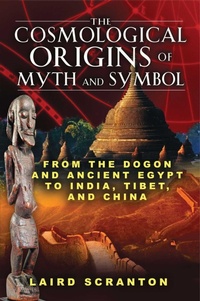
The Cosmological Origins of Myth and Symbol
From the Dogon and Ancient Egypt to India, Tibet, and China
Published on 24. September 2010
Book
Paperback/Softback
208 pages
978-1-59477-376-1 (ISBN)
Description
Great thinkers and researchers such as Carl Jung have acknowledged the many broad similarities that exist between the myths and symbols of ancient cultures. One largely unexplored explanation for these similarities lies in the possibility that these systems of myth all descended from one common cosmological plan. Outlining the most significant aspects of cosmology found among the Dogon, ancient Egyptians, and ancient Buddhists, including the striking physical and cosmological parallels between the Dogon granary and the Buddhist stupa, Laird Scranton identifies the signature attributes of a theoretic ancient parent cosmology--a planned instructional system that may well have spawned these great ancient creation traditions. Examining the esoteric nature of cosmology itself, Scranton shows how this parent cosmology encompassed both a plan for the civilized instruction of humanity as well as the conceptual origins of language. The recurring shapes in all ancient religions were key elements of this plan, designed to give physical manifestation to the sacred and provide the means to conceptualize and compare earthly dimensions with those of the heavens. As a practical application of the plan, Scranton explores the myths and language of an obscure Chinese priestly tribe known as the Na-Khi--the keepers of the world's last surviving hieroglyphic language. Suggesting that cosmology may have engendered civilization and not the other way around, Scranton reveals how this plan of cosmology provides the missing link between our macroscopic universe and the microscopic world of atoms.
Reviews / Votes
"Pursuing the powerful quest began in The Science of the Dogon, Laird Scranton provides . . . another compulsive read for those wishing to get to the heart of the ancient mysteries." * Andrew Collins, author of Beneath the Pyramids: Egypt's Greatest Secret Uncovered * "Laird Scranton's groundbreaking new research is a major piece of the puzzle that will forever change the way we view the knowledge of the ancients." * Edward G. Nightingale, author of The Giza Template * "Looking at many ancient cultures and looking for their influences, The Cosmological Origins of Myth and Symbol proposes many unique ideas and makes for a solidly recommended read." * The Midwest Book Review, December 2010 * "Following up and synthesizing his last two books, The Science of the Dogon, and Sacred Symbols of the Dogon, Laird Scranton's latest book makes a good case that what we call today the myths and symbols of ancient peoples have not only cosmology as their basis but they originated from one "parent" cosmology. . . most fascinating study. . . " * New Dawn Magazine, May 2011 * "An inspiring journey through cosmology." * Nexus Magazine, August 2011 *More details
Language
English
Place of publication
Rochester
United States
Product notice
Paperback (trade)
Illustrations
29 b&w illustrations
Dimensions
Height: 228 mm
Width: 151 mm
Thickness: 15 mm
Weight
336 gr
ISBN-13
978-1-59477-376-1 (9781594773761)
Copyright in bibliographic data and cover images is held by Nielsen Book Services Limited or by the publishers or by their respective licensors: all rights reserved.
Schweitzer Classification
Other editions
Additional editions
Laird Scranton
The Cosmological Origins of Myth and Symbol
From the Dogon and Ancient Egypt to India, Tibet, and China
E-Book
09/2010
Simon + Schuster LLC
€12.85
Available for download
Person
Laird Scranton is an independent software designer who has studied ancient myth, language, and cosmology for nearly 10 years. An authority on Dogon mythology and symbolism, he has given lectures at Colgate University and is the author of The Science of the Dogon and Sacred Symbols of the Dogon. He lives in Albany, New York.
Content
Foreword by William Henry
Acknowledgments
Introduction
One Concepts of Comparative Cosmology
Two Signature Signs of the Parent Cosmology
Three The Dogon Mythological Structure of Matter
Four Symbolism
Five Guiding Metaphors of the Cosmology
Six The Egg-in-a-Ball
Seven The Aligned Ritual Shrine
Eight The Elemental Deities
Nine The Concept of the Primordial Egg
Ten The Concept of the Divine Word
Eleven The Concept of the Fish
Twelve Deities
Thirteen Civilizing Skills
Fourteen Written Language
Fifteen Synchronizing Cosmologies: The Na-khi-Dongba of China
Sixteen As Above, So Below: The Chariot of Orion
Seventeen Recapping the Plan of the Cosmology
Notes
Bibliography
Index
Acknowledgments
Introduction
One Concepts of Comparative Cosmology
Two Signature Signs of the Parent Cosmology
Three The Dogon Mythological Structure of Matter
Four Symbolism
Five Guiding Metaphors of the Cosmology
Six The Egg-in-a-Ball
Seven The Aligned Ritual Shrine
Eight The Elemental Deities
Nine The Concept of the Primordial Egg
Ten The Concept of the Divine Word
Eleven The Concept of the Fish
Twelve Deities
Thirteen Civilizing Skills
Fourteen Written Language
Fifteen Synchronizing Cosmologies: The Na-khi-Dongba of China
Sixteen As Above, So Below: The Chariot of Orion
Seventeen Recapping the Plan of the Cosmology
Notes
Bibliography
Index