

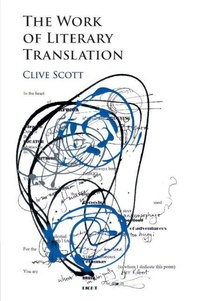
The Work of Literary Translation
Published on 25. June 2020
Book
Paperback/Softback
298 pages
978-1-108-44581-8 (ISBN)
Description
Offering an original reconceptualization of literary translation, Clive Scott argues against traditional approaches to the theory and practice of translation. Instead he suggests that translation should attend more to the phenomenology of reading, triggering creative textual thinking in the responsive reader rather than testing the hermeneutic skills of the professional translator. In this new guise, translation enlists the reader as an active participant in the constant re-fashioning of the text's structural, associative, intertextual and intersensory possibilities, so that our larger understanding of ecology, anthropology, comparative literature and aesthetics is fundamentally transformed and our sense of the expressive resources of language radically extended. Literary translation thus assumes an existential value which takes us beyond the text itself to how it situates us in the world, and what part it plays in the geography of human relationships.
Reviews / Votes
'For Clive Scott, the new proximities and the new estrangements wrought by global flows of people, goods, finance, communications - have given literary translators a more urgent part to play than ever before.' Marina Warner, London Review of Books '... formidable and eloquently argued philosophy of translation, which richly rewards the readerly attention of all those interested in the art, practice, and work of translation.' Thomas O. Beebee, Translation and Literature '... this work is a stimulating and thought-provoking exploration of the open-ended potential of literary translation. Fascinating reading for practitioners, scholars and - perhaps with a dictionary to hand - the lay reader.' Forum for Modern Language StudiesMore details
Language
English
Place of publication
Cambridge
United Kingdom
Target group
Professional and scholarly
College/higher education
Product notice
Paperback (trade)
Illustrations
Worked examples or Exercises; 10 Halftones, black and white; 5 Line drawings, black and white
Dimensions
Height: 229 mm
Width: 152 mm
Thickness: 17 mm
Weight
435 gr
ISBN-13
978-1-108-44581-8 (9781108445818)
Copyright in bibliographic data and cover images is held by Nielsen Book Services Limited or by the publishers or by their respective licensors: all rights reserved.
Schweitzer Classification
Other editions
Additional editions
Clive Scott
The Work of Literary Translation
Book
06/2018
Cambridge University Press
€116.90
Shipment within 15-20 days
Person
Clive Scott is Professor Emeritus of European Literature at the University of East Anglia and a Fellow of the British Academy. His previous publications include, Translating Baudelaire (2000), Channel Crossings: French and English Poetry in Dialogue 1550-2000 (2002), Translating Rimbaud's 'Illuminations', (2006), Street Photography: From Atget to Cartier-Bresson (2007), Literary Translation and the Rediscovery of Reading (Cambridge, 2012) Translating the Perception of Text: Literary Translation and Phenomenology (2012), and Translating Apollinaire (2014).
Content
Introduction; Part I. Thinking One's Way into Literary Translation: Concepts and Readings: 1. Cartesian reading; 2. Untranslatability; 3. Translation and music; 4. The language of translation; 5. Voice in translation; 6. Orality; 7. Multilingualism; 8. Frontiers; 9. Cultures; 10. Choice as work; 11. The temporal nature of text; 12. The notion of the future of the text; Part II. Translation among the Disciplines: 1. Understanding translation as an eco-poetics; 2. Translation as an agent of anthropological/ethnographic awareness; 3. Translation and the re-conception of comparative literature; 4. Translation in pursuit of an appropriate aesthetics; Part III. The Paginal Art of Translation: 5. Text and page: margin and rhythm; 6. Translation and situating the self: punctuation and rhythm; 7. Translation and vocal behaviour: typography and rhythm; 8. Translation as scansion: capturing the multiplicity of rhythm; Conclusion.