

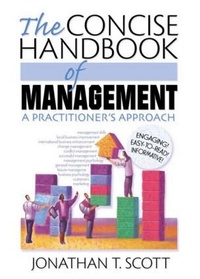
The Concise Handbook of Management
A Practitioner's Approach
1st Edition
Published on 20. September 2005
Book
Paperback/Softback
278 pages
978-0-7890-2648-4 (ISBN)
Description
Discover the practical tips to make you an effective, customer-oriented manager!
Focusing on the pervading belief that everything a manager does must be customer oriented, The Concise Handbook of Management: A Practitioner's Approach gives you an overview of everything you need to know about managing in one practical, concise book. This plain-talking guide not only explains management theories, but also presents commonsense suggestions on the best ways to effectively manage people and things, no matter what type of business you are in. Taking a practitioner's approach of discussing management issues with customers ultimately in mind, this practical book motivates, is easily understandable, and is entertaining to boot.
The Concise Handbook of Management: A Practitioner's Approach uses succinct chapters with several real stories and case studies designed to clearly illustrate each concept and suggestion. Written with the busy manager in mind, each chapter is compact, clear, true-to-life, and is always aimed at the bottom line. The book includes a small business marketing and promotion checklist, a helpful bibliography, and a useful glossary of terms.
The Concise Handbook of Management: A Practitioner's Approach explores:
the first three steps in becoming a good manager
understanding the importance of customers
getting the most from employees
management competencies and styles
organizational structures and cultures
managing change
managing conflict and stress
managing teams and workgroups
ethics
leadership
managing time
written business communication
mastering the skills of a presentation
dealing with people in the workplace
a small business marketing checklist
project or program planning
the marketing basicsproductstrategymarketingpricing
developing external and internal customers
The Concise Handbook of Management: A Practitioner's Approach proves the adage that less is more, and has already been called the undergraduate/graduate student's or practicing manager's best all-in-one source and reference for simplified management theory and skills.
Focusing on the pervading belief that everything a manager does must be customer oriented, The Concise Handbook of Management: A Practitioner's Approach gives you an overview of everything you need to know about managing in one practical, concise book. This plain-talking guide not only explains management theories, but also presents commonsense suggestions on the best ways to effectively manage people and things, no matter what type of business you are in. Taking a practitioner's approach of discussing management issues with customers ultimately in mind, this practical book motivates, is easily understandable, and is entertaining to boot.
The Concise Handbook of Management: A Practitioner's Approach uses succinct chapters with several real stories and case studies designed to clearly illustrate each concept and suggestion. Written with the busy manager in mind, each chapter is compact, clear, true-to-life, and is always aimed at the bottom line. The book includes a small business marketing and promotion checklist, a helpful bibliography, and a useful glossary of terms.
The Concise Handbook of Management: A Practitioner's Approach explores:
the first three steps in becoming a good manager
understanding the importance of customers
getting the most from employees
management competencies and styles
organizational structures and cultures
managing change
managing conflict and stress
managing teams and workgroups
ethics
leadership
managing time
written business communication
mastering the skills of a presentation
dealing with people in the workplace
a small business marketing checklist
project or program planning
the marketing basicsproductstrategymarketingpricing
developing external and internal customers
The Concise Handbook of Management: A Practitioner's Approach proves the adage that less is more, and has already been called the undergraduate/graduate student's or practicing manager's best all-in-one source and reference for simplified management theory and skills.
More details
Language
English
Place of publication
New York
United States
Publishing group
Taylor & Francis Inc
Dimensions
Height: 210 mm
Width: 148 mm
Weight
510 gr
ISBN-13
978-0-7890-2648-4 (9780789026484)
Copyright in bibliographic data and cover images is held by Nielsen Book Services Limited or by the publishers or by their respective licensors: all rights reserved.
Schweitzer Classification
Other editions
Additional editions
E-Book
02/2013
1st Edition
Routledge
€89.99
Available for download
E-Book
02/2013
1st Edition
Routledge
€89.99
Available for download

Book
10/2005
1st Edition
Routledge
€230.65
Shipment within 10-20 days
Person
Jonathan T Scott
Content
Preface. Why Another Book About Management?
Acknowledgments
PART I: BUILDING THE MANAGEMENT FOUNDATION
Chapter 1. What Is Management?
Chapter 2. A Brief History of Management
The Industrial Revolution and the Division of Labor
The Study of Management Begins
The Evolution of Scientific Management
Perhaps the Most Important Study of All
Chapter 3. The First Three Steps to Becoming a Good Manager
Step 1: Mind-Set
Step 2: Integrity
Step 3: Training
Chapter 4. Understanding the Importance of Customers
Losing Touch
Understanding External and Internal Customers
The Ten Commandments of Business Success
What Is Good Customer Service?
The Final Word
PART II: BASIC THOUGHTS ON AND THEORIES OF MANAGEMENT
Chapter 5. Management Competencies and Styles
Managerial Competencies
Managerial Styles
To Recap
Chapter 6. Getting the Most from Employees
Tapping into the Workforce
Delegating Responsibility
The Employee-Customer Connection
Employee Empowerment
Summary
Chapter 7. Organizational Structures and Cultures
Bureaucratic and Adaptive Organizations
Organizational Cultures
Can Structure and Culture Be Changed?
Chapter 8. Managing Change
Preparing for Organizational Change
Understanding Resistance to Change
Building the Commitment to Change
Change Management: Some Examples
Chapter 9. Managing Conflict
The Value of Conflict
The Nature of Work-Related Conflict
Dealing with Conflict
Battling the Stress That Work and Conflict Create
Putting It All Together
Chapter 10. Managing Teams and Work Groups
Types of Teams
Developing a Functional Team
Overcoming the Obstacles of a Team
Chapter 11. Managing by Objectives
Goal Setting: A Three-Step Process
Management by Objectives
Chapter 12. Quality
Achieving Quality
Measuring Quality
Putting Quality into Action
Chapter 13. Ethics
Ethical Behavior
Four Levels of Organizational Ethics
Unethical versus Ethical Decision Making
Whistle-Blowing
The Bottom Line
Chapter 14. Leadership
Leadership versus Management
Leadership: Abilities and Action
Coming to Grips with Leadership Theory
The Nature of Leadership
Chapter 15. Management: Theory versus Practice
A Practical Example
Theory versus Practice: A Metaphor
Chapter 16. Managing in Different Cultures
Culture and Human Behavior
Errors in Cultural Perceptions
Culture Shock
Communicating in Different Cultures
In Conclusion
PART III: THE BASIC SKILLS OF MANAGEMENT
Chapter 17. Managerial Decision Making and Problem Solving
Making Up Your Mind
Good Problem Solving and Decision Making: A Step-by-Step Approach
Practices to Avoid When Making Decisions
Chapter 18. Managing Time
Understanding Effective Time Management
Tips for Maximizing Your Time
The End Game: Making Life Easier
Chapter 19. Dealing with People in the Workplace
Understanding Employee Behavior (Four Theories)
Corrective Communication
Behavior Modification
Summing Up
Chapter 20. Oral Communication in the Workplace
Dealing with Difficulties As They Arise
A Few Communication Basics
A Final Tip
Chapter 21. Written Business Communication
The Roles of Busi
Acknowledgments
PART I: BUILDING THE MANAGEMENT FOUNDATION
Chapter 1. What Is Management?
Chapter 2. A Brief History of Management
The Industrial Revolution and the Division of Labor
The Study of Management Begins
The Evolution of Scientific Management
Perhaps the Most Important Study of All
Chapter 3. The First Three Steps to Becoming a Good Manager
Step 1: Mind-Set
Step 2: Integrity
Step 3: Training
Chapter 4. Understanding the Importance of Customers
Losing Touch
Understanding External and Internal Customers
The Ten Commandments of Business Success
What Is Good Customer Service?
The Final Word
PART II: BASIC THOUGHTS ON AND THEORIES OF MANAGEMENT
Chapter 5. Management Competencies and Styles
Managerial Competencies
Managerial Styles
To Recap
Chapter 6. Getting the Most from Employees
Tapping into the Workforce
Delegating Responsibility
The Employee-Customer Connection
Employee Empowerment
Summary
Chapter 7. Organizational Structures and Cultures
Bureaucratic and Adaptive Organizations
Organizational Cultures
Can Structure and Culture Be Changed?
Chapter 8. Managing Change
Preparing for Organizational Change
Understanding Resistance to Change
Building the Commitment to Change
Change Management: Some Examples
Chapter 9. Managing Conflict
The Value of Conflict
The Nature of Work-Related Conflict
Dealing with Conflict
Battling the Stress That Work and Conflict Create
Putting It All Together
Chapter 10. Managing Teams and Work Groups
Types of Teams
Developing a Functional Team
Overcoming the Obstacles of a Team
Chapter 11. Managing by Objectives
Goal Setting: A Three-Step Process
Management by Objectives
Chapter 12. Quality
Achieving Quality
Measuring Quality
Putting Quality into Action
Chapter 13. Ethics
Ethical Behavior
Four Levels of Organizational Ethics
Unethical versus Ethical Decision Making
Whistle-Blowing
The Bottom Line
Chapter 14. Leadership
Leadership versus Management
Leadership: Abilities and Action
Coming to Grips with Leadership Theory
The Nature of Leadership
Chapter 15. Management: Theory versus Practice
A Practical Example
Theory versus Practice: A Metaphor
Chapter 16. Managing in Different Cultures
Culture and Human Behavior
Errors in Cultural Perceptions
Culture Shock
Communicating in Different Cultures
In Conclusion
PART III: THE BASIC SKILLS OF MANAGEMENT
Chapter 17. Managerial Decision Making and Problem Solving
Making Up Your Mind
Good Problem Solving and Decision Making: A Step-by-Step Approach
Practices to Avoid When Making Decisions
Chapter 18. Managing Time
Understanding Effective Time Management
Tips for Maximizing Your Time
The End Game: Making Life Easier
Chapter 19. Dealing with People in the Workplace
Understanding Employee Behavior (Four Theories)
Corrective Communication
Behavior Modification
Summing Up
Chapter 20. Oral Communication in the Workplace
Dealing with Difficulties As They Arise
A Few Communication Basics
A Final Tip
Chapter 21. Written Business Communication
The Roles of Busi