


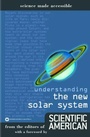
Understanding the New Solar System
Published on 1. December 2002
Book
Paperback/Softback
160 pages
978-0-446-67953-4 (ISBN)
Description
The solar system - our sun and the planets and other bodies that orbit it - has remained essentially the same for hundreds of millions years. What, then, is the New Solar System? Quite simply what's new is our understanding of what in fact makes up the solar system and our deeper understanding of long-known objects such as the planets, their satellites, comets and asteroids. The ancient Romans observed and noted the motions of the known planets at that time but it wasn't until 1781 that Uranus was discovered. Neptune was discovered in 1846 and Pluto in 1930. Pluto's moon, Charon, was only discovered in 1978, or about the time that robotic exploration of the solar system became a serious undertaking. This book reveals the latest knowledge of the composition and nature of our solar family. Here you'll discover what lies beyond the orbit of Pluto, which solar body is the most volcanically active, and which solar system bodies have atmospheres and may harbour primitive life.
More details
Language
English
Place of publication
New York
United States
Product notice
Paperback (UK-trade)
Dimensions
Height: 205 mm
Width: 134 mm
Weight
155 gr
ISBN-13
978-0-446-67953-4 (9780446679534)
Copyright in bibliographic data is held by Nielsen Book Services Limited or its licensors: all rights reserved.
Schweitzer Classification
Other editions
Additional editions
Of Scientific American Editors
Understanding the New Solar System
E-Book
12/2002
Grand Central Publishing
€6.99
Available for download
Person
SCIENTIFIC AMERICAN is the oldest continuously published magazine in America: for all of that time it has been the leader in communications about science and technology.