


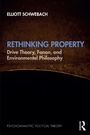
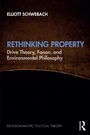
Rethinking Property
Drive Theory, Fanon, and Environmental Philosophy
1st Edition
Published on 7. October 2024
Book
Hardback
148 pages
978-1-032-60170-0 (ISBN)
Description
In this eye-opening study at the intersection of psychoanalytic theory and political organization and thought, Elliott Schwebach explores why property can be understood to be oppressive and how political theory overlooks its unique significance as a pillar of social violence.
Synthesizing insights from Pierre-Joseph Proudhon, Sigmund Freud, Ives Hendrick, and Frantz Fanon, Schwebach investigates human activity as shaped by the effects of property regimes and traces broader implications for understanding the legacies of colonial domination. He then shifts focus to contemporary eco-theory, challenging the Lockeanism that continues to characterize premodern Indigenous environmental engagements and presenting novel frameworks for understanding healthy ecopolitical activity based upon the trajectories of psychological drives.
This unique perspective validates creative expressions of decolonial resistance and offers fruitful alternatives to customary positions in psychoanalytic and environmental political philosophy. The book will be an indispensable resource for scholars of property, Freudian psychology, political ecology, and the visionary thought of Frantz Fanon.
Synthesizing insights from Pierre-Joseph Proudhon, Sigmund Freud, Ives Hendrick, and Frantz Fanon, Schwebach investigates human activity as shaped by the effects of property regimes and traces broader implications for understanding the legacies of colonial domination. He then shifts focus to contemporary eco-theory, challenging the Lockeanism that continues to characterize premodern Indigenous environmental engagements and presenting novel frameworks for understanding healthy ecopolitical activity based upon the trajectories of psychological drives.
This unique perspective validates creative expressions of decolonial resistance and offers fruitful alternatives to customary positions in psychoanalytic and environmental political philosophy. The book will be an indispensable resource for scholars of property, Freudian psychology, political ecology, and the visionary thought of Frantz Fanon.
More details
Series
Language
English
Place of publication
London
United Kingdom
Publishing group
Taylor & Francis Ltd
Target group
College/higher education
Postgraduate and Undergraduate
Illustrations
9 s/w Tabellen
9 Tables, black and white
Dimensions
Height: 235 mm
Width: 157 mm
Thickness: 14 mm
Weight
398 gr
ISBN-13
978-1-032-60170-0 (9781032601700)
Copyright in bibliographic data and cover images is held by Nielsen Book Services Limited or by the publishers or by their respective licensors: all rights reserved.
Schweitzer Classification
Other editions
Additional editions

Book
approx. 12/2025
1st Edition
Routledge
€68.30
Not yet published
E-Book
10/2024
1st Edition
Routledge
€60.99
Available for download
E-Book
10/2024
1st Edition
Routledge
€60.99
Available for download
Person
Elliott Schwebach completed his PhD in Spring 2022 and has served as a lecturer, consultant, and occasional retail associate since. Currently, he is working with the Washington State Bar Association as an Equity and Justice Lead and taking a welcome break from moonlighting. After 5pm, you might find him at a kava bar, browsing poetry in used bookstores, or taking a walk through city streets.
Content
Preface
Acknowledgements
Introduction
1 On Proudhon: Proto-Drive Theorist and Champion of "Possession"
2 On Drive Theory: Physio-Somatic v. Socio-Centric
3 On Drive Theory, Continued: Hendrick v. Marcuse
4 On Fanon: Drives and Decolonization
5 On Eco-Theory: The Environmental Implications of Bodily Drives
Conclusion
Acknowledgements
Introduction
1 On Proudhon: Proto-Drive Theorist and Champion of "Possession"
2 On Drive Theory: Physio-Somatic v. Socio-Centric
3 On Drive Theory, Continued: Hendrick v. Marcuse
4 On Fanon: Drives and Decolonization
5 On Eco-Theory: The Environmental Implications of Bodily Drives
Conclusion