

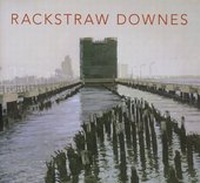
Rackstraw Downes
Published on 8. May 2005
Book
Hardback
200 pages
978-0-691-12047-8 (ISBN)
Description
Rackstraw Downes paints down-to-earth, often gritty features of today's American environment in an unflinching and highly realistic style. This book is the first to provide a multifaceted picture of his work, its intellectual foundations, and its place in the history of art--from both outside commentators and Downes himself. Beautifully illustrated, with copious examples from thirty years of the artist's work, the book makes eminently clear why Downes is widely regarded as a "painter's painter." It showcases many of the artist's panoramic pictures--painted with a strong sense of place and a miniaturist's sense of scale. The images, which depict industrial parks, construction sites, housing projects, refineries, razor wire, and landfills, stimulate fresh thoughts about these supposedly unattractive sights. Bathed in the light of a precise time, the paintings resonate with a strikingly evocative quality. The three essays that accompany Downes's art provide rare insights into the way a painter thinks and works. Sanford Schwartz explores the relationships between the artist's personal and intellectual background and his oeuvre.
Robert Storr situates Downes in the context of a number of highly prominent contemporary artists such as Chuck Close, Bernd and Hilla Becher, Jasper Johns, Gerhard Richter, and Robert Smithson in a way that offers a new interpretation of Downes's work, while making clear its importance within twentieth-century art. Downes's own essay, "Turning the Head in Empirical Space," presents a direct, firsthand account of his working methods within a larger discussion on spatial paradigms of Renaissance and post-Renaissance modes of painting.
Robert Storr situates Downes in the context of a number of highly prominent contemporary artists such as Chuck Close, Bernd and Hilla Becher, Jasper Johns, Gerhard Richter, and Robert Smithson in a way that offers a new interpretation of Downes's work, while making clear its importance within twentieth-century art. Downes's own essay, "Turning the Head in Empirical Space," presents a direct, firsthand account of his working methods within a larger discussion on spatial paradigms of Renaissance and post-Renaissance modes of painting.
Reviews / Votes
"Rackstraw Downes, the veteran painter of landscapes and urban places, is a realist esteemed by people, including me, who normally have scant use for realism in art. [His work] is powerful in quiet, stubborn ways... luminous, yet taciturn: just the facts... There is an existentialist, not to say quixotic, flavor to Downes's insistence on realizing the real by hand. He likes jam-ups of culture and nature, where practical human uses overlap with indifferent geology and shaggy flora--he is the bard of weeds."--Peter Schjeldahl, New YorkerMore details
Language
English
Place of publication
New Jersey
United States
Target group
College/higher education
Professional and scholarly
Product notice
Trade binding
Illustrations
100 color plates. 15 halftones.
Dimensions
Height: 279 mm
Width: 254 mm
Weight
1389 gr
ISBN-13
978-0-691-12047-8 (9780691120478)
Copyright in bibliographic data and cover images is held by Nielsen Book Services Limited or by the publishers or by their respective licensors: all rights reserved.
Schweitzer Classification
Persons
Sanford Schwartz is an independent journalist whose books include "Christen Kobke" and "Artists and Writers". Robert Storr is the Rosalie Solow Professor of Modern Art at the New York Institute of Fine Arts and former Senior Curator of Painting and Sculpture at the Museum of Modern Art, New York. Rackstraw Downes's work is represented in numerous museum collections, including the Hirshhorn Museum, The Art Institute of Chicago, the Metropolitan Museum of Art, the Museum of Modern Art, and the Whitney Museum of American Art.